

Udeesha Tomar
AVP - Strategy and Solutions
Leading procurement research solutions across chemicals, materials, and food & beverages, with expertise in price forecasting and market analytics.

| Product | Region | Incoterm Basis | Price | Last Updated Month |
|---|---|---|---|---|
| Tetrahydrofuran | China | FOB | USD 1,466.18/MT | August 2026 |
| Tetrahydrofuran | India | CIF | USD 1,556.97/MT | August 2026 |
| Tetrahydrofuran | USA | CIF | USD 1,621.80/MT | August 2026 |
| Tetrahydrofuran | Germany | CIF | USD 1,579.77/MT | August 2026 |
| Tetrahydrofuran | Japan | CIF | USD 1,500.50/MT | August 2026 |
| Tetrahydrofuran | China | FOB | USD 1,472.85/MT | July 2026 |
| Tetrahydrofuran | India | CIF | USD 1,579.66/MT | July 2026 |
| Tetrahydrofuran | USA | CIF | USD 1,660.34/MT | July 2026 |
| Tetrahydrofuran | Germany | CIF | USD 1,606.48/MT | July 2026 |
| Tetrahydrofuran | Japan | CIF | USD 1,505.85/MT | July 2026 |
Stay updated with the latest Tetrahydrofuran prices, historical data, and tailored regional analysis
Asia
In China, the average price of Tetrahydrofuran was ~USD 1,683/MT (FOB) in Q2’26, the lowest across the tracked regions. Chinese THF conditions became firmer toward the end of Q2 as suppliers faced higher chemical-processing and logistics costs, while improving manufacturing activity supported solvent consumption. China’s manufacturing output increased 4.4% year on year in May, providing support from electronics, specialty chemicals and other THF-consuming industries. However, sufficient domestic availability and moderate growth across the wider chemical sector prevented a stronger increase. Tetrahydrofuran in India was assessed at an average of ~USD 1,771/MT (CIF) in June. Indian values remained above Chinese levels because of freight, import handling and replacement costs. Demand from pharmaceuticals, coatings, adhesives and polymer processing remained steady, while buyers largely maintained need-based procurement.
Europe
In Germany, Tetrahydrofuran averaged ~USD 1,804/MT (CIF) in June. THF prices in the European region were higher as energy, freight and imported chemical costs kept replacement values elevated in the initial half of Q2. Industrial solvent demand received some support from improving intermediate-goods activity, with euro-area intermediate-goods production increasing 0.8% month on month in April. However, broader manufacturing remained uneven, limiting the extent to which suppliers could transfer higher operating costs. Consumption from pharmaceuticals, coatings, adhesives and specialty polymers remained stable, while buyers avoided excess inventories as crude and energy costs eased from earlier-quarter highs.
North America
The average price of Tetrahydrofuran in the USA was ~USD 1,838/MT (CIF) in June’26. The prices in the North American markets stayed comparatively firm because of higher processing, distribution and replacement costs. U.S. industrial production increased 0.1% month on month in May, indicating stable rather than strong downstream activity. Demand from pharmaceuticals, resins, coatings and specialty chemical manufacturing remained regular, but flat manufacturing momentum kept procurement disciplined. Elevated intermediate-goods and logistics costs nevertheless supported supplier offers.
Analyst Insight
According to Procurement Resource, in the near term, THF prices are expected to remain stable to firm, with industrial demand and replacement costs providing support while easing energy values and adequate supply limit sharper gains.
Related Report
Need Latest Tetrahydrofuran Prices?
Get real-time price assessments, periodic trends, forecasts and price driver insights across key global markets.
Our Clients































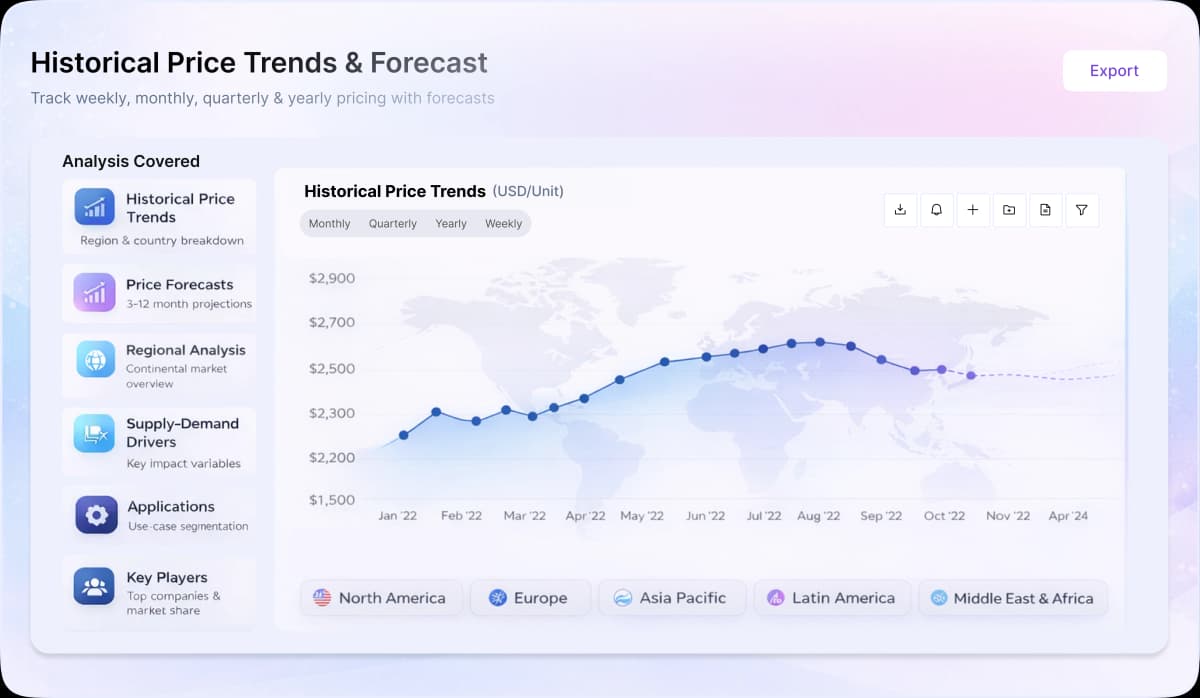
Turn price intelligence into action with the Procurement Resource Database. Log in or subscribe to unlock live price trends, historical charts, supplier databases, cost curves, and analyst-backed insights across chemicals, agriculture, energy, packaging, and more. Use these tools to benchmark your contracts, plan budgets with confidence, and stay ahead of market moves on every product you buy.
0
+Products
0
+Regions
0
+Subscriptions
Asia
In Asia, Tetrahydrofuran prices strengthened in Q1 2026 as BDO, the key upstream feedstock, moved higher through March. China’s BDO market rose by 2.52% during March 2-6, followed by 2.65% during March 9-13 and 1.84% during March 16-20. The feedstock push was supported by tighter supply and firmer downstream sentiment from PTMEG and spandex. Petrochemical disruption after the Iran war added further pressure, as some Asian naphtha-fed crackers reduced operations. One South Korean cracker cut rates by 20.0% to 63.0%-65.0% from 83.0%-85.0%, showing wider upstream stress across solvent and intermediate chains.
Europe
Europe also recorded a firm THF trend, mainly due to feedstock, energy, and logistics pressure. The region was exposed to higher naphtha-linked petrochemical costs after Middle East tensions affected crude-linked supply routes. THF demand from coatings, adhesives, pharmaceuticals, and polymer intermediates stayed steady, but buyers kept procurement need-based. Active BDO, THF, and PolyTHF production in Europe helped avoid a sharp shortage, although energy and freight risk supported firmer replacement costs.
North America
North America remained more balanced than Asia and Europe due to stronger local chemical supply and Gulf Coast logistics. However, import sentiment turned cautious after polymer and chemical transactions from Asia and the Middle East to the Americas slowed on March 2. Chemical container exports from the US Gulf Coast rose 12.0% in March, and 20.0% surge capacity was available for disruptions, supporting regional export flexibility. Domestic demand from solvents, pharmaceuticals, coatings, adhesives, and elastomer intermediates remained stable.
At room temperature, Tetrahydrofuran (THF), commonly known as Oxolane, is a clear liquid chemical molecule. THF is a polar solvent with a low viscosity that may be combined with water. This substance is classed as heterocyclic chemical, specifically a cyclic ether. It is generally utilized as a precursor to polymers. Being polar and possessing a wide liquid range, THF is a useful solvent.
C4H8O
PTMEG, Spandex, Other polyurethanes, PVC, other solvents
Oxolane, 1,4-Epoxybutane, 1-Oxacyclopentane, Tetrahydrofuran, THF, 1,4-Butylene oxide, Cyclotetramethylene oxide fraction, Furanidin, Tetra-methylene oxide
Ashland, BASF SE, CDC, Mitsubishi Chemical Corporation, Banner Chemicals Limited
CurrencyUS$ (Data can also be provided in local currency)
Supplier Database AvailabilityYes
Customization ScopeThe report can be customized as per the requirements of the customer
Post-Sale Analyst Support360-degree analyst support after report delivery
Note: Our supplier search experts can assist your procurement teams in compiling and validating a list of suppliers indicating they have products, services, and capabilities that meet your company's needs.
A dehydration technique is used to produce tetrahydrofuran (THF) from butanediol (BDO). The dehydration of 1,4-butanediol in the presence of a zirconium sulphate catalyst produces tetrahydrofuran in a straightforward and low-risk process.
Our Price Analysis Methodology
AVP - Strategy and Solutions
Leading procurement research solutions across chemicals, materials, and food & beverages, with expertise in price forecasting and market analytics.
Experience how Procurement Resource transforms raw material price data into clear, decision ready intelligence. Optimise your performance with reliable, expert market data and analysis. Schedule your demo today to experience a live walk-through where our experts will showcase interactive price charts, forecasted prices, and insights driving the prices for your key commodities, tailored to your workflows. Contact us now!
Our Team will be happy to assist you
We are just a text away
Still Need Help?
Unlock full access to Procurement Resource's price databases, interactive charts, and short-term forecasts for thousands of commodities. Elevate your sourcing decisions by comparing prices across regions, downloading historical data, and layering in analyst-backed insights, all with our flexible plans that scale as your portfolio grows.
Still have any Questions
Contact Us



Price Trend Dashboard - What's Included
Price trends across a diverse portfolio of categories and products, spanning board to niche chemicals
Coverage extendable to grade-specific chemicals based on procurement requirements
Regular price tracking supported by robust historical datasets
News, policy updates, and key market drivers impacting price movements
Short-term and long-term price outlooks and forecasts
Supply–demand dynamics and capacity-driven market analysis

Track prices, market movements, supply-demand dynamics, and industry developments across hundreds of commodities through a centralized intelligence platform built for informed procurement decisions.

Understand market fluctuations using analyst-backed forecasts, historical pricing patterns, and evolving industry trends to strengthen sourcing strategies and budget planning.

Leverage cost models, pricing benchmarks, and procurement insights to evaluate purchasing opportunities, improve negotiations, and enhance operational efficiency.
Access region-specific price trends, trade activities, capacity changes, and supply chain developments influencing commodity markets worldwide.