Titanium Dioxide (TiO2) Price Trend Analysis 2026: Supply Demand Analysis, Market Insights, Price Drivers, Latest News & Historical Prices

Procurement Resource Database

Laptop screen

Turn price intelligence into action with the Procurement Resource Database. Log in or subscribe to unlock live price trends, historical charts, supplier databases, cost curves, and analyst-backed insights across chemicals, agriculture, energy, packaging, and more. Use these tools to benchmark your contracts, plan budgets with confidence, and stay ahead of market moves on every product you buy.

Titanium Dioxide (TiO2) Dashboard Inclusions

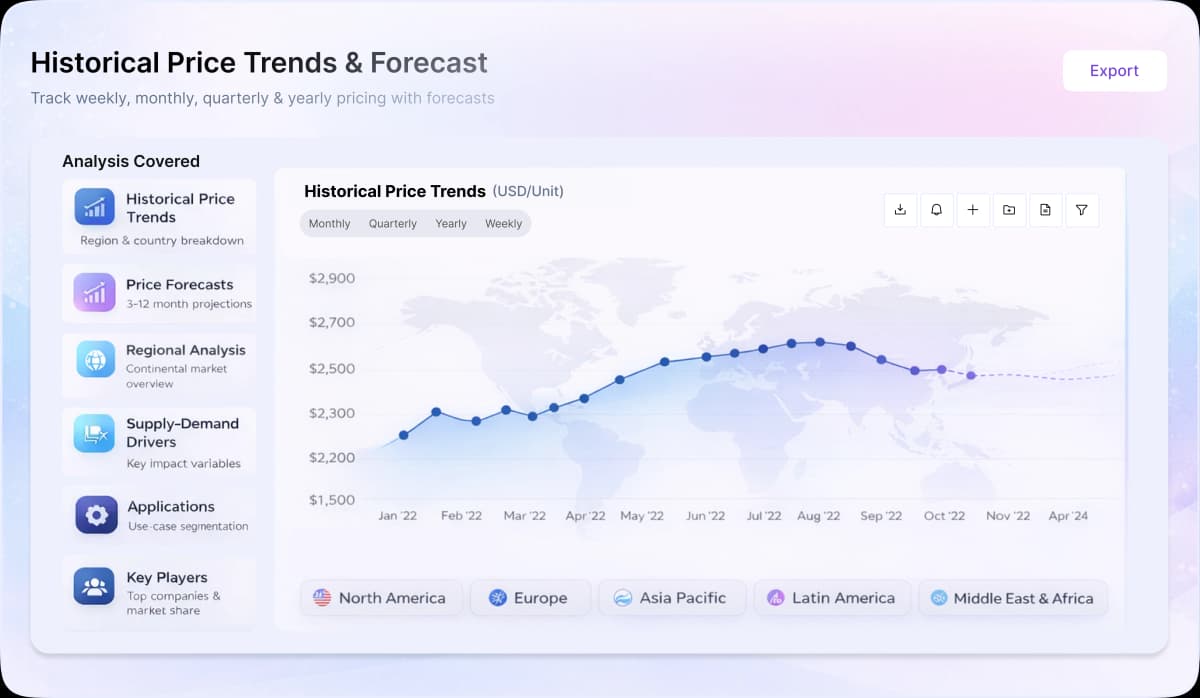
Titanium Dioxide (TiO2) Price Dasboard

0

+

Products

0

+

Regions

0

+

Subscriptions

Product Category Region Price Last Updated Month
Titanium Dioxide (TiO2) Chemicals China 2738 USD/MT October 2025

Stay updated with the latest Titanium Dioxide (TiO2) prices, historical data, and tailored regional analysis

Asia

In Asia, titanium dioxide prices mostly stabilized in Q4’25 after a long period of decline. In China, domestic and export prices held steady as producers managed inventory and margins carefully. Demand from coatings, plastics, and other downstream industries remained moderate, preventing a sharp rise or fall in prices. Imports of raw materials like titanium ore continued to support production, while overcapacity kept the market cautious. In India, a court ruling removed anti-dumping duties on Chinese TiO2 imports, temporarily increasing supply options and reducing cost pressures for local users. Overall, the Asian market showed stable pricing but limited signs of strong demand growth.

Europe

European titanium dioxide markets remained under pressure despite the stability in Asia. Anti-dumping duties on Chinese imports kept access to lower-priced pigment limited, maintaining higher costs for European producers. Paint and coatings companies could not benefit from cheaper imports, and weak demand in construction and industrial sectors prevented significant price movement. Local production expansions, such as acquisitions of TiO2 plants, aimed to improve supply security, but these had little effect on short-term pricing. European markets were steady but remained tight, with buyers relying on supply management rather than expecting price relief.

North America

In North America, titanium dioxide prices were relatively stable but showed signs of pressure from oversupply. Imports from Europe and Asia increased as producers sought new outlets for excess inventory. Weak downstream demand in coatings and plastics limited price growth, and some suppliers delayed shipments to avoid losses. The market remained cautious, with contract negotiations including measures to prevent further price drops. Overall, prices held steady, but buyers were careful in planning orders due to uncertain demand and global supply flows.


About Titanium Dioxide (TiO2)

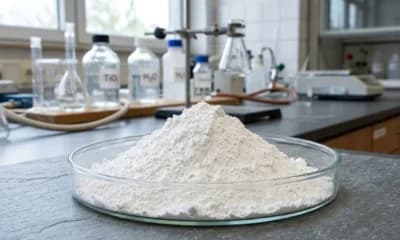
It is a naturally occurring oxide of titanium that is generally sourced from ilmenite, rutile, and anatase. It is a white solid, unreactive in nature. It finds a wide range of applications owing to its characteristics features like whiteness and opacity. Titanium Dioxide is most widely utilised as a pigment under the names titanium white, Pigment White 6 (PW6), and others.

Titanium Dioxide (TiO2) Product Detail
Chemical Formula

TiO2

Molecular Weight
79.87 g/mol
Industrial Uses

Pigment for paints and coatings, Cosmetics, Food colouring, Industrial uses, Sunscreens, Shrinking agents (glass fibres)

Synonyms

Titania, Titanium (IV) oxide, Rutile, 13463-67-7

Supplier Database

The Chemours Company, Tronox Holdings plc, KRONOS Worldwide, Inc., Evonik Industries AG, CINKARNA Celje d.d., Tronox Holdings plc, Jinan Yuxing Chemical Co.Ltd, ISHIHARA SANGYO KAISHA, LTD, Nanjing Titanium Dioxide Chemical Co., Ltd., Ningbo Xinfu Titanium Dioxide Co., Ltd 

Regional Coverage

Asia Pacific

China, India, Indonesia, Pakistan, Bangladesh, Japan, Philippines, Vietnam, Iran, Thailand, South Korea, Iraq, Saudi Arabia, Malaysia, Nepal, Taiwan, Sri Lanka, UAE, Israel, Hongkong, Singapore, Oman, Kuwait, Qatar, Australia, and New Zealand

Europe

Germany, France, United Kingdom, Italy,Spain, Russia, Turkey, Netherlands, Poland, Sweden, Belgium, Austria, Ireland Switzerland, Norway, Denmark, Romania, Finland, Czech Republic, Portugal and Greece

North America

United States and Canada

Latin America

Brazil, Mexico, Argentina, Columbia, Chile, Ecuador, and Peru

Africa

South Africa, Nigeria, Egypt, Algeria, Morocco

CurrencyUS$ (Data can also be provided in local currency)

Supplier Database AvailabilityYes

Customization ScopeThe report can be customized as per the requirements of the customer

Post-Sale Analyst Support360-degree analyst support after report delivery

Note: Our supplier search experts can assist your procurement teams in compiling and validating a list of suppliers indicating they have products, services, and capabilities that meet your company's needs.

Titanium Dioxide (TiO2) Production Processes

  • Titanium Dioxide Production via Sulphate Process; via Chloride Process; via Rutile; and via Ilmenite

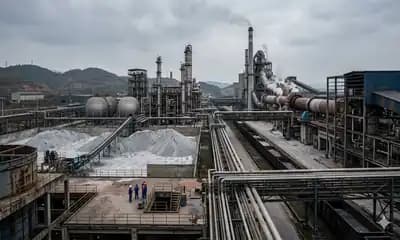
In the Sulphate process, technology is used to convert low grade and cheap ores to finally obtain Titanium pigment with the help of sulphuric acid.

Our Price Analysis Methodology

Schedule Demo

Schedule A Demo

Experience how Procurement Resource transforms raw material price data into clear, decision ready intelligence. Optimise your performance with reliable, expert market data and analysis. Schedule your demo today to experience a live walk-through where our experts will showcase interactive price charts, forecasted prices, and insights driving the prices for your key commodities, tailored to your workflows. Contact us now!

Our Team will be happy to assist you

We are just a text away

Still Need Help ?

Europe & Africa

+44 7573 171117

[email protected]

USA & Canada

+1 307 363 1045

[email protected]

APAC

+91 8850629517

[email protected]

Other Related Reports

Titanium Dioxide Production from llmenite

This report presents the economics of titanium dioxide production from Ilmenite through sulphate process.

Titanium Dioxide Production from Rutile

This report presents the cost analysis for titanium dioxide production from rutile through chlorine process. Rutile is processed along with coke and chlorine, into a chlorinator to produce titanium chloride.

Titanium Dioxide Production from Chloride process

It produces a pure product and may require construction of a chlor alkali unit.

Titanium Dioxide Production from Sulphate process

In this process, simple technology is used. The ores used are low grade and cheap. Titanium pigment is extracted by sulphuric acid.

Unlock full access to Procurement Resource's price databases, interactive charts, and short-term forecasts for thousands of commodities. Elevate your sourcing decisions by comparing prices across regions, downloading historical data, and layering in analyst-backed insights, all with our flexible plans that scale as your portfolio grows.
Still have any Questions

Contact Us
Mastercard
Wire
VISA
Stripe

Related News

View All

Why Procurement Database

Extensive Commodity Price Database

Extensive Commodity Price Database

Track prices, market movements, supply-demand dynamics, and industry developments across hundreds of commodities through a centralized intelligence platform built for informed procurement decisions.

Reliable Price Forecasting & Market Outlooks

Reliable Price Forecasting & Market Outlooks

Understand market fluctuations using analyst-backed forecasts, historical pricing patterns, and evolving industry trends to strengthen sourcing strategies and budget planning.

Data Driven Cost & Procurement Optimization

Data Driven Cost & Procurement Optimization

Leverage cost models, pricing benchmarks, and procurement insights to evaluate purchasing opportunities, improve negotiations, and enhance operational efficiency.

Global Coverage with region-specific Market Insights

Global Coverage with region-specific Market Insights

Access region-specific price trends, trade activities, capacity changes, and supply chain developments influencing commodity markets worldwide.

1/4