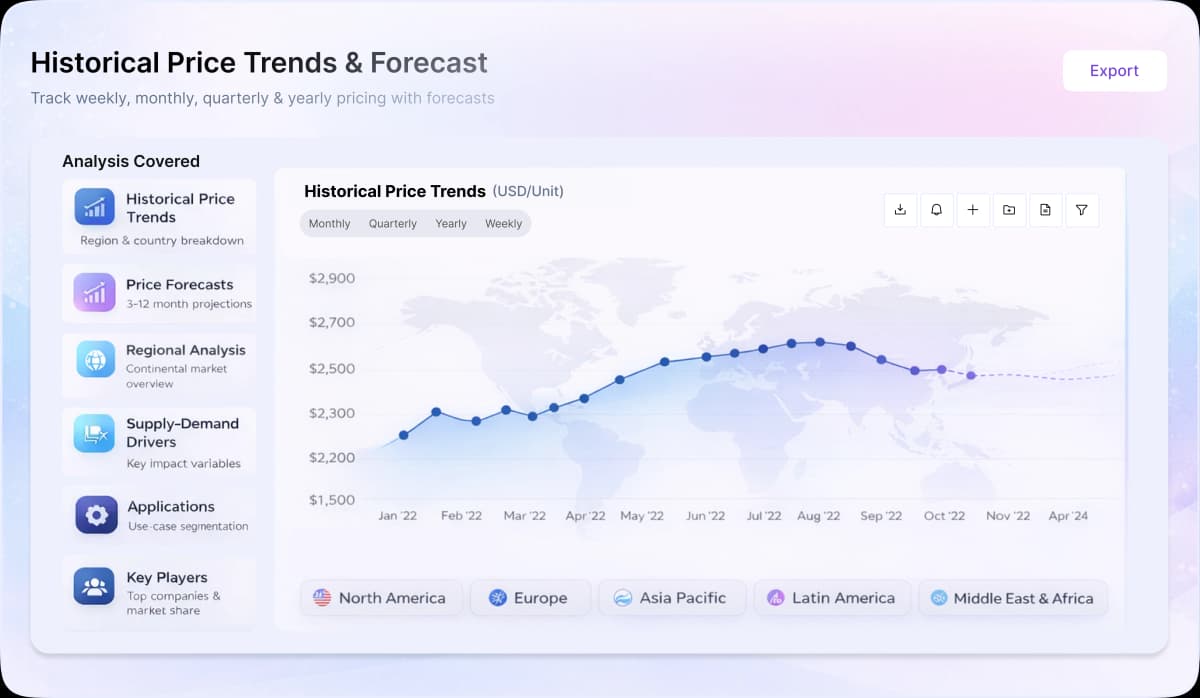
- Tungsten carbide prices surged globally in Q1’26, driven by acute supply tightness and export restrictions, with the market remaining highly volatile amid geopolitical disruptions.
- Feedstock costs rose sharply as upstream tungsten concentrate and APT markets tightened due to reduced mining quotas and export controls, significantly inflating production costs.
- Downstream demand remained robust across tooling, aerospace, and defence sectors, with additional pressure from military consumption intensifying competition for limited supply.
In Asia, tungsten carbide prices exhibited a strong upward trajectory throughout Q1’26, primarily supported by severe feedstock constraints and tightening export availability. China, the dominant global supplier, implemented strict export controls that reduced overseas shipments by nearly 40%, significantly disrupting global trade flows and tightening domestic availability. Concurrently, mining quotas were reduced, and environmental regulations tightened, leading to lower raw material output and sustained cost escalation across the tungsten value chain. As a result, tungsten carbide powder prices rose sharply through January and February, reflecting strong cost-push pressure and supply shortages. Demand-side fundamentals remained firm, particularly from cutting tools, mining equipment, and industrial manufacturing, which continued to absorb available supply despite elevated prices. Additionally, heightened defence-related consumption further constrained availability, intensifying competition between industrial and military sectors. Toward the end of the quarter, prices showed slight stabilization as buyers resisted further increases and engaged in cautious procurement, though overall levels remained significantly elevated.