Raw milk prices likely up 4-5%
CRISIL Ratings expects raw milk production growth to slow to 4% due to El Niño and high fodder costs. Higher production costs will push milk prices up 4-5% this fiscal, with dairy companies passing costs to consumers.

CRISIL Ratings expects raw milk production growth to slow to 4% due to El Niño and high fodder costs. Higher production costs will push milk prices up 4-5% this fiscal, with dairy companies passing costs to consumers.
In North America, yogurt market movement in H1’26 remained stable to slightly soft, supported by balanced milk supply and normal retail offtake. The decline was mainly linked to softer dairy retail indexes rather than weak consumption, as food-at-home rose only 0.1% MoM, while food-away-from-home rose 0.3% MoM in May. Feedstock conditions were mixed, with producer milk receipts lower YoY, but Class II and broader dairy manufacturing demand stayed supported by active export channels. USDA raised 2026 dairy export forecasts to 20.3 billion lb on a milk-fat basis and 49.3 billion lb on a skim-solids basis, helped by cheese and dry whey demand. The Iran war and Strait of Hormuz closure added indirect cost risk through freight, refrigeration, fertilizer, feed, and packaging, as crude, LNG, and fertilizer flows were sharply disrupted.
Analyst Insight
According to Procurement Resource, in the near term, yogurt movement is expected to remain steady, with cost risk tied more to energy and logistics than milk supply.
Related Report
Need Latest Yogurt Prices?
Get real-time price assessments, periodic trends, forecasts and price driver insights across key global markets.
Our Clients





























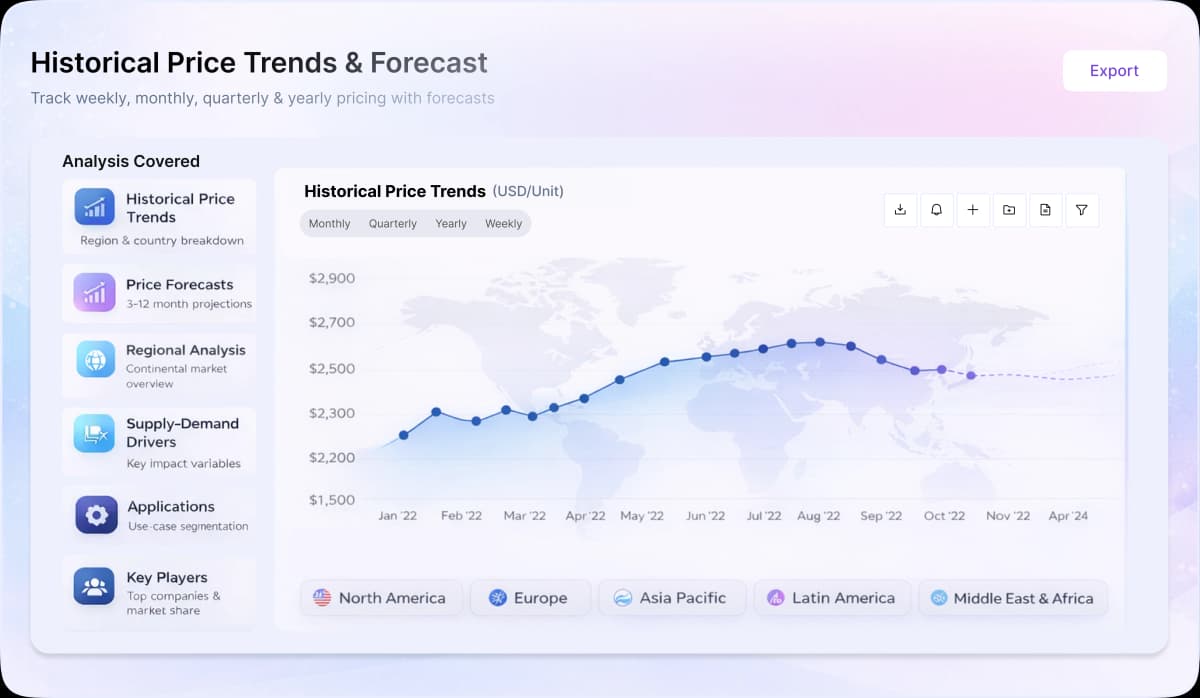
Turn price intelligence into action with the Procurement Resource Database. Log in or subscribe to unlock live price trends, historical charts, supplier databases, cost curves, and analyst-backed insights across chemicals, agriculture, energy, packaging, and more. Use these tools to benchmark your contracts, plan budgets with confidence, and stay ahead of market moves on every product you buy.
0
+Products
0
+Regions
0
+Subscriptions
Yogurt prices trended higher during the second half of 2025, shaped by a convergence of trade policy shifts, ingredient cost pressures, and evolving supply-demand dynamics across the domestic market. The introduction of steep tariffs on imported organic sugar, alongside a near-elimination of duty-free import quotas, drove a sharp increase in organic sugar costs for food manufacturers. Since organic sugar is a common ingredient in yogurt production, particularly within the organic segment, producers faced a meaningful rise in input expenses that transmitted into higher finished product prices.
Smaller organic yogurt manufacturers were disproportionately affected, as limited domestic organic sugar availability left producers with few viable sourcing alternatives. Some companies indicated they were weighing production adjustments in response to the cost burden. The absence of scalable domestic organic sugar supply added further strain, as converting conventional farmland to certified organic production remained a multi-year process. On the trade front, the broader dairy sector maintained a positive export balance, supported by competitive U.S. pricing relative to other major exporters. Demand for high-protein dairy products, including yogurt, continued to support market activity through the period.
Yogurt is a food prepared by bacterial fermentation of milk. The bacteria that is utilised to make Yogurt are known as Yogurt cultures. The fermentation of lactose by these bacteria produces lactic acid, that acts on milk protein to give Yogurt its texture and characteristic tart flavour.
Food preparations, Confectionary, Desserts and sweets
Lactalis Group, General Mills Inc, Nestlé SA, FrieslandCampina, Dean Foods Company, Danone, Yili Group
CurrencyUS$ (Data can also be provided in local currency)
Supplier Database AvailabilityYes
Customization ScopeThe report can be customized as per the requirements of the customer
Post-Sale Analyst Support360-degree analyst support after report delivery
Note: Our supplier search experts can assist your procurement teams in compiling and validating a list of suppliers indicating they have products, services, and capabilities that meet your company's needs.
Yogurt is produced by heating milk to a certain temperature that denatures its proteins (scalding), which are essential for making Yogurt. Later it is also cooled down to a certain temperature so that the high temperature doesn't completely eliminate or kill the live microorganisms that turn the milk into Yogurt.
Our Price Analysis Methodology

Manager - Market Research
Delivering market research and procurement intelligence at Procurement Resource with a focus on economic forecasting, commodity analysis, and client advisory to help sourcing teams make data-backed purchasing decisions.
Experience how Procurement Resource transforms raw material price data into clear, decision ready intelligence. Optimise your performance with reliable, expert market data and analysis. Schedule your demo today to experience a live walk-through where our experts will showcase interactive price charts, forecasted prices, and insights driving the prices for your key commodities, tailored to your workflows. Contact us now!
Our Team will be happy to assist you
We are just a text away
Still Need Help?
Europe & Africa
+44 7573 171117
Sales@procurementresource.com
USA & Canada
+1 307 363 1045
Sales@procurementresource.com
APAC
+91 8850629517
Sales@procurementresource.com
This report provides the cost structure of Greek yoghurt from the fermentation process. Milk is first heated and then cooled to make suitable conditions for fermentation before bacteria cultures are added.
Unlock full access to Procurement Resource's price databases, interactive charts, and short-term forecasts for thousands of commodities. Elevate your sourcing decisions by comparing prices across regions, downloading historical data, and layering in analyst-backed insights, all with our flexible plans that scale as your portfolio grows.
Still have any Questions
Contact Us



Price Trend Dashboard - What's Included
Price trends across a diverse portfolio of categories and products, spanning board to niche chemicals
Coverage extendable to grade-specific chemicals based on procurement requirements
Regular price tracking supported by robust historical datasets
News, policy updates, and key market drivers impacting price movements
Short-term and long-term price outlooks and forecasts
Supply–demand dynamics and capacity-driven market analysis

Track prices, market movements, supply-demand dynamics, and industry developments across hundreds of commodities through a centralized intelligence platform built for informed procurement decisions.

Understand market fluctuations using analyst-backed forecasts, historical pricing patterns, and evolving industry trends to strengthen sourcing strategies and budget planning.

Leverage cost models, pricing benchmarks, and procurement insights to evaluate purchasing opportunities, improve negotiations, and enhance operational efficiency.
Access region-specific price trends, trade activities, capacity changes, and supply chain developments influencing commodity markets worldwide.

