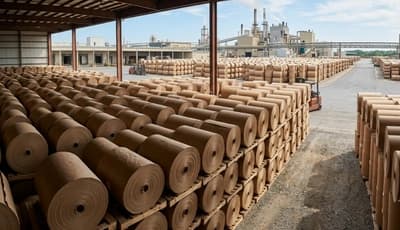
- Packaging is offsetting lower printing and writing paper demand.
- Annual Indian paper output is reported near 30 million tonnes.
- Imported fibre supplies about half of production requirements.
- Higher raw-material costs are pressuring mills.
- Buyers should negotiate by grade, mill and fibre composition.
India’s paper sector continues to expand as demand for packaging offsets declining consumption in newspapers and other traditional printing uses. E-commerce companies, food producers and consumer-goods manufacturers are using more paper-based packaging, changing the grade mix required from domestic mills.
The July 10 report placed India’s annual paper output at around 30 million tonnes. Imported fibre accounts for about half of the raw material used in production. This reliance creates direct exposure to international pulp and recovered-paper costs, foreign-exchange movements, ocean freight and port handling.
Packaging demand does not support every paper grade equally. Containerboard, kraft paper, linerboard, corrugating medium, coated board and food-contact grades can experience stronger demand even when printing and writing paper remains weak. Buyers should avoid using a general paper-market statement when negotiating a specific packaging grade.
Paper mills are also facing pressure from higher raw-material costs and older manufacturing equipment. Industry representatives identified fibre security and plant modernisation as important operating issues. Machinery efficiency affects energy use, production yield, moisture control, sheet consistency and downtime, all of which can influence delivered cost and supply reliability.
Request the Latest Linerboard Prices Data - Access Price Insights Now
Packaging buyers should request grade-level production schedules and mill allocation details. A mill may report adequate total production but still have limited capacity for a particular basis weight, burst strength, surface treatment or food-contact specification. Contracts should state technical tolerances and procedures for rejecting material that fails converting tests.
Imported-fibre exposure should also be visible in price-adjustment clauses. A supplier should identify whether a proposed increase comes from pulp, recovered paper, chemicals, energy or freight. Buyers can then compare the adjustment with the cost component that actually changed.
Companies using large volumes can reduce disruption by approving more than one mill and testing alternative fibre compositions before shortages occur. Recycled and virgin-fibre grades may perform differently on printing, coating and corrugating lines, so substitutions require production trials.
The packaging sector is supporting paper demand, but fibre dependence and ageing machinery continue to shape procurement risk. Buyers need grade-specific supply information rather than broad claims about national paper availability.