Prakhar Panchbhaiya
Assistant Manager: Business Insights and Content
Supporting procurement teams with category intelligence, market research, price trends, supply-demand analysis, and strategic sourcing insights across key industries.
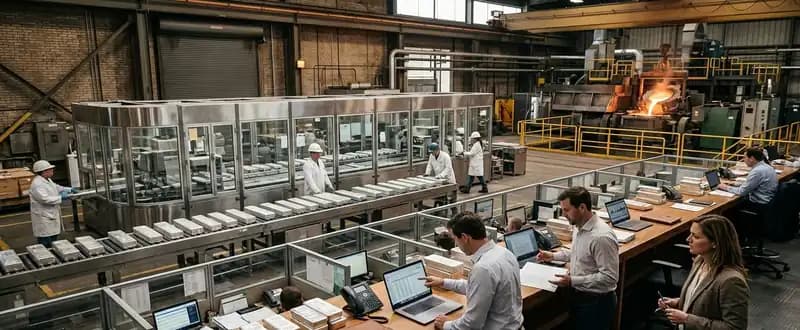
India’s restrictions on silver imports have sharply reduced overseas supply, creating tighter availability for jewellery manufacturers, solar-panel producers and electronics companies. The country depends on imported metal for more than 80% of its silver requirement, leaving industrial buyers exposed when licensing rules delay shipments or restrict the forms that can enter the country.
The government placed most forms of silver under immediate import restrictions in mid-May. The controls were extended during June to include silver grain and silver powder, requiring importers to secure prior authorisation. These forms are widely used by refiners, fabricators and manufacturers, so the restriction affects more than finished bullion products. It reaches industrial material used in conductive pastes, contacts, electrical components and jewellery production.
Official trade data showed imports falling to 46.8 metric tonnes in May from 534.3 tonnes during the same month of 2025. Importers reported a further decline during June. The government also raised the import duty on gold and silver to 15% from 6%, adding a direct landed-cost increase before domestic refining, financing, transport and fabrication charges.
Request the Latest Silver Prices Data - Access Price Insights Now
Domestic premiums reached USD 6.50 per ounce during the week of the report, more than 10% above international benchmarks. The market had traded at discounts of as much as USD 5.50 per ounce in May. Metal released through withdrawals from silver exchange-traded funds temporarily softened the shortage, but dealers said those volumes had been absorbed. Domestic buyers were then relying heavily on Hindustan Zinc, India’s largest silver producer. India’s regular overseas suppliers include the United Arab Emirates, the United Kingdom and China.
Procurement teams should separate international silver prices from the actual domestic replacement cost. The calculation now includes import duty, authorisation delays, local premiums, fabrication and financing. Industrial users should confirm whether suppliers hold approved import licences before accepting delivery commitments. Buyers can also expand scrap-recovery programmes, improve silver-yield measurement and negotiate toll-refining agreements. Solar and electronics manufacturers carrying low inventory may need to secure approved metal earlier because the main risk is no longer only price movement. Availability and regulatory clearance have become equally important parts of the purchase decision.
Assistant Manager: Business Insights and Content
Supporting procurement teams with category intelligence, market research, price trends, supply-demand analysis, and strategic sourcing insights across key industries.




We are Just a Text away