Prakhar Panchbhaiya
Assistant Manager: Business Insights and Content
Supporting procurement teams with category intelligence, market research, price trends, supply-demand analysis, and strategic sourcing insights across key industries.
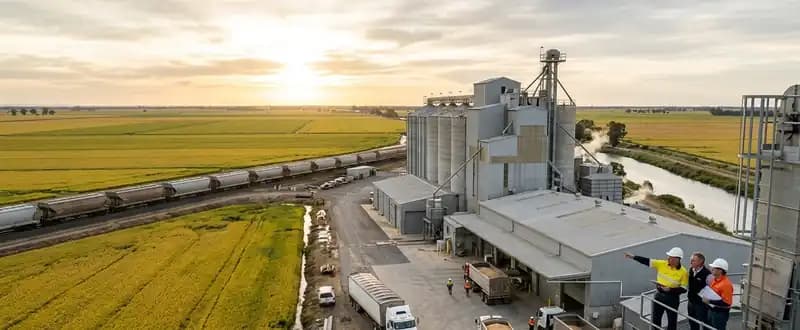
SunRice has announced lower production activity at its Deniliquin and Leeton milling operations in Australia’s Riverina region. The company has started consultations with employees working across milling, logistics, grain receival, storage and regional depots. The changes bring attention to the effect that water availability and crop size can have on processing capacity, employment and rice distribution.
The Riverina produces more than 95% of Australia’s rice in a usual production year. SunRice processes most of that regional crop and supplies domestic and overseas markets. Its local network supports about 650 employees, around 500 growers and nearly 400 small and medium-sized businesses. The company has annual revenue of about A$1.8 billion and contributes close to A$500 million to the southern Murray-Darling Basin economy in a typical year.
Request the Latest Rice Prices Data - Access Price Insights Now
The company linked its operating changes to water-policy settings and said it was monitoring seasonal conditions and the crop outlook. Under the Murray-Darling Basin Plan, the federal government is seeking to return another 450 gigalitres of water to environmental use by 2027. Water purchases reduce the volume available for some agricultural production, though the government says its approach combines environmental recovery, infrastructure investment and support for affected communities.
The production cuts do not establish an immediate nationwide rice shortage. They indicate that lower regional milling requirements may alter plant schedules, storage use and workforce levels. Domestic buyers need to watch whether reduced Riverina output changes allocation between Australian retail demand and export customers. Buyers using Australian medium-grain varieties may have fewer direct substitutes than purchasers of widely traded long-grain rice.
Food processors should ask suppliers for updated crop-receival volumes, milling schedules and stock availability rather than relying on normal-year production assumptions. Companies requiring Australian origin, fixed grain length or defined cooking performance should approve alternative suppliers before stocks tighten. Imported rice can provide another source, but switching origins can affect flavour, texture, packaging claims and lead times.
Export customers should also review shipment schedules from Riverina-linked suppliers. Lower production can change the frequency of milling runs and container loading, even when enough inventory exists to fulfil contracts. Procurement plans should include additional time for origin approval, product trials and revised shipping routes. The operational announcement is a reminder that water policy can move through the chain from farms to mills, warehouses, transport companies and finished-food buyers.
Assistant Manager: Business Insights and Content
Supporting procurement teams with category intelligence, market research, price trends, supply-demand analysis, and strategic sourcing insights across key industries.




We are Just a Text away