Asia
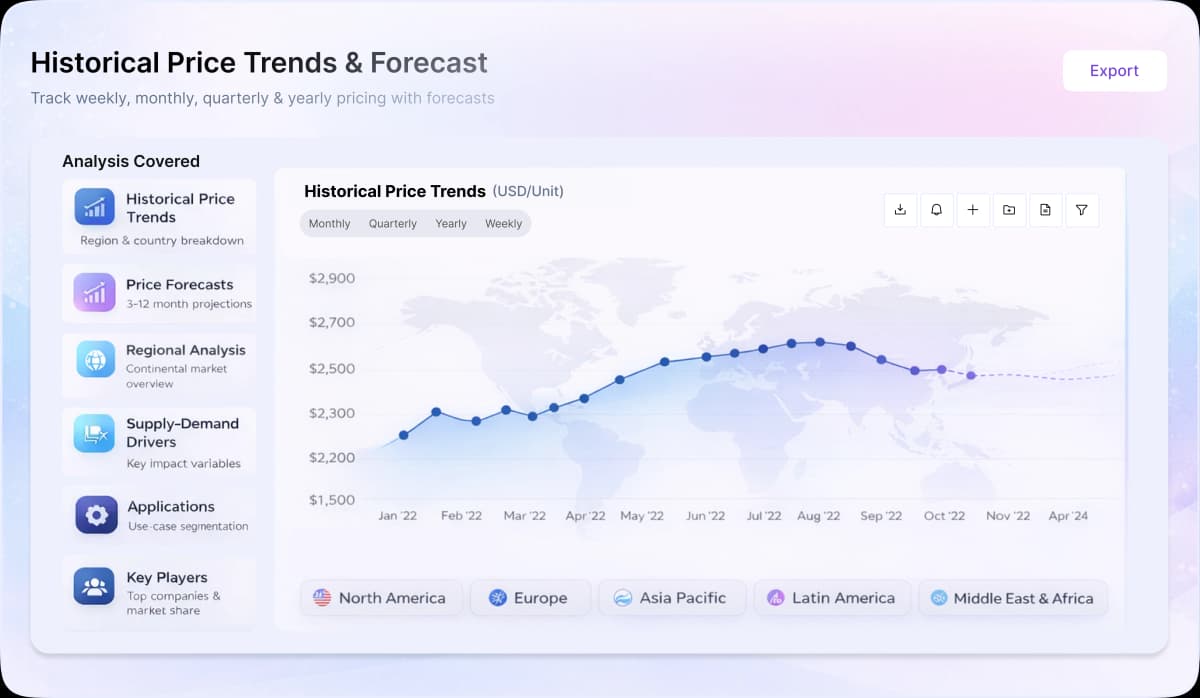
The Asian region experienced fluctuating 2-Aminoethanol prices in 2024. The year began positively in Q1, particularly in India, where tight supply conditions and strong demand from personal care and agrochemical sectors drove prices upward. This trend reversed sharply in Q2 as oversupply and subdued demand created significant downward pressure. The same bearish sentiment continued through Q3.
In Q4, despite rising production costs, the market remained under pressure from excess inventory and weak seasonal demand. Chinese manufacturers offering substantial discounts further challenged regional producers, forcing them to reduce prices and operate at lower capacities.
Europe
Europe's 2-Aminoethanol market displayed predominantly bearish trends throughout 2024. Q1 saw notable price declines as demand weakened, particularly from the cleaning products sector, while farmer protests disrupted agricultural chemical demand. The downward trajectory continued in Q2, with stable but subdued demand and sufficient inventories keeping pressure on prices. Q3 provided a temporary uptrend due to rising Ammonia costs and seasonal agricultural demand that strained supply channels. By Q4, the market returned to bearish conditions as production costs decreased and demand remained weak across key sectors. Excess inventory prompted discounting, but low consumer confidence and financial constraints hampered recovery.
North America
In North America, 2-Aminoethanol prices followed a predominantly downward trajectory throughout 2024. Q1 saw price declines due to reduced demand from cleaning products and personal care sectors, coupled with persistent oversupply issues. During Q2, the downward trend intensified as feedstock costs for Ethylene Oxide and Ammonia decreased, further pressuring prices amid weak demand and high inventories.
Q3 provided temporary relief with a brief price recovery, driven by supply constraints from labour strikes and hurricane disruptions. However, the market reverted to bearish conditions in Q4, with limited downstream demand and ample inventories preventing any significant price improvements.