

Udeesha Tomar
AVP - Strategy and Solutions
Leading procurement research solutions across chemicals, materials, and food & beverages, with expertise in price forecasting and market analytics.

In Q4’25, barium chloride prices remained mostly stable with a slightly firm undertone, influenced by steady industrial demand and balanced supply conditions. The product continued to see consistent consumption from water treatment, pigment manufacturing, and chemical processing sectors. Demand was not very strong, but it remained sufficient to support regular market activity throughout the quarter.
On the cost side, feedstock dynamics played an important role. During the quarter, hydrochloric acid prices showed limited movement, with some regions experiencing mild softness due to weaker steel sector demand. This helped keep production costs under control. At the same time, ongoing structural dependence on imported barite in several markets maintained a firm raw material sentiment, preventing any major price decline.
Supply conditions were generally comfortable, as manufacturers operated at normal production rates and logistics remained smooth. Buyers adopted cautious procurement strategies and avoided building excess inventories, which kept market activity moderate. As a result, barium chloride prices in Q4’25 reflected stability with slight firmness, supported by steady downstream demand and controlled raw material costs.
Analyst Insight
According to Procurement Resource, Barium chloride prices were expected to remain stable in the near term, with changes likely linked to feedstock costs and recovery in industrial demand.
Related Report
Need Latest Barium Chloride Prices?
Get real-time price assessments, periodic trends, forecasts and price driver insights across key global markets.
Our Clients
























Turn price intelligence into action with the Procurement Resource Database. Log in or subscribe to unlock live price trends, historical charts, supplier databases, cost curves, and analyst-backed insights across chemicals, agriculture, energy, packaging, and more. Use these tools to benchmark your contracts, plan budgets with confidence, and stay ahead of market moves on every product you buy.
0
+Products
0
+Regions
0
+Subscriptions
During the third quarter of 2025, the global barium chloride market showed a soft to stable trend. Prices moved slightly downward as raw material support remained weak and energy costs stayed moderate.
Feedstock supply stayed sufficient, especially after Southeast Asia strengthened its position in the barite trade, ensuring stable availability for barium-based chemicals. However, industrial activity slowed in several end-use sectors such as glass, pigments, and water treatment, which reduced overall buying momentum.
Producers continued regular operations, but weaker downstream demand led to mild inventory accumulation. Some manufacturers offered competitive pricing to sustain sales and manage stock levels.
On the other hand, logistical conditions improved, with better port operations in Vietnam and steady trade flows from Asia, which helped maintain overall supply balance in the market. Despite this, limited consumption and cautious purchasing from buyers kept the market sentiment subdued through the quarter.
Analyst Insight
According to Procurement Resource, Barium Chloride prices are expected to remain mostly steady in the coming months as demand recovery looks slow and feedstock costs shows little upward pressure.
Inorganic salt made of barium cations (Ba2+) and chloride anions is known as barium chloride (Cl–). Barium dichloride or barium muriate are other names for it. It is a white solid that is water soluble and hygroscopic in nature. It tints a flame just a little bit yellow-green. Barium salts are widely utilised in the sector. White paints, especially those intended for outdoor use, contain the sulphate. Nature makes barium chloride poisonous.
In the purification of brine solutions used in caustic chlorine plants, BaCl2 is primarily used in the industrial sector. This substance is also used to produce heat treatment salts and to case-harden steel. Due to its high toxicity, this compound only has a few applications.
BaCl2
Paint Industry, Caustic chlorine plants, Steel Industry, Rubber Industry, Wate water treatment
Barium dichloride, Barium muriate
Solvay S.A, Nippon Chemical Industrial, American Elements, Chemical Products Corporation, Chaitanya Chemical, Finoric LLC
CurrencyUS$ (Data can also be provided in local currency)
Supplier Database AvailabilityYes
Customization ScopeThe report can be customized as per the requirements of the customer
Post-Sale Analyst Support360-degree analyst support after report delivery
Note: Our supplier search experts can assist your procurement teams in compiling and validating a list of suppliers indicating they have products, services, and capabilities that meet your company's needs.
Barium chloride from barite involves a two-step process in which barite is first reacted with coke to yield barium sulfur. In the second step, it is then reacted with HCl to obtain barium chloride.
Our Price Analysis Methodology
AVP - Strategy and Solutions
Leading procurement research solutions across chemicals, materials, and food & beverages, with expertise in price forecasting and market analytics.
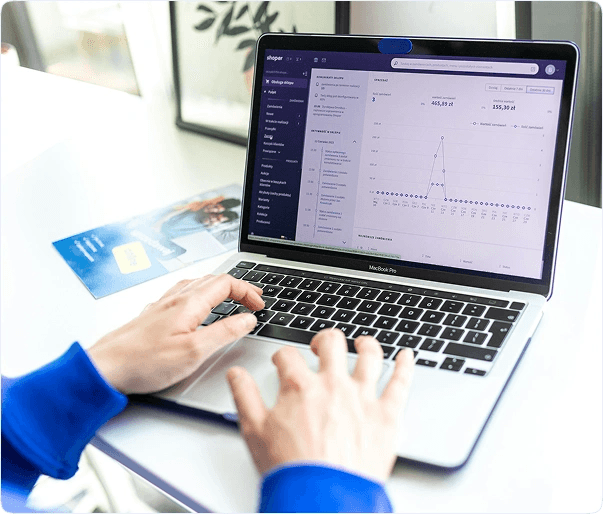
Experience how Procurement Resource transforms raw material price data into clear, decision ready intelligence. Optimise your performance with reliable, expert market data and analysis. Schedule your demo today to experience a live walk-through where our experts will showcase interactive price charts, forecasted prices, and insights driving the prices for your key commodities, tailored to your workflows. Contact us now!
Our Team will be happy to assist you
We are just a text away
Still Need Help?
Unlock full access to Procurement Resource's price databases, interactive charts, and short-term forecasts for thousands of commodities. Elevate your sourcing decisions by comparing prices across regions, downloading historical data, and layering in analyst-backed insights, all with our flexible plans that scale as your portfolio grows.
Still have any Questions
Contact Us



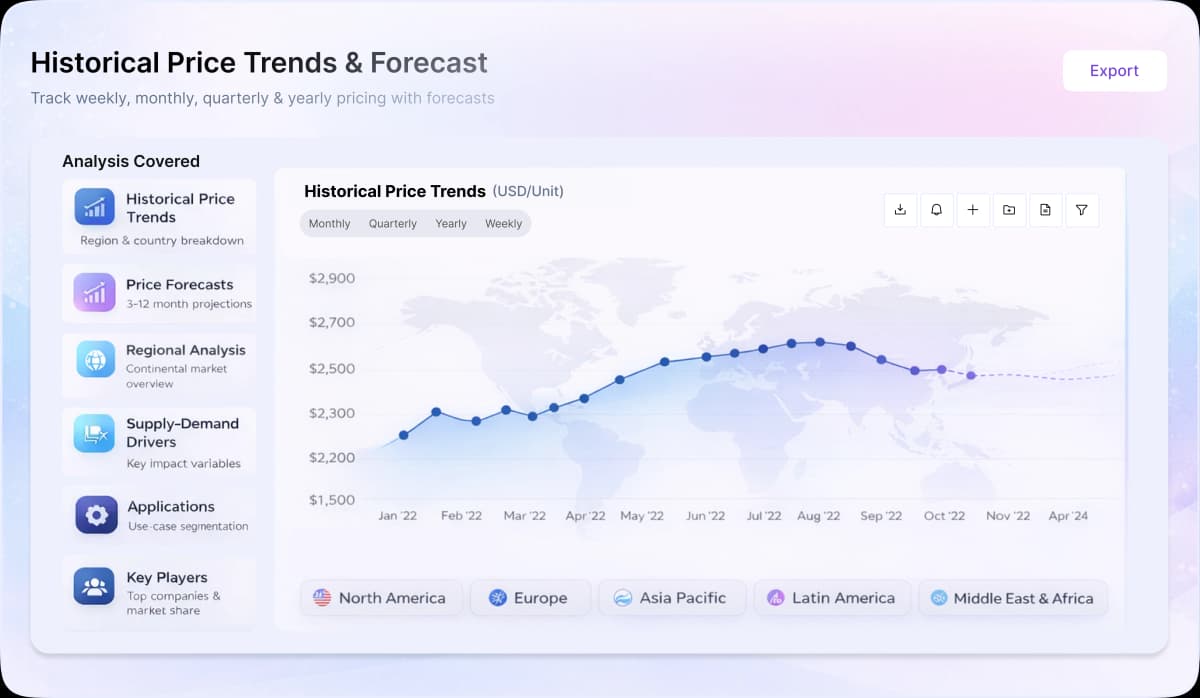
Price Trend Dashboard - What's Included
Price trends across a diverse portfolio of categories and products, spanning board to niche chemicals
Coverage extendable to grade-specific chemicals based on procurement requirements
Regular price tracking supported by robust historical datasets
News, policy updates, and key market drivers impacting price movements
Short-term and long-term price outlooks and forecasts
Supply–demand dynamics and capacity-driven market analysis

Track prices, market movements, supply-demand dynamics, and industry developments across hundreds of commodities through a centralized intelligence platform built for informed procurement decisions.

Understand market fluctuations using analyst-backed forecasts, historical pricing patterns, and evolving industry trends to strengthen sourcing strategies and budget planning.

Leverage cost models, pricing benchmarks, and procurement insights to evaluate purchasing opportunities, improve negotiations, and enhance operational efficiency.
Access region-specific price trends, trade activities, capacity changes, and supply chain developments influencing commodity markets worldwide.