Bauxite Price Trend Analysis 2026: Price Drivers, Supply Demand Analysis, Market Insights, Historical Prices & Latest News

Shriya Singh profile photo
Written ByShriya Singh

Procurement Resource Database

Laptop screen

Turn price intelligence into action with the Procurement Resource Database. Log in or subscribe to unlock live price trends, historical charts, supplier databases, cost curves, and analyst-backed insights across chemicals, agriculture, energy, packaging, and more. Use these tools to benchmark your contracts, plan budgets with confidence, and stay ahead of market moves on every product you buy.

Bauxite Dashboard Inclusions

Bauxite Price Dasboard

0

+

Products

0

+

Regions

0

+

Subscriptions

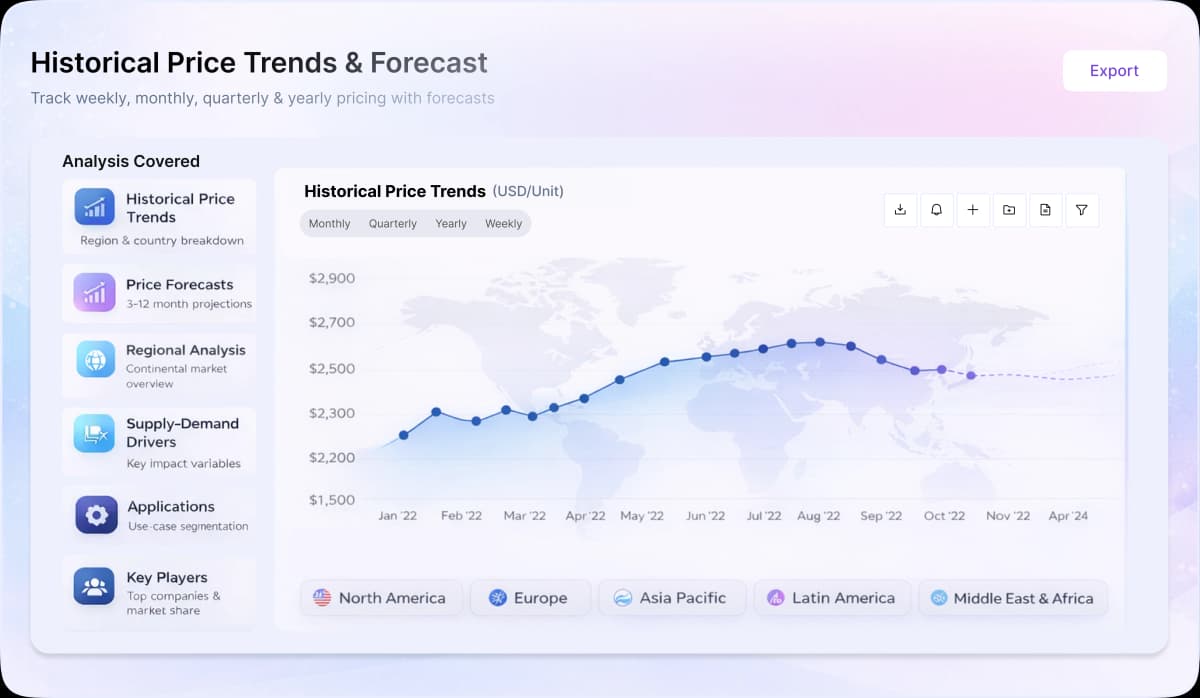
  • Global bauxite prices showed a mixed trend in Q1 2026, as improved supply weighed on prices while war-led logistics disruptions created intermittent upward pressure.
  • Feedstock dynamics reflected easing ore costs due to higher availability, although the closure of key shipping routes raised freight and insurance expenses.
  • Downstream demand remained cautious, with weak alumina market conditions limiting procurement despite periodic cost support from supply chain disruptions.

Asia

In Asia, bauxite prices followed a fluctuating trend as strong supply growth from Guinea countered cost-side pressures. Guinea’s exports rose by about 25% in 2025, with over 70% directed to China, improving regional availability and pushing prices downward at intervals. However, the Iran war increased freight costs and disrupted shipping routes, raising landed costs and creating short-term price rebounds. At the same time, additional alumina refining capacity in China and Indonesia reduced the urgency for raw material purchases, keeping demand subdued and leading to alternating periods of decline and recovery.

Europe

In Europe, bauxite prices moved in a mixed pattern as import dependence exposed the region to both global oversupply and logistics disruptions. Improved supply from West Africa reduced competition for cargoes and pressured prices, while rising freight and insurance costs due to the Iran war intermittently increased import costs. Concerns over potential export quotas in Guinea added uncertainty to long-term supply agreements, resulting in oscillating price movements rather than a clear directional trend.

North America

In North America, bauxite prices remained oscillating as soft global fundamentals were offset by logistical challenges. Higher availability from international suppliers and weaker alumina prices reduced procurement urgency, keeping downward pressure on prices. However, war-related disruptions increased transportation costs and delayed shipments, periodically tightening supply chains and supporting temporary price increases. The balance between ample supply and elevated logistics costs kept the market range-bound.

About Bauxite

Bauxite is a sedimentary rock composed primarily of aluminum oxide minerals, like gibbsite, boehmite, and diaspore, along with various impurities. It is the primary source of aluminum metal and extensively mined worldwide. Through the Bayer process, bauxite is refined to extract alumina, which is then smelted to produce aluminum.

This lightweight and corrosion-resistant metal finds numerous applications in industries such as aerospace, transportation, construction, and packaging. Bauxite is also used to manufacture refractories, abrasives, and chemicals. Despite its industrial significance, bauxite mining and processing can have environmental challenges, requiring sustainable practices to mitigate impacts.

Bauxite Product Detail

Hs Code
26060020
Chemical Formula

Al2O3·2H2O

Cas Number
1318-16-7
Molecular Weight
119.977 g/mol
Industrial Uses

Aluminium production, Refining, Refractories, Cement, Abrasives

Supplier Database

Alcoa Corporation, Aluminium Corporation of China Limited, Norsk Hydro ASA, NALCO India, Hindalco Industries Ltd, Emirates Global Aluminium PJSC

Regional Coverage

Asia Pacific

China, India, Indonesia, Pakistan, Bangladesh, Japan, Philippines, Vietnam, Iran, Thailand, South Korea, Iraq, Saudi Arabia, Malaysia, Nepal, Taiwan, Sri Lanka, UAE, Israel, Hongkong, Singapore, Oman, Kuwait, Qatar, Australia, and New Zealand

Europe

Germany, France, United Kingdom, Italy,Spain, Russia, Turkey, Netherlands, Poland, Sweden, Belgium, Austria, Ireland Switzerland, Norway, Denmark, Romania, Finland, Czech Republic, Portugal and Greece

North America

United States and Canada

Latin America

Brazil, Mexico, Argentina, Columbia, Chile, Ecuador, and Peru

Africa

South Africa, Nigeria, Egypt, Algeria, Morocco

CurrencyUS$ (Data can also be provided in local currency)

Supplier Database AvailabilityYes

Customization ScopeThe report can be customized as per the requirements of the customer

Post-Sale Analyst Support360-degree analyst support after report delivery

Note: Our supplier search experts can assist your procurement teams in compiling and validating a list of suppliers indicating they have products, services, and capabilities that meet your company's needs.

Bauxite Production Processes

  • Bauxite Production from Bayer process

The ore is first washed and then crushed into smaller parts. These particles are then mixed with used liquor to create a slurry that is simple to pump. Desilication, which takes the silica out of the content, follows the procedure. After that, the mineral mixture is added to a tank containing caustic soda, which will react with the mixture to produce sodium aluminate and other materials.

Alumina would then precipitate on the solution as the final product is allowed to age. The alumina is next cleaned, refined, and calcined to remove any remaining impurities before being sent for smelting to produce aluminum metal.

Frequently Asked Questions

Bauxite prices remained cost-sensitive, supported by steady alumina and aluminium demand, freight costs, and supply risks from key mining regions. In the U.S. market, the average import unit value for bauxite was estimated slightly higher in 2025 compared with 2024.
The bauxite market is expected to remain supported by alumina refinery demand and aluminium production growth. Prices may stay firm if logistics issues, mine disruptions, or policy changes affect supply from major producing countries.
Bauxite is mainly refined through the Bayer process to produce alumina, which is then used in aluminium smelting. This makes bauxite pricing closely linked to alumina refinery demand and aluminium market conditions.
Bauxite prices were pressured by higher Guinea exports, with most shipments moving to China and improving raw material availability. However, Iran’s war-related shipping disruption raised freight and landed costs, while new alumina capacity in China and Indonesia kept spot buying moderate, causing prices to move between short declines and brief recoveries.
Guinea, Australia, China, Brazil, and India are the major bauxite-producing countries. These countries dominate global supply due to large reserves, established mining operations, and strong links with alumina refining.
Alumina and aluminium production are the main demand drivers for bauxite. Non-metallurgical uses also include abrasives, cement, chemicals, proppants, refractories, and steel mill slag adjustment.
In late March 2026, Guinea announced the Guinea Bauxite Index, a national benchmark intended to improve pricing transparency for bauxite exports. This development is important because Guinea is the world’s largest bauxite exporter, so pricing reforms can affect global trade negotiations and future contract structures.
Bauxite is commonly traded through long-term supply agreements and spot cargoes based on origin, ore grade, moisture, alumina content, reactive silica, freight, and delivery terms. Refiners usually prefer stable supply contracts due to consistent feedstock needs.
Procurement Resource employs a structured methodology combining primary research, secondary market data, analytical models, and validation processes to assess commodity prices and trends. Price evaluations incorporate supply-demand dynamics, mining activity, refining demand, trade flows, logistics, and value chain analysis, trade flows, supported by continuous market monitoring to ensure accurate and reliable insights.

About the Author

Shriya Singh profile photo

Shriya Singh

Business Insights Analyst

Helping procurement and sourcing teams navigate complex markets through data-driven research, category intelligence, and actionable insights - with a focus on identifying market trends, analyzing supply-side developments, and delivering clear intelligence that supports informed business decisions.

Our Price Analysis Methodology

Schedule Demo

Schedule a demo

Experience how Procurement Resource transforms raw material price data into clear, decision ready intelligence. Optimise your performance with reliable, expert market data and analysis. Schedule your demo today to experience a live walk-through where our experts will showcase interactive price charts, forecasted prices, and insights driving the prices for your key commodities, tailored to your workflows. Contact us now!

Our Team will be happy to assist you

We are just a text away

+1

Still Need Help?

Europe & Africa

+44 7573 171117

[email protected]

USA & Canada

+1 307 363 1045

[email protected]

APAC

+91 8850629517

[email protected]

Unlock full access to Procurement Resource's price databases, interactive charts, and short-term forecasts for thousands of commodities. Elevate your sourcing decisions by comparing prices across regions, downloading historical data, and layering in analyst-backed insights, all with our flexible plans that scale as your portfolio grows.

Still have any Questions

Contact Us
Mastercard
Wire
VISA
Stripe

Why Procurement Database

Commodity Market Intelligence

Commodity Market Intelligence

Track prices, market movements, supply-demand dynamics, and industry developments across hundreds of commodities through a centralized intelligence platform built for informed procurement decisions.

Price Forecasts & Market Outlooks

Price Forecasts & Market Outlooks

Understand market fluctuations using analyst-backed forecasts, historical pricing patterns, and evolving industry trends to strengthen sourcing strategies and budget planning.

Cost & Procurement Optimization

Cost & Procurement Optimization

Leverage cost models, pricing benchmarks, and procurement insights to evaluate purchasing opportunities, improve negotiations, and enhance operational efficiency.

Global & Regional Market Insights

Global & Regional Market Insights

Access region-specific price trends, trade activities, capacity changes, and supply chain developments influencing commodity markets worldwide.

1/4