Benzyl Salicylate Price Trend Analysis 2026: Market Insights, Price Drivers, Latest News, Historical Prices & Supply Demand Analysis

Pragati Agarwal profile photo
Written ByPragati Agarwal

Procurement Resource Database

Laptop screen

Turn price intelligence into action with the Procurement Resource Database. Log in or subscribe to unlock live price trends, historical charts, supplier databases, cost curves, and analyst-backed insights across chemicals, agriculture, energy, packaging, and more. Use these tools to benchmark your contracts, plan budgets with confidence, and stay ahead of market moves on every product you buy.

0

+

Products

0

+

Regions

0

+

Subscriptions

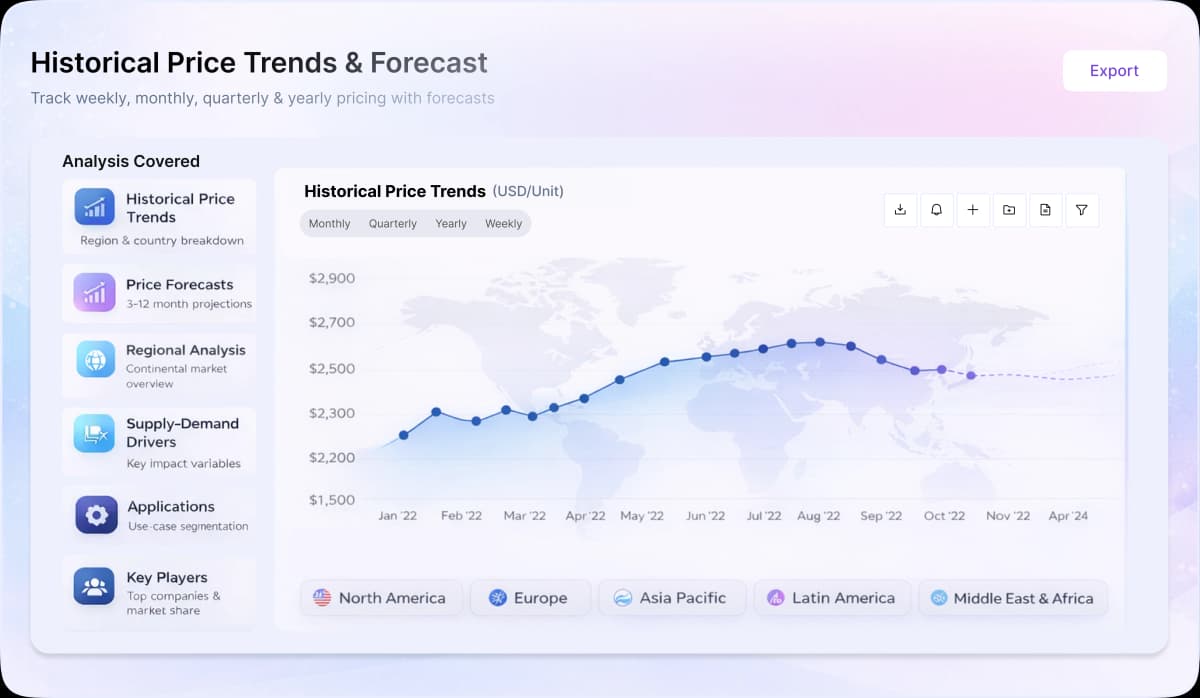
The Benzyl Salicylate prices during the quarter reflected moderate fluctuations influenced by upstream cost movements and downstream consumption patterns. Market sentiment shifted in response to changing feedstock economics, particularly movements in salicylic acid, which affected production costs for manufacturers. Early in the quarter, softer upstream pricing encouraged suppliers to maintain stable offers, while buyers adopted cautious purchasing strategies. According to the Benzyl Salicylate price database, supply availability remained adequate, preventing sharp price adjustments despite cost variability.

As the quarter progressed, rising feedstock costs increased pressure on production margins, prompting suppliers to reassess pricing strategies. However, pass-through into the Benzyl Salicylate latest price remained limited due to measured demand from end-use segments. Consumption from fragrance compounding, personal care formulations, and cosmetic manufacturing stayed steady, with buyers focusing on operational coverage rather than inventory buildup.

Trade activity remained routine and import volumes met regional requirements without causing supply tightness. The Benzyl Salicylate price curve showed mostly range-bound movement, as balanced supply-demand conditions offset upstream volatility. The price graph reflected short-lived adjustments rather than sustained directional shifts, highlighting cautious market behaviour throughout the quarter.


About Benzyl Salicylate

Benzyl salicylate, a colourless to pale yellow clear oily liquid, is a salicylic acid benzyl ester. It is a chemical compound that is frequently utilised as a fragrance additive in cosmetics owing to its sweet floral, balsamic odour. It is also useful in savoury spices, sweets, and other products.
Benzyl Salicylate Product Detail

Chemical Formula

C14H12O3

CAS Number
118-58-1
Molecular Weight
228.24 g/mol
Industrial Uses

Fragrance and Flavouring Agent, Personal Care Products, UV Absorber in Cosmetics, Solvent, Fixative in Floral Perfumes

Synonyms

Benzyl 2-hydroxybenzoate, Benzyl o-hydroxybenzoate

Supplier Database

Eternis Fine Chemicals Ltd, Haihang Industry Co., Ltd, Symerise AG , Moellhausen S.p.A, Ungerer and Company

Regional Coverage

Asia Pacific

China, India, Indonesia, Pakistan, Bangladesh, Japan, Philippines, Vietnam, Iran, Thailand, South Korea, Iraq, Saudi Arabia, Malaysia, Nepal, Taiwan, Sri Lanka, UAE, Israel, Hongkong, Singapore, Oman, Kuwait, Qatar, Australia, and New Zealand

Europe

Germany, France, United Kingdom, Italy,Spain, Russia, Turkey, Netherlands, Poland, Sweden, Belgium, Austria, Ireland Switzerland, Norway, Denmark, Romania, Finland, Czech Republic, Portugal and Greece

North America

United States and Canada

Latin America

Brazil, Mexico, Argentina, Columbia, Chile, Ecuador, and Peru

Africa

South Africa, Nigeria, Egypt, Algeria, Morocco

CurrencyUS$ (Data can also be provided in local currency)

Supplier Database AvailabilityYes

Customization ScopeThe report can be customized as per the requirements of the customer

Post-Sale Analyst Support360-degree analyst support after report delivery

Note: Our supplier search experts can assist your procurement teams in compiling and validating a list of suppliers indicating they have products, services, and capabilities that meet your company's needs.

Benzyl Salicylate Production Processes

  • Production of Benzyl Salicylate via Reaction between Benzyl Chloride and Sodium Salicylate using a Phase Transfer Catalyst; and via Esterification of Benzyl Alcohol with Salicylic Acid

In the esterification process, benzyl alcohol and salicylic acid are used as the starting materials. The esterification of these two substances produces Benzyl Salicylate as the result.

Frequently Asked Questions

The benzyl salicylate outlook for 2026 remains steady-to-firm, with prices expected to stay largely range-bound. Elevated salicylic acid feedstock costs anchor the price floor, while balanced supply, supported by adequate benzyl alcohol availability, prevents tightening. Consistent offtake from fragrance compounding, personal care, and cosmetic manufacturing provides steady demand, though need-based procurement tempers aggressive cost pass-through. The trajectory could shift upward if salicylic acid costs accelerate or fragrance and personal care offtake picks up, while sustained feedstock easing or weaker downstream consumption could soften the floor.
Benzyl salicylate prices are driven primarily by salicylic acid feedstock costs, the principal input, alongside benzyl alcohol availability, which together set the underlying production economics. When salicylic acid costs run elevated but supply stays adequate, underlying firmness persists without sharp upward moves. European prices generally carry a premium reflecting higher conversion costs, while North American prices tend to move in sympathy on routine import flows. Consistent but measured offtake from fragrance compounding and personal care manufacturers favours need-based procurement, keeping feedstock cost pass-through moderate rather than aggressive.
China and India dominate benzyl salicylate production and exports, with salicylic acid sourced from phenol-based producers in both markets. Europe maintains active manufacturing at a price premium due to higher conversion costs, while North America relies on imports tracking global prices. Key companies spanning production and trading roles include Eternis Fine Chemicals Ltd, Haihang Industry Co., Ltd, Symrise AG, Moellhausen S.p.A, and Ungerer and Company. Heavy concentration in China and India means any upstream disruption to salicylic acid or benzyl alcohol availability directly threatens fragrance and personal care buyers worldwide.
Benzyl salicylate is produced via esterification of salicylic acid with benzyl alcohol at around 140 °C using an acid catalyst such as zinc oxide, with toluene added to remove water. Salicylic acid and benzyl alcohol together account for roughly 60-75% of raw material costs, with about 0.65-0.75 MT of salicylic acid and 0.55-0.70 MT of benzyl alcohol consumed per MT of product. Alternative routes include transesterification of methyl salicylate with benzyl alcohol, or reacting sodium salicylate with benzyl chloride using a phase-transfer catalyst.


Fragrance compounding is the dominant demand driver, where benzyl salicylate acts as a fixative and solvent to stabilise floral scents in perfumes. Personal care and cosmetic manufacturers are the second major consumer, leveraging its dual role as a fragrance ingredient and UV light protector in lotions, creams, shampoos, and soaps. The food industry also contributes demand as a flavour enhancer and preservative. Together, these end-uses create steady, need-based procurement that keeps pricing range-bound, with salicylic acid feedstock costs providing the primary floor for production economics.
Benzyl Salicylate is available in fragrance, cosmetic, and technical grades, each meeting distinct purity and regulatory benchmarks. Fragrance grade prioritizes olfactory performance for fine perfumes and personal care. Cosmetic grade meets stricter purity, color, and allergen-labeling requirements for lotions, creams, and sun care, where UV-absorbing function matters. Technical grade serves soaps, detergents, and cleaning products where cost efficiency is paramount.
Procurement Resource assesses benzyl salicylate prices via a structured, data-driven methodology. It engages producers, suppliers, and traders for real transaction data and sentiment, supplemented by secondary market data. The assessment continuously monitors feedstock and input costs, trade flows, and inventories, validating findings against exchange or spot benchmarks. These inputs are reconciled into a transparent price assessment reflecting supply-demand fundamentals and downstream fragrance industry dynamics, delivering reliable, actionable intelligence for procurement sourcing decisions.

Our Price Analysis Methodology

About the Author

Pragati Agarwal profile photo

Pragati Agarwal

Senior Business Insights Analyst

Delivering price trend analysis and procurement market insights at Procurement Resource, with expertise in identifying commodity patterns, supporting purchasing strategies, and improving cost efficiency through actionable market intelligence.

Schedule Demo

Schedule A Demo

Experience how Procurement Resource transforms raw material price data into clear, decision ready intelligence. Optimise your performance with reliable, expert market data and analysis. Schedule your demo today to experience a live walk-through where our experts will showcase interactive price charts, forecasted prices, and insights driving the prices for your key commodities, tailored to your workflows. Contact us now!

Our Team will be happy to assist you

We are just a text away

+1

Still Need Help?

Europe & Africa

+44 7573 171117

[email protected]

USA & Canada

+1 307 363 1045

[email protected]

APAC

+91 8850629517

[email protected]

Other Related Reports

2-Hydroxybenzoic Acid Production from Aspirin or Methyl Salicylate (oil of wintergreen) via Hydrolysis

This report presents a detailed cost analysis of 2-hydroxybenzoic acid production from aspirin or methyl salicylate using hydrolysis.

Unlock full access to Procurement Resource's price databases, interactive charts, and short-term forecasts for thousands of commodities. Elevate your sourcing decisions by comparing prices across regions, downloading historical data, and layering in analyst-backed insights, all with our flexible plans that scale as your portfolio grows.

Still have any Questions

Contact Us
Mastercard
Wire
VISA
Stripe

Related News

View All

Why Procurement Database

Commodity Market Intelligence

Commodity Market Intelligence

Track prices, market movements, supply-demand dynamics, and industry developments across hundreds of commodities through a centralized intelligence platform built for informed procurement decisions.

Price Forecasts & Market Outlooks

Price Forecasts & Market Outlooks

Understand market fluctuations using analyst-backed forecasts, historical pricing patterns, and evolving industry trends to strengthen sourcing strategies and budget planning.

Cost & Procurement Optimization

Cost & Procurement Optimization

Leverage cost models, pricing benchmarks, and procurement insights to evaluate purchasing opportunities, improve negotiations, and enhance operational efficiency.

Global & Regional Market Insights

Global & Regional Market Insights

Access region-specific price trends, trade activities, capacity changes, and supply chain developments influencing commodity markets worldwide.

1/4