Bio-Butanol Price Trend Analysis 2026: Price Drivers, Historical Prices, Market Insights, Latest News & Supply Demand Analysis

Udeesha Tomar profile photo
Written ByUdeesha Tomar

Procurement Resource Database

Laptop screen

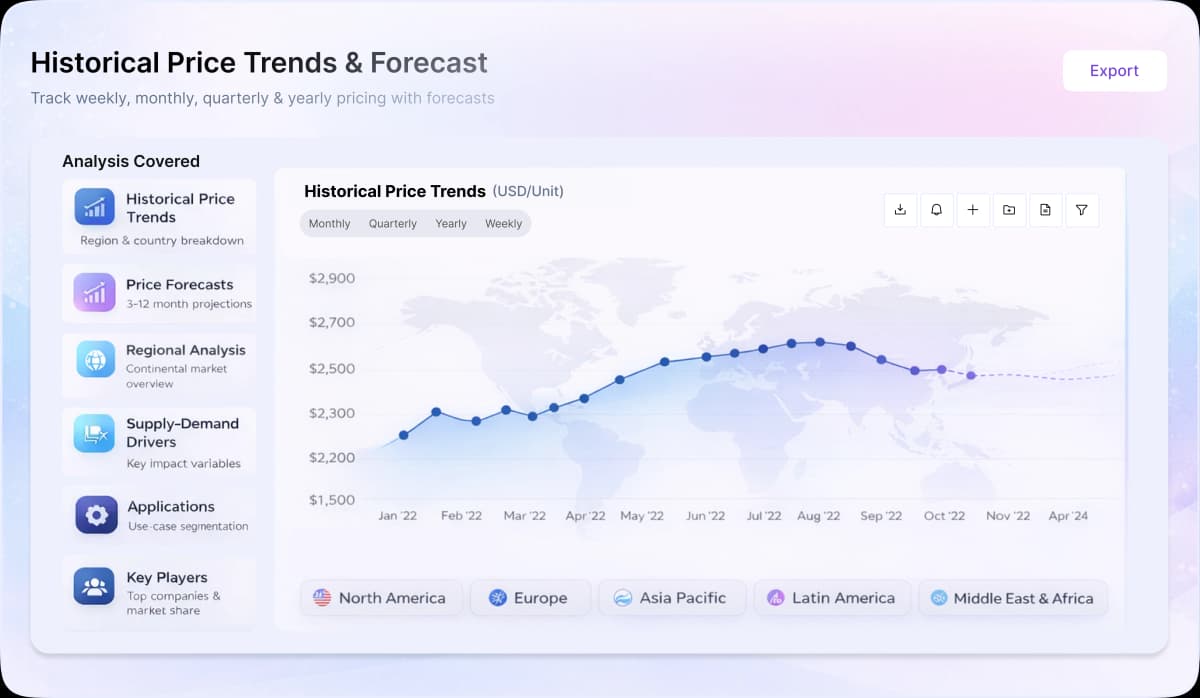
Turn price intelligence into action with the Procurement Resource Database. Log in or subscribe to unlock live price trends, historical charts, supplier databases, cost curves, and analyst-backed insights across chemicals, agriculture, energy, packaging, and more. Use these tools to benchmark your contracts, plan budgets with confidence, and stay ahead of market moves on every product you buy.

0

+

Products

0

+

Regions

0

+

Subscriptions

Asia

Asian Bio-Butanol prices witnessed fluctuating price patterns throughout the first half of 2023. Prices mostly wavered on the higher end of the curve. Bio-Butanol is sourced from feedstock crops like wheat and corn. Corn prices remained high swinging in the Asia Pacific as the Black Sea agreement between Russia, Ukraine, Turkey, and the United Nations ended after the first quarter of this year.

Further, the disruptions in agriculture sectors because of disturbed rainfall patterns also hindered the corn and wheat supplies. Overall, the prices dwelled high for Bio-Butanol in the Asian region as the production costs inclined because of rising feedstock prices.

Europe

European region behaved in an oscillating manner for the Bio-Butanol prices, as good harvest season in America ensured supplies in the first quarter, so the Bio-Butanol prices had a dim start in January 2023. But from the middle of the second quarter, the termination of the Black Sea agreement started affecting the European market. Feedstock wheat and corn prices kept riding high, pushing the price trend for Bio-Butanol up.

North America

The North American Bio-Butanol market witnessed mixed price trend in H1 2023. In Q1, prices declined because of good harvests and added supplies from Ukraine. But as the European supplies curtailed the following quarter, prices started ramping up as more supplies were diverted for food. Hence, the Bio-Butanol prices kept on an inclined trajectory in Q2.


About Bio-Butanol

Butanol made from biomass feedstocks is called biobutanol. Biobutanol, when compared with ethanol, has a lot of benefits such as its immiscibility in water, higher energy content, and a lower Reid vapour pressure.

Bio-Butanol Product Detail

Chemical Formula

C4H9OH

Molecular Weight
74.12 g/mol
Industrial Uses

Transport fuel

Supplier Database

Abengoa, Biocleave Limited, Bioenergy International, Butalco GmBH (Lesaffre), Butamax Advanced Biofuels LLC (BP and Corteva), Eastman Chemical Company, Gevo Inc

Regional Coverage

Asia Pacific

China, India, Indonesia, Pakistan, Bangladesh, Japan, Philippines, Vietnam, Iran, Thailand, South Korea, Iraq, Saudi Arabia, Malaysia, Nepal, Taiwan, Sri Lanka, UAE, Israel, Hongkong, Singapore, Oman, Kuwait, Qatar, Australia, and New Zealand

Europe

Germany, France, United Kingdom, Italy,Spain, Russia, Turkey, Netherlands, Poland, Sweden, Belgium, Austria, Ireland Switzerland, Norway, Denmark, Romania, Finland, Czech Republic, Portugal and Greece

North America

United States and Canada

Latin America

Brazil, Mexico, Argentina, Columbia, Chile, Ecuador, and Peru

Africa

South Africa, Nigeria, Egypt, Algeria, Morocco

CurrencyUS$ (Data can also be provided in local currency)

Supplier Database AvailabilityYes

Customization ScopeThe report can be customized as per the requirements of the customer

Post-Sale Analyst Support360-degree analyst support after report delivery

Note: Our supplier search experts can assist your procurement teams in compiling and validating a list of suppliers indicating they have products, services, and capabilities that meet your company's needs.

Bio-Butanol Production Processes

  • Production of Bio-Butanol from Biomass Feedstock via Fermentation

Simple sugars in bio-mass feedstock produce bio-butanol using the fermentation process, otherwise known as the Acetone Butanol Ethanol (ABE) process. Under anaerobic conditions, a microbial species, Clostridium acetobutylicum bacterium, is employed to create bio-butanol with ethanol and acetone as byproducts.

Related Report

Frequently Asked Questions

The bio-butanol outlook is shaped by the ABE-fermentation feedstock complex, including glucose syrup, cassava hydrolysate, sugarcane syrup, and molasses, alongside crude oil and propylene costs, since bio-butanol competes with and is benchmarked against fossil-based alternatives. Regional supply-demand balance matters as much as feedstock costs: production running ahead of downstream offtake in petrochemical, coatings, and transport-fuel blending applications tends to build inventories and pressure prices, while plant maintenance shutdowns or a pickup in downstream procurement can tighten the market. Asian import flows remain a key swing factor for regional price divergence.
Bio-butanol prices are shaped by regional feedstock and demand dynamics that can diverge markedly between regions. In Asia, supply chain disruptions and elevated feedstock costs can squeeze availability and lift prices when paired with healthy downstream procurement, though plant maintenance shutdowns, falling feedstock costs, or a surge in overseas imports can quickly reverse that trend. In Europe and North America, subdued downstream demand combined with robust production tends to build inventories and prompt destocking, while falling propylene and crude oil costs, the key feedstocks, further ease production expenses and reinforce softer pricing.
Key producing companies include Butamax Advanced Biofuels LLC (US, a BP and Corteva partnership), Gevo Inc (US), Eastman Chemical Company (US), Butalco GmbH backed by Lesaffre (Germany), Abengoa (Spain), Biocleave Limited (UK), and Bioenergy International. Production is concentrated in North America and Europe, while Asia Pacific represents the primary consuming region, creating a notable east-west supply chain split that buyers monitor for logistics and feedstock cost exposure.
Bio-butanol is produced via the ABE fermentation process using biomass-derived feedstocks including glucose syrup, dextrose, cassava hydrolysate, sugarcane syrup, molasses, and lignocellulosic hydrolysate. Starch feedstocks are liquefied and saccharified to glucose, while molasses is clarified and diluted. A solventogenic Clostridium culture such as C. acetobutylicum or C. beijerinckii converts sugars to bio-butanol anaerobically at 30 to 37 degrees Celsius, with pH shifting from around 6.0 toward 4.5.
Bio-butanol demand is driven by the petrochemical, coatings, plastics and fibers, and transport fuel industries. It is blended with gasoline in the petrochemical sector due to its higher energy content and low volatility, and used as a raw material in paints, chemical coatings, and polymer production. Regional procurement patterns can diverge sharply: healthy downstream buying in Asia tends to provide price support, while subdued buying in Europe and North America, combined with robust production and rising inventories, tends to exert downward price pressure.
Procurement Resource assesses bio-butanol prices through a structured, data-driven methodology combining primary engagement with producers, suppliers and traders, secondary market data, monitoring of feedstock and input costs, trade-flow and inventory tracking, and exchange or spot benchmarks. These inputs are validated and translated into a transparent price assessment and outlook. The detailed methodology is available on the Procurement Resource website.

Our Price Analysis Methodology

About the Author

Udeesha Tomar profile photo

Udeesha Tomar

AVP - Strategy and Solutions

Leading procurement research solutions across chemicals, materials, and food & beverages, with expertise in price forecasting and market analytics.

Schedule Demo

Schedule A Demo

Experience how Procurement Resource transforms raw material price data into clear, decision ready intelligence. Optimise your performance with reliable, expert market data and analysis. Schedule your demo today to experience a live walk-through where our experts will showcase interactive price charts, forecasted prices, and insights driving the prices for your key commodities, tailored to your workflows. Contact us now!

Our Team will be happy to assist you

We are just a text away

+1

Still Need Help?

Europe & Africa

+44 7573 171117

Sales@procurementresource.com

USA & Canada

+1 307 363 1045

Sales@procurementresource.com

APAC

+91 8850629517

Sales@procurementresource.com

Unlock full access to Procurement Resource's price databases, interactive charts, and short-term forecasts for thousands of commodities. Elevate your sourcing decisions by comparing prices across regions, downloading historical data, and layering in analyst-backed insights, all with our flexible plans that scale as your portfolio grows.

Still have any Questions

Contact Us
Mastercard
Wire
VISA
Stripe

Why Procurement Database

Commodity Market Intelligence

Commodity Market Intelligence

Track prices, market movements, supply-demand dynamics, and industry developments across hundreds of commodities through a centralized intelligence platform built for informed procurement decisions.

Price Forecasts & Market Outlooks

Price Forecasts & Market Outlooks

Understand market fluctuations using analyst-backed forecasts, historical pricing patterns, and evolving industry trends to strengthen sourcing strategies and budget planning.

Cost & Procurement Optimization

Cost & Procurement Optimization

Leverage cost models, pricing benchmarks, and procurement insights to evaluate purchasing opportunities, improve negotiations, and enhance operational efficiency.

Global & Regional Market Insights

Global & Regional Market Insights

Access region-specific price trends, trade activities, capacity changes, and supply chain developments influencing commodity markets worldwide.

1/4