Borosilicate Glass Price Trend Analysis 2026: Historical Prices, Market Insights, Latest News, Supply Demand Analysis & Price Drivers

Udeesha Tomar profile photo
Written ByUdeesha Tomar

Procurement Resource Database

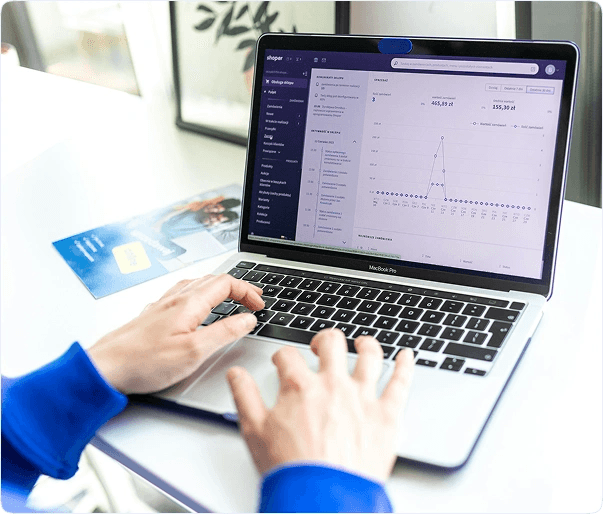
Laptop screen

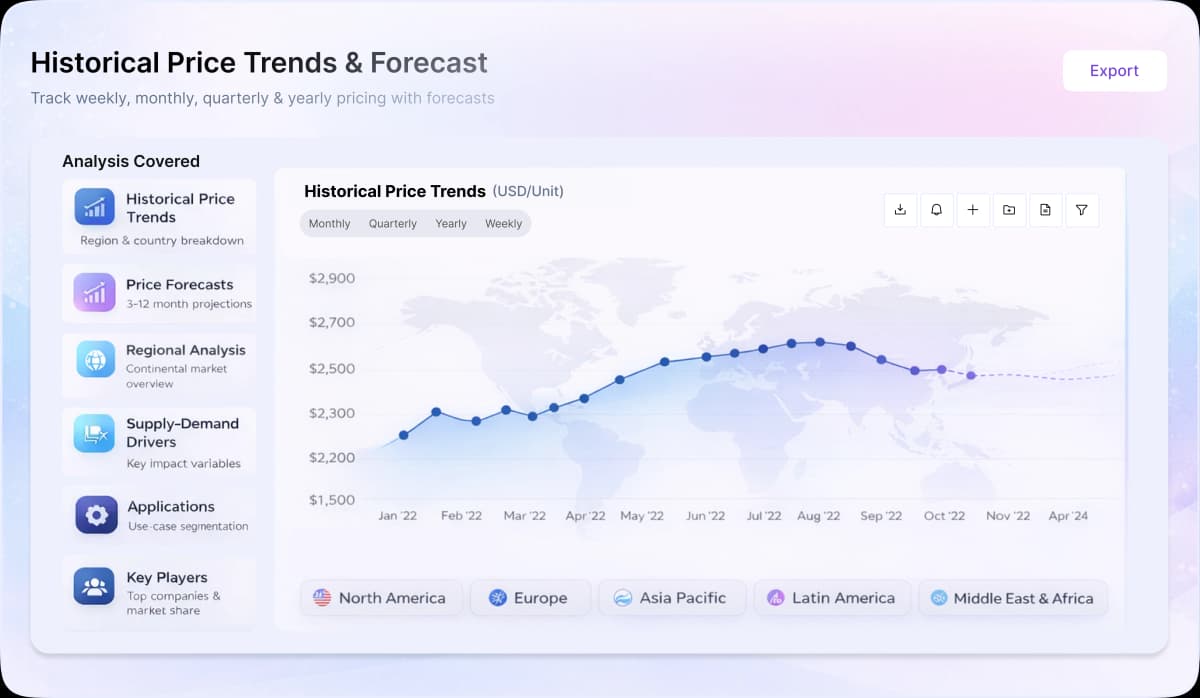
Turn price intelligence into action with the Procurement Resource Database. Log in or subscribe to unlock live price trends, historical charts, supplier databases, cost curves, and analyst-backed insights across chemicals, agriculture, energy, packaging, and more. Use these tools to benchmark your contracts, plan budgets with confidence, and stay ahead of market moves on every product you buy.

0

+

Products

0

+

Regions

0

+

Subscriptions

About Borosilicate Glass

Borosilicate glass is a specialty glass containing significant amounts of boron oxide and silica. It offers excellent thermal resistance, chemical durability, and low thermal expansion compared with conventional glass. These properties allow it to withstand rapid temperature changes and exposure to harsh chemicals, making it suitable for laboratory, industrial, pharmaceutical, and household applications.

Borosilicate Glass Product Detail

Hs Code
7017
Chemical Formula

SiO2·B2O3·Na2O·Al2O3

Synonyms

Borosilicate Glass, Heat Resistant Glass, Pyrex Glass, Laboratory Glass

Supplier Database

SCHOTT AG, Corning Incorporated, AGC Inc., Nippon Electric Glass Co., Ltd., Saint-Gobain, Borosil Renewables Limited

Regional Coverage

Asia Pacific

China, India, Indonesia, Pakistan, Bangladesh, Japan, Philippines, Vietnam, Iran, Thailand, South Korea, Iraq, Saudi Arabia, Malaysia, Nepal, Taiwan, Sri Lanka, UAE, Israel, Hongkong, Singapore, Oman, Kuwait, Qatar, Australia, and New Zealand

Europe

Germany, France, United Kingdom, Italy,Spain, Russia, Turkey, Netherlands, Poland, Sweden, Belgium, Austria, Ireland Switzerland, Norway, Denmark, Romania, Finland, Czech Republic, Portugal and Greece

North America

United States and Canada

Latin America

Brazil, Mexico, Argentina, Columbia, Chile, Ecuador, and Peru

Africa

South Africa, Nigeria, Egypt, Algeria, Morocco

CurrencyUS$ (Data can also be provided in local currency)

Supplier Database AvailabilityYes

Customization ScopeThe report can be customized as per the requirements of the customer

Post-Sale Analyst Support360-degree analyst support after report delivery

Note: Our supplier search experts can assist your procurement teams in compiling and validating a list of suppliers indicating they have products, services, and capabilities that meet your company's needs.

Production Process

The manufacturing process of borosilicate glass starts by blending boron compounds with glassmaking materials like silica sand, soda ash, etc. This glass batch is then introduced into a furnace and heated to temperatures between 1400 and 1650 degree Celsius. After the raw materials are fully melted into a uniform molten glass, the material is formed into various shapes according to applications.

Industrial Uses

Borosilicate glass is widely used in laboratory equipment, pharmaceutical containers, chemical processing equipment, lighting components, cookware, and solar applications. It is used for test tubes, beakers, vials, ampoules, reactor vessels, and high-temperature glass components. Its resistance to thermal shock and chemical corrosion makes it suitable for demanding industrial environments.

Frequently Asked Questions

Germany, the United States, Japan, China, and India host most of the world's borosilicate glass capacity, with China accounting for the largest share of tubing and container output and Germany and the United States concentrated in higher-specification laboratory, pharmaceutical, and optical grades. Leading manufacturers include SCHOTT AG and DWK Life Sciences GmbH of Germany, Corning Incorporated of the United States, Nippon Electric Glass Co., Ltd. and AGC Inc. of Japan, Borosil Ltd. of India, and Kavalierglass a.s. of the Czech Republic. Upstream, the picture is different: boron feedstock is concentrated in Turkey, the United States, and Chile, which together hold the bulk of global borate reserves. That means producers in every region depend on a narrow set of borate sources, and any disruption there affects feedstock availability and cost industry-wide.



Borosilicate glass production begins with four key raw materials: boron compounds, silica sand, soda ash, and lime. The chain begins upstream with borate mining and refining into borax and boric acid, after which the batch is melted in a furnace at 1,400 to 1,650°C, formed into tubing, sheet, or containers, annealed to relieve internal stress, and then finished or converted into end products. The output serves laboratory glassware, bakeware, optical components, industrial reactors and pipes, medical devices, aerospace parts, and safety equipment. Boron compound costs and energy prices are the primary cost drivers through the chain.
Borosilicate glass demand is spread across laboratory glassware, household goods, optics, industrial processing, medical devices, aerospace, and safety equipment, and that breadth is what steadies the market: no single sector dictates consumption, so softness in one end use is typically offset by others. Chemical processing, oil and gas, and power generation drive consumption of heat exchangers, reactors, and piping, while the optical industry pulls material for telescopes and microscopes. Demand for safety-grade and thermally stable components in aviation, automotive, and construction further underpins volumes.
Procurement Resource assesses borosilicate glass price trends through a structured, data-driven methodology that combines primary engagement with producers, suppliers, and traders, secondary market data, and continuous monitoring of feedstock and input costs. Trade-flow and inventory tracking, alongside supplier quotations and spot transaction data, are validated and translated into a transparent price assessment and outlook. The detailed methodology is available on the Procurement Resource website.

Our Price Analysis Methodology

About the Author

Udeesha Tomar profile photo

Udeesha Tomar

AVP - Strategy and Solutions

Leading procurement research solutions across chemicals, materials, and food & beverages, with expertise in price forecasting and market analytics.

Schedule Demo

Schedule a demo

Experience how Procurement Resource transforms raw material price data into clear, decision ready intelligence. Optimise your performance with reliable, expert market data and analysis. Schedule your demo today to experience a live walk-through where our experts will showcase interactive price charts, forecasted prices, and insights driving the prices for your key commodities, tailored to your workflows. Contact us now!

Our Team will be happy to assist you

We are just a text away

+1

Still Need Help?

Europe & Africa

+44 7573 171117

[email protected]

USA & Canada

+1 307 363 1045

[email protected]

APAC

+91 8850629517

[email protected]

Other Related Reports

Float Glass Production From Molten Sand

The Study Offers a Detailed Cost Analysis of Float Glass Production From Molten Sand. In Addition, the Report Incorporates the Manufacturing Process With Detailed Process and Material Flow, Operating Costs Along With Financial Expenses and Depreciation Charges.

Float Glass Manufacturing Plant Project Report 2026: Cost Analysis, ROI, and Feasibility Insights

Float Glass Manufacturing Plant Project Report thoroughly focuses on every detail that encompasses the cost of manufacturing. Our extensive cost model meticulously covers breaking down Float Glass plant capital cost around raw materials, labour, technology, and manufacturing expenses. This enables precise cost structure optimization and helps in identifying effective strategies to reduce the overall Float Glass manufacturing plant cost and the cash cost of manufacturing.

Bulletproof Glass Manufacturing Plant Project Report 2026: Cost Analysis, ROI, and Feasibility Insights

Bulletproof Glass Manufacturing Plant Project Report thoroughly focuses on every detail that encompasses the cost of manufacturing. Our extensive cost model meticulously covers breaking down expenses around raw materials, labour, technology, and manufacturing expenses. This enables precise cost structure optimization and helps in identifying effective strategies to reduce the overall cash cost of manufacturing.

Unlock full access to Procurement Resource's price databases, interactive charts, and short-term forecasts for thousands of commodities. Elevate your sourcing decisions by comparing prices across regions, downloading historical data, and layering in analyst-backed insights, all with our flexible plans that scale as your portfolio grows.

Still have any Questions

Contact Us
Mastercard
Wire
VISA
Stripe

Related News

View All

Why Procurement Database

Commodity Market Intelligence

Commodity Market Intelligence

Track prices, market movements, supply-demand dynamics, and industry developments across hundreds of commodities through a centralized intelligence platform built for informed procurement decisions.

Price Forecasts & Market Outlooks

Price Forecasts & Market Outlooks

Understand market fluctuations using analyst-backed forecasts, historical pricing patterns, and evolving industry trends to strengthen sourcing strategies and budget planning.

Cost & Procurement Optimization

Cost & Procurement Optimization

Leverage cost models, pricing benchmarks, and procurement insights to evaluate purchasing opportunities, improve negotiations, and enhance operational efficiency.

Global & Regional Market Insights

Global & Regional Market Insights

Access region-specific price trends, trade activities, capacity changes, and supply chain developments influencing commodity markets worldwide.

1/4