Casein Price Trend Analysis 2026: Market Insights, Latest News, Price Drivers, Historical Prices & Supply Demand Analysis

Siddharth David profile photo
Written BySiddharth David

Procurement Resource Database

Laptop screen

Turn price intelligence into action with the Procurement Resource Database. Log in or subscribe to unlock live price trends, historical charts, supplier databases, cost curves, and analyst-backed insights across chemicals, agriculture, energy, packaging, and more. Use these tools to benchmark your contracts, plan budgets with confidence, and stay ahead of market moves on every product you buy.

0

+

Products

0

+

Regions

0

+

Subscriptions

Product Category Region Price Last Updated Month
Casein Food and Beverages New Zealand 8642 USD/MT July 2025
Casein Food and Beverages New Zealand 8683 USD/MT October 2025

Stay updated with the latest Casein prices, historical data, and tailored regional analysis

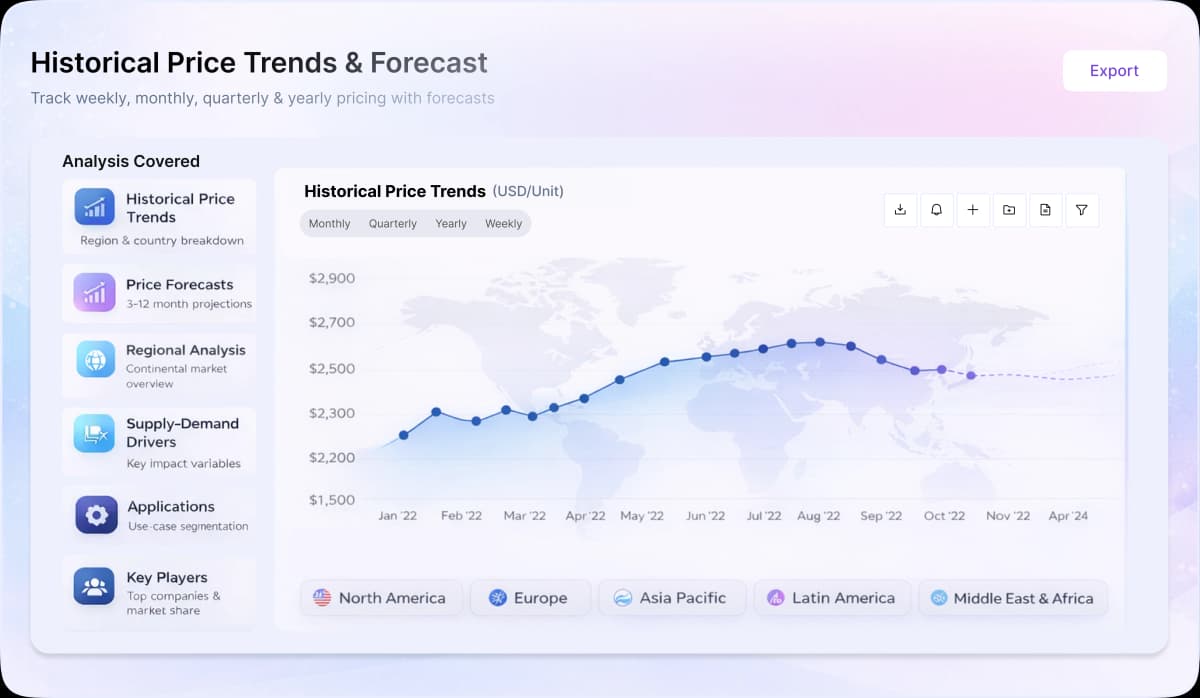
During the third quarter of 2025, Casein prices in New Zealand followed a mild upward trajectory early in the period before softening toward the end of the quarter, resulting in overall range-bound movements. The overall trend reflected a balanced market shaped by elevated milk production levels and mixed demand signals across global dairy sectors. Prices stood at about 8642 USD/MT (FOB) in July and were forecast to reach around 8683 USD/MT in October.

The market initially experienced firming sentiment as producers adjusted to higher production costs, including increases in energy and feed prices. Concurrently, steady domestic demand from the food and nutraceutical industries provided additional support. Export activity remained active, though competitive pressures in key markets limited broader gains. As the quarter progressed, Casein values began to ease in response to heightened milk availability. New Zealand recorded a new high in seasonal milk collections, with output growth led by the Waikato and Taranaki regions. The surge in milk supply expanded Casein production capacity, contributing to moderate downward pressure on prices toward the close of the quarter.

Internationally, global dairy trade sentiment weakened amid increased whole milk powder and skim milk powder exports from major producers, which diverted some purchasing focus away from Casein. Buyers in Asia and Europe displayed cautious procurement behaviour as inventories remained adequate. Despite this, stable farm margins and favourable milk payouts sustained steady production momentum across the sector.


About Casein

Casein is the chief protein found in milk and the essential ingredient of cheese. It belongs to a family of related phosphoproteins. While pure casein is an amorphous white solid and is tasteless and odourless, commercial casein is slightly yellow in colour, having a pleasant odour.

Casein Product Detail

Industrial Uses

Pharmaceutical (slow-digesting dairy protein), Cheese-making, Polymers, Adhesives, Paint and plastics, Paper industry, Leather industry, Textile industry, Beverage, Cosmetics, Animal feed

Supplier Database

Nestlé S.A, Danone, Arla Foods Ingredients Group, Fonterra Co-operative Group, Westland Milk Products

Regional Coverage

Asia Pacific

China, India, Indonesia, Pakistan, Bangladesh, Japan, Philippines, Vietnam, Iran, Thailand, South Korea, Iraq, Saudi Arabia, Malaysia, Nepal, Taiwan, Sri Lanka, UAE, Israel, Hongkong, Singapore, Oman, Kuwait, Qatar, Australia, and New Zealand

Europe

Germany, France, United Kingdom, Italy,Spain, Russia, Turkey, Netherlands, Poland, Sweden, Belgium, Austria, Ireland Switzerland, Norway, Denmark, Romania, Finland, Czech Republic, Portugal and Greece

North America

United States and Canada

Latin America

Brazil, Mexico, Argentina, Columbia, Chile, Ecuador, and Peru

Africa

South Africa, Nigeria, Egypt, Algeria, Morocco

CurrencyUS$ (Data can also be provided in local currency)

Supplier Database AvailabilityYes

Customization ScopeThe report can be customized as per the requirements of the customer

Post-Sale Analyst Support360-degree analyst support after report delivery

Note: Our supplier search experts can assist your procurement teams in compiling and validating a list of suppliers indicating they have products, services, and capabilities that meet your company's needs.

Casein Production Processes

  • Production of Casein via Rennet Process; via Fermentation; via Precipitation (using acid)

Casein is made from skim milk by one of two general methods – precipitation by acid or coagulation by rennet. In the rennet process, pasteurised skimmed milk is heated and set with rennet extract, which results in the formation of gel. This gel is further cut and processed to separate whey and Casein.

Frequently Asked Questions

The casein outlook remains tied to New Zealand's seasonal spring-flush production cycle, since New Zealand is the dominant producing and exporting origin. Elevated milk collections during the spring flush, supported by palm kernel feed imports, tend to keep supply ample and prices range-bound. Downstream food processing and nutritional applications typically maintain routine, steady buying patterns rather than driving sharp swings. Stability tends to hold as long as New Zealand output stays sufficient and global consumption remains consistent; a significant supply disruption or demand shift, such as competing protein-source tightness, could alter the picture.
New Zealand's seasonal spring-flush production cycle is the central driver of casein prices, since elevated milk collections during that period expand supply and can ease prices when they coincide with steady demand. Palm kernel feed imports, which expand dairy production capacity, add a further supply lever. Export demand from traditional markets tends to move at routine, predictable procurement levels rather than surging, so the market typically finds equilibrium between seasonal supply swings and standard downstream buying from food processing and nutritional applications.
New Zealand is the dominant producing and exporting country for casein, with Fonterra Co-operative Group and Westland Milk Products as key processors. Europe, North America, and Asia Pacific are the primary consuming and importing regions. Production is concentrated among a small number of New Zealand-based processors, which creates meaningful supply concentration risk for global buyers. Nestlé S.A. and Danone are major downstream users integrated into the food and nutrition value chain, while Arla Foods Ingredients Group operates across European production and supply.
The protein shortage is lifting casein prices, driven by surging demand for protein supplements linked to GLP-1 medication use. This has created supply shortages across protein markets, with north-western European whey prices jumping 50% since early 2026, pressuring casein-linked producers.
Casein is produced from skimmed and pasteurized milk, which supplies the protein and represents 70% to 85% of variable raw material cost. Three production routes are used: the rennet process cools milk to 30 to 35°C and coagulates it with chymosin; the acid precipitation route acidifies milk to pH 4.6 with hydrochloric or sulfuric acid; and the fermentation route cultures milk with Lactococcus lactis (historically termed Streptococcus lactis). The resulting white to cream-colored powder serves food and beverage, pharmaceutical, cosmetics, animal feed, and industrial applications including adhesives, paints, and textiles.
Casein demand is driven by dairy products, infant formula, bakery items, protein-rich snacks, and beverages, where it functions as a thickener, emulsifier, and stabilizer. Nutritional supplement use by athletes and fitness enthusiasts further supports consumption. New Zealand's seasonal spring-flush milk collections keep supply generally adequate relative to this steady downstream buying, so demand growth in these end-use categories tends to translate into gradual rather than sharp price movement.
New Zealand's Southern Hemisphere spring flush is the central seasonal driver of casein prices, since it lifts milk collections to elevated levels each year and expands available supply. Palm kernel feed imports reduce feed costs during this window, supporting higher production volumes and reinforcing ample supply. Prices typically stabilize once supply and steady global consumption reach a new equilibrium, with routine export procurement from traditional markets underpinning the level that results.
Casein is supplied as a white to cream-colored powder or granular solid. The three production routes (rennet, acid, and fermentation) yield products with distinct functional properties. Sodium, calcium, and potassium caseinates offer improved water solubility for emulsification and stabilization. A low microbial count is critical for food and pharmaceutical applications, while food-grade acids are required in acid casein production. Pharmaceutical and food buyers demand tighter purity and consistent functionality, whereas technical users in adhesives, paper, and textiles prioritize cost and bonding performance over purity.
Procurement Resource assesses casein prices through a structured, data-driven methodology combining primary engagement with producers, suppliers and traders, secondary market data, monitoring of feedstock and input costs, trade-flow and inventory tracking, and exchange or spot benchmarks. Each assessment is validated and translated into a transparent price outlook. The detailed methodology is available on the Procurement Resource website.

Our Price Analysis Methodology

About the Author

Siddharth David profile photo

Siddharth David

Manager - Market Research

Delivering market research and procurement intelligence at Procurement Resource with a focus on economic forecasting, commodity analysis, and client advisory to help sourcing teams make data-backed purchasing decisions.

Schedule Demo

Schedule A Demo

Experience how Procurement Resource transforms raw material price data into clear, decision ready intelligence. Optimise your performance with reliable, expert market data and analysis. Schedule your demo today to experience a live walk-through where our experts will showcase interactive price charts, forecasted prices, and insights driving the prices for your key commodities, tailored to your workflows. Contact us now!

Our Team will be happy to assist you

We are just a text away

+1

Still Need Help?

Europe & Africa

+44 7573 171117

Sales@procurementresource.com

USA & Canada

+1 307 363 1045

Sales@procurementresource.com

APAC

+91 8850629517

Sales@procurementresource.com

Other Related Reports

Casein Production From Skimmed and Pasteurized Milk

This report presents the cost structure of rennet casein. Rennet casein is made using skimmed and pasteurized milk using enzymes including chymosin.

Casein Production From Precipitation

Milk is acidified using acids like dilute hydrochloric acid or sulfuric acid, until the isoelectric point of casein is achieved.

Casein Production From Fermentation

This report provides the cost structure of casein production from fermentation. Milk is fermented with the help of the bacterium Streptococcus lactis.

Hydrogenated Castor Oil Manufacturing Plant Project Report 2026: Cost Analysis, ROI, and Feasibility Insights

Hydrogenated Castor Oil Manufacturing Plant Project Report thoroughly focuses on every detail that encompasses the cost of manufacturing. Our extensive cost model meticulously covers breaking down expenses around raw materials, labour, technology, and manufacturing expenses. This enables precise cost structure optimization and helps in identifying effective strategies to reduce the overall cash cost of manufacturing.

Unlock full access to Procurement Resource's price databases, interactive charts, and short-term forecasts for thousands of commodities. Elevate your sourcing decisions by comparing prices across regions, downloading historical data, and layering in analyst-backed insights, all with our flexible plans that scale as your portfolio grows.

Still have any Questions

Contact Us
Mastercard
Wire
VISA
Stripe

Related News

View All

Why Procurement Database

Commodity Market Intelligence

Commodity Market Intelligence

Track prices, market movements, supply-demand dynamics, and industry developments across hundreds of commodities through a centralized intelligence platform built for informed procurement decisions.

Price Forecasts & Market Outlooks

Price Forecasts & Market Outlooks

Understand market fluctuations using analyst-backed forecasts, historical pricing patterns, and evolving industry trends to strengthen sourcing strategies and budget planning.

Cost & Procurement Optimization

Cost & Procurement Optimization

Leverage cost models, pricing benchmarks, and procurement insights to evaluate purchasing opportunities, improve negotiations, and enhance operational efficiency.

Global & Regional Market Insights

Global & Regional Market Insights

Access region-specific price trends, trade activities, capacity changes, and supply chain developments influencing commodity markets worldwide.

1/4