Need latest Ethylbenzene prices?
Get real-time price assessments, periodic trends, forecasts and price driver insights across key global markets.
Unlock Price Insights NowOur Clients
Asia
During the second half of 2025, Ethylbenzene prices in Asia followed a weak to stable trend. The market was mainly influenced by soft downstream demand from the styrene and polystyrene sectors. In China, ample availability of benzene and steady plant operating rates kept feedstock costs under pressure, which limited any upward movement. Demand from packaging, consumer goods, and appliances remained sluggish, leading buyers to adopt cautious attitude. Although supply disruptions occurred occasionally in related aromatics, overall market availability stayed sufficient. The introduction of benzene futures in China improved price transparency but did not immediately boost physical demand. As a result, Ethylbenzene prices in Asia remained subdued, supported more by supply balance than by demand growth.
Europe
In Europe, Ethylbenzene prices showed a bearish to stable trend throughout H2’25. Weak industrial activity and slow recovery in the plastics sector reduced demand for styrene derivatives, which directly affected Ethylbenzene consumption. Benzene supply remained adequate as refiners operated at normal rates, while imports were easily available. High inventories and limited export interest added pressure to the market. Although detergent and chemical applications provided some support, they were not strong enough to change overall sentiment. Buyers remained cautious while the producers focused on maintaining steady operations and managing inventories.
North America
In North America, Ethylbenzene prices also weak during the second half of 2025. The market faced pressure from ample benzene supply, steady refinery runs, and high inventory levels. Demand from styrene and polystyrene producers stayed muted due to slow packaging and consumer product demand. Export activity remained limited, reducing outlet options for surplus volumes. While seasonal demand from detergents and adhesives offered mild support, overall buying interest stayed low. Market participants largely followed a wait-and-see approach, keeping prices under pressure.
Analyst Insight
According to Procurement Resource, Ethylbenzene market is expected to remain cautious, with any recovery depending on improved downstream demand and inventory management across regions.
Related Report
Get real-time price assessments, periodic trends, forecasts and price driver insights across key global markets.
Unlock Price Insights NowOur Clients

Turn price intelligence into action with the Procurement Resource Database. Log in or subscribe to unlock live price trends, historical charts, supplier databases, cost curves, and analyst-backed insights across chemicals, agriculture, energy, packaging, and more. Use these tools to benchmark your contracts, plan budgets with confidence, and stay ahead of market moves on every product you buy.

0
+Products
0
+Regions
0
+Subscriptions
Asia
In the first half of 2025, ethylbenzene prices in Asia moved on a largely downward path. This decline was mainly driven by weak demand in key downstream sectors such as styrene and plastics, especially polystyrene, which remained under pressure due to soft end-use consumption. The ethylene market in Asia also faced a bearish trend during this period, and since ethylbenzene production is tied to both benzene and ethylene, this put additional cost pressure on producers.
Moreover, benzene prices in Asia trended lower for much of H1 due to falling crude oil values, muted demand, and high inventories. Although some temporary support emerged from plant maintenance in China and South Korea, the overall supply chain remained well-stocked. Cautious buying behaviour and a lack of significant restocking activity also kept the market subdued, leading to a consistent downward trend in ethylbenzene pricing across the region.
Europe
In Europe, ethylbenzene prices also weakened during the first half of the year. One of the main contributing factors was the sluggish performance of the construction and automotive sectors, which impacted demand for styrene-based products. Additionally, the European ethylene market remained oversupplied, with capacity exceeding consumption levels. Feedstock benzene prices saw a mixed trend in Europe but were affected by inflation and rising energy costs, creating further instability.
Ethylene prices, meanwhile, fell steadily due to overcapacity and limited downstream activity. These combined factors meant ethylbenzene producers faced narrowing margins and limited pricing power. Even though there were some planned cracker shutdowns, the overall supply-demand balance remained loose, and buyers refrained from making large-volume purchases. The weak economic environment and contract renegotiations across the petrochemical chain added to the uncertainty.
North America
In North America, ethylbenzene prices experienced downward pressure similar to other regions. Ethylene prices were soft due to weak demand from derivatives like styrene and polyethylene, while benzene prices were volatile, partly due to shifting trade policies and tariffs on imports from key partners like Canada and China.
The early part of the year saw some disruptions in the Gulf Coast due to weather events, but these were short-lived and did not significantly tighten supply. Inventory levels remained high, and buyers were generally conservative with their purchasing strategies. The downstream market for styrenics showed limited growth, contributing to the overall bearish sentiment. Feedstock variability also played a role, but with both ethylene and benzene not showing strong bullish cues, ethylbenzene prices stayed low throughout the half-year.
Ethylbenzene is a colourless, extremely flammable liquid with a gasoline-like stench. This monocyclic aromatic hydrocarbon is used as an intermediary in the manufacturing of styrene, which is the precursor of polystyrene, a common plastic material. In 2012, the manufacturing of styrene utilised more than 99 percent of the ethylbenzene produced.

C8H10
Styrene Production, Gasoline, Natural Gas, Paint, Asphalt & Naphtha
Phenylethane, Ethylbenzol, Diethylbenzene
Dow chemical company, Exxon Mobil Corp, Jx Nippon Oil and Energy group, Royal Dutch Shell Plc, Tianjin Jixin Industrial & Trade Co., Ltd., Zhejiang Weishi Biotechnology Co., Ltd.
CurrencyUS$ (Data can also be provided in local currency)
Supplier Database AvailabilityYes
Customization ScopeThe report can be customized as per the requirements of the customer
Post-Sale Analyst Support360-degree analyst support after report delivery
Note: Our supplier search experts can assist your procurement teams in compiling and validating a list of suppliers indicating they have products, services, and capabilities that meet your company's needs.
On a wide scale, ethylbenzene is made by mixing benzene and ethylene in an acid-catalyzed chemical process.
Our Price Analysis Methodology

Experience how Procurement Resource transforms raw material price data into clear, decision ready intelligence. Optimise your performance with reliable, expert market data and analysis. Schedule your demo today to experience a live walk-through where our experts will showcase interactive price charts, forecasted prices, and insights driving the prices for your key commodities, tailored to your workflows. Contact us now!
Our Team will be happy to assist you
We are just a text away
Still Need Help ?
Unlock full access to Procurement Resource's price databases, interactive charts, and short-term forecasts for thousands of commodities. Elevate your sourcing decisions by comparing prices across regions, downloading historical data, and layering in analyst-backed insights, all with our flexible plans that scale as your portfolio grows.
Still have any Questions
Contact Us


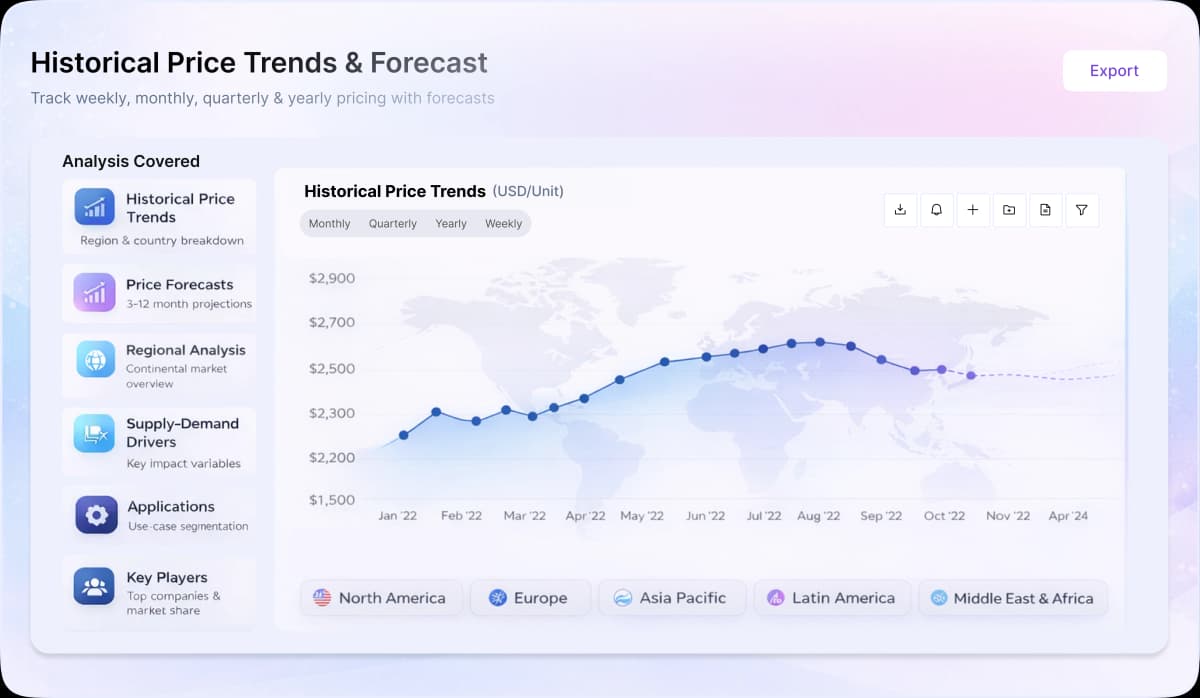
Price Trend Dashboard - What's Included
Price trends across a diverse portfolio of categories and products, spanning board to niche chemicals
Coverage extendable to grade-specific chemicals based on procurement requirements
Regular price tracking supported by robust historical datasets
News, policy updates, and key market drivers impacting price movements
Short-term and long-term price outlooks and forecasts
Supply–demand dynamics and capacity-driven market analysis