

Udeesha Tomar
AVP - Strategy and Solutions
Leading procurement research solutions across chemicals, materials, and food & beverages, with expertise in price forecasting and market analytics.

Asia
In Q4’25, Laurolactam prices in Asia showed a weak to slightly declining trend. The main pressure came from the soft chemical market environment, where feedstocks such as benzene and related aromatics remained weak due to ample supply and poor demand. Chemical producers operated at stable rates, and there were no major production disruptions, which kept supply comfortable. Demand from downstream nylon and engineering plastic sectors stayed slow, as buyers remained cautious toward year-end and focused on inventory control. Export demand also weakened as currency movements reduced overseas competitiveness, leading many buyers to delay new orders. Overall, the Asian market lacked strong cost or demand support, which kept Laurolactam prices under pressure.
Europe
In Europe, Laurolactam prices moved weakly during the said period. The region faced low-capacity utilization across the chemical sector, which reduced pricing power. Weak upstream aromatic prices and declining global chemical indices limited cost support. Demand from automotive, construction, and industrial plastics remained subdued, reflecting slow economic activity. Although supply was not excessive, buyers avoided long-term commitments and preferred short-term purchases. Trade uncertainty and global tariff tensions also affected confidence, keeping prices from rising. As a result, the market stayed stable but fragile.
North America
In North America, Laurolactam prices remained relatively stable compared to other regions. Feedstock costs were mixed, as crude oil and benzene stayed weak, but some chemical intermediates found support from steady polymer demand. Downstream consumption from packaging, consumer goods, and industrial applications helped balance the market. However, buyers remained cautious owing to ample inventories and weak export demand. Overall, the market stayed balanced with no sharp movements.
Analyst Insight
According to Procurement Resource, Laurolactam prices are expected to remain stable to slightly weak unless demand from nylon applications improves or upstream chemical markets recovers.
Related Report
Need Latest Laurolactam Prices?
Get real-time price assessments, periodic trends, forecasts and price driver insights across key global markets.
Our Clients





























Turn price intelligence into action with the Procurement Resource Database. Log in or subscribe to unlock live price trends, historical charts, supplier databases, cost curves, and analyst-backed insights across chemicals, agriculture, energy, packaging, and more. Use these tools to benchmark your contracts, plan budgets with confidence, and stay ahead of market moves on every product you buy.
0
+Products
0
+Regions
0
+Subscriptions
Asia
In Asia, laurolactam prices observed a downward movement throughout the third quarter of 2025. Demand from downstream industries, especially in fibres and engineering plastics, stayed soft due to high temperatures, seasonal slowdowns, and reduced manufacturing activity in several countries.
Industrial output and construction-related applications remained limited, while buyers remained cautious and made only necessary purchases. At the same time, upstream pressure from falling raw material and intermediate prices pushed production costs lower. High inventories further added to the oversupply situation, forcing sellers to maintain lower prices to stay competitive in a subdued market environment.
Europe
In Europe, laurolactam market conditions were also weak during the said quarter. Seasonal plant shutdowns and lower operating rates during the summer holidays led to reduced production and buying interest. Procurement activity from end-users remained low as industries were dealing with slow domestic demand and limited export opportunities.
Economic uncertainty and regulatory hurdles further restricted industrial activity. With soft cost inputs and weak downstream performance, prices remained under pressure. Suppliers faced challenges in moving stock, and market participants largely held back from large-volume deals, expecting further softness.
North America
In North America, laurolactam prices stayed on the lower side as the market reflected weak overall sentiment. Industrial demand showed no major improvement, especially in segments linked to construction and automotive parts. Supply remained ample, but poor demand conditions created an imbalance.
Trade barriers and reduced international movement of related chemical products also contributed to limited market activity. Some producers focused on cost-cutting and operating at reduced capacities to manage excess stock and protect margins. As a result, price levels stayed soft through the quarter.
Laurolactam is a white, water-insoluble crystalline solid readily soluble in organic solvents like benzene and cyclohexane. It is acutely toxic to aquatic life, with long-lasting effects. Laurolactam belongs to the class of macrocyclic lactams and is primarily used as a monomer in the production of nylon-12 and other polyamides.
C12H23NO
Plastics, Polymers, Chemical Substrates
Azacyclotridecan-2-one, Dodecalactam
Evonik Industries, Arkema SA, Merck KGaA, Toray Industries Inc, DowDuPont
CurrencyUS$ (Data can also be provided in local currency)
Supplier Database AvailabilityYes
Customization ScopeThe report can be customized as per the requirements of the customer
Post-Sale Analyst Support360-degree analyst support after report delivery
Note: Our supplier search experts can assist your procurement teams in compiling and validating a list of suppliers indicating they have products, services, and capabilities that meet your company's needs.
In this process, cyclododecane is converted into cyclododecanone, which further reacts with hydroxylamine in the presence of an oximation solvent to produce cyclododecanone oxime. The intermediate is separated into the oily phase and the aqueous phase. It then undergoes rearrangement in the presence of rearrangement catalyst having an aromatic ring to give the desired Laurolactam.
Our Price Analysis Methodology
AVP - Strategy and Solutions
Leading procurement research solutions across chemicals, materials, and food & beverages, with expertise in price forecasting and market analytics.
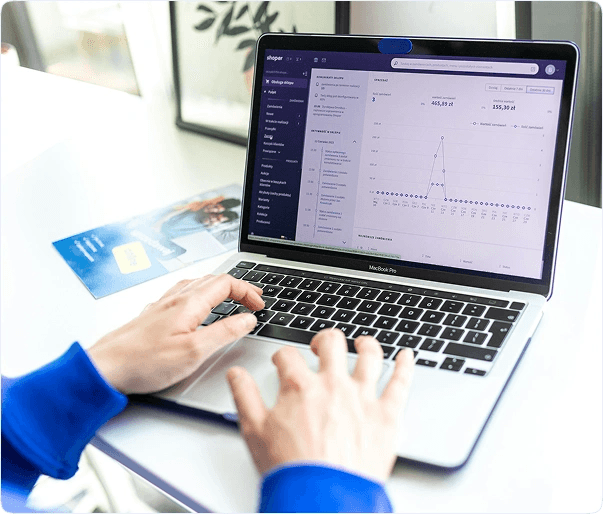
Experience how Procurement Resource transforms raw material price data into clear, decision ready intelligence. Optimise your performance with reliable, expert market data and analysis. Schedule your demo today to experience a live walk-through where our experts will showcase interactive price charts, forecasted prices, and insights driving the prices for your key commodities, tailored to your workflows. Contact us now!
Our Team will be happy to assist you
We are just a text away
Still Need Help?
The study offers a detailed cost analysis of Nylon 6 Production from Caprolactam. In addition, the report incorporates the manufacturing process with detailed process and material flow, operating costs along with financial expenses and depreciation charges.
The study offers a detailed cost analysis of Nylon Production from Adipic Acid and Hexamethylene Diamine. In addition, the report incorporates the manufacturing process with detailed process and material flow, operating costs along with financial expenses and depreciation charges.
Nylon Filament Yarn Manufacturing Plant Project Report thoroughly focuses on every detail that encompasses the cost of manufacturing. Our extensive cost model meticulously covers breaking down expenses around raw materials, labour, technology, and manufacturing expenses. This enables precise cost structure optimization and helps in identifying effective strategies to reduce the overall cash cost of manufacturing.
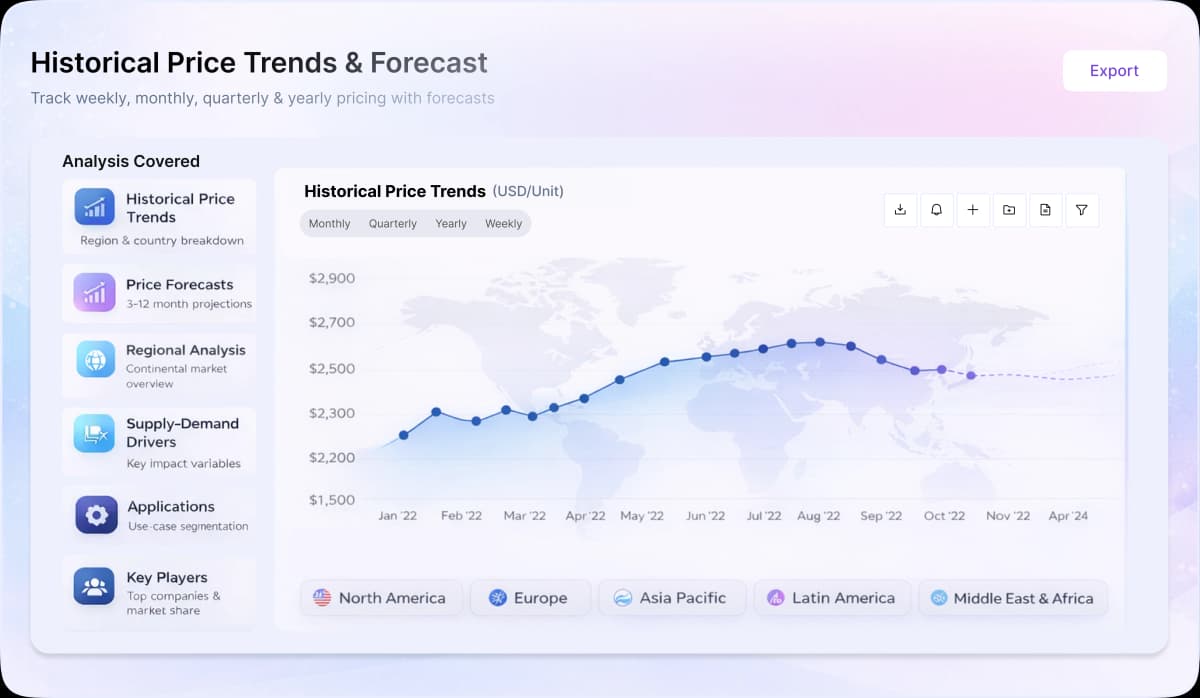
Unlock full access to Procurement Resource's price databases, interactive charts, and short-term forecasts for thousands of commodities. Elevate your sourcing decisions by comparing prices across regions, downloading historical data, and layering in analyst-backed insights, all with our flexible plans that scale as your portfolio grows.
Still have any Questions
Contact Us



Price Trend Dashboard - What's Included
Price trends across a diverse portfolio of categories and products, spanning board to niche chemicals
Coverage extendable to grade-specific chemicals based on procurement requirements
Regular price tracking supported by robust historical datasets
News, policy updates, and key market drivers impacting price movements
Short-term and long-term price outlooks and forecasts
Supply–demand dynamics and capacity-driven market analysis

Track prices, market movements, supply-demand dynamics, and industry developments across hundreds of commodities through a centralized intelligence platform built for informed procurement decisions.

Understand market fluctuations using analyst-backed forecasts, historical pricing patterns, and evolving industry trends to strengthen sourcing strategies and budget planning.

Leverage cost models, pricing benchmarks, and procurement insights to evaluate purchasing opportunities, improve negotiations, and enhance operational efficiency.
Access region-specific price trends, trade activities, capacity changes, and supply chain developments influencing commodity markets worldwide.

