Maltose Price Trend Analysis 2026: Price Drivers, Historical Prices, Latest News, Market Insights & Supply Demand Analysis
Maltose Price Trend 2025
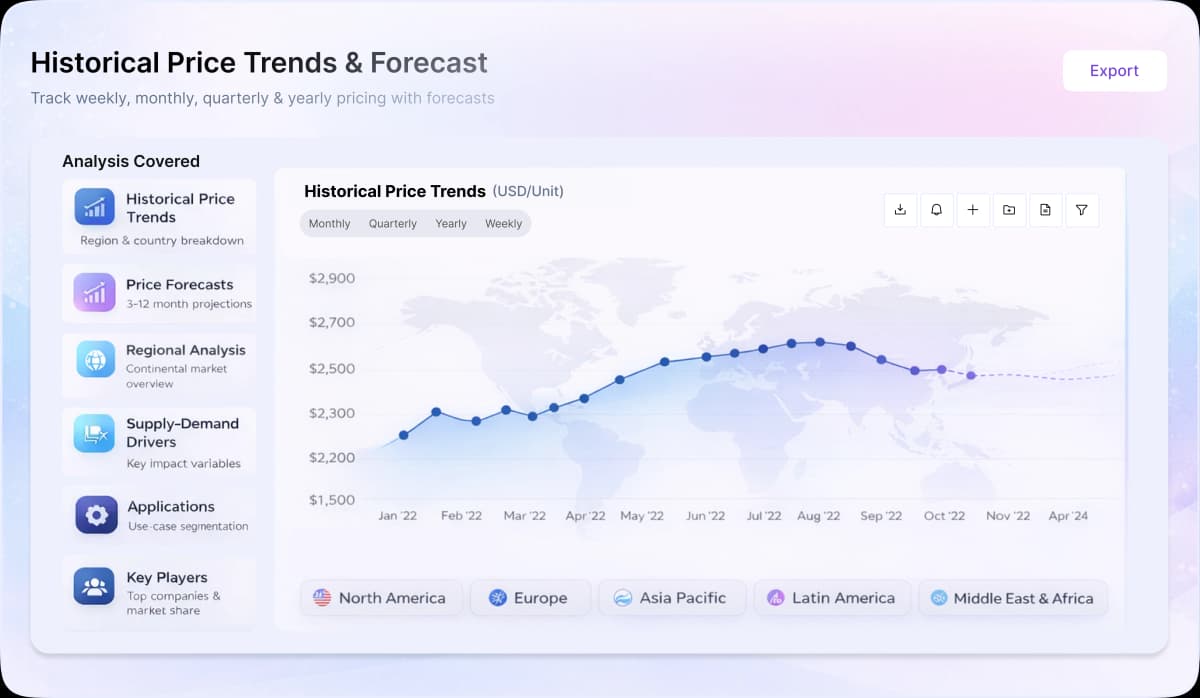
In 2025, maltose prices showed a mixed yet mostly downward trend across global markets. During the first quarter, prices fluctuated as supply conditions shifted frequently. High inventories and cautious buying behaviour kept prices under pressure, even though short-term logistics issues and seasonal demand caused brief upward movements.
In the second quarter, prices remained mostly stable to slightly firm in some regions. Production costs increased for a short period due to higher raw material and transport expenses, while supply tightened temporarily in certain markets. This supported prices, especially where demand from food and pharmaceutical users improved. However, the recovery was limited, as overall consumption remained controlled.
The third quarter saw a clear decline in maltose prices. Oversupply became the main factor, driven by improved production efficiency and increased output in Asia. Cheaper freight and strong export availability added pressure across global markets. Demand weakened further as buyers reduced spending and relied on existing stocks, leading sellers to lower prices to move inventory.
Toward the end of the year, prices stayed soft. New starch-based processing capacity in emerging regions increased future supply expectations, while demand growth remained slow. Competitive market conditions and ample availability kept prices subdued through late 2025.
Analyst Insight
According to Procurement Resource, Maltose prices are expected to remain stable to weak, with any recovery depending on demand growth and how quickly new supply is absorbed by the market.
Need latest Maltose prices?
Get real-time price assessments, periodic trends, forecasts and price driver insights across key global markets.
Unlock Price Insights NowOur Clients
Procurement Resource Database

Turn price intelligence into action with the Procurement Resource Database. Log in or subscribe to unlock live price trends, historical charts, supplier databases, cost curves, and analyst-backed insights across chemicals, agriculture, energy, packaging, and more. Use these tools to benchmark your contracts, plan budgets with confidence, and stay ahead of market moves on every product you buy.
Maltose Dashboard Inclusions

0
+Products
0
+Regions
0
+Subscriptions
In 2024, maltose prices showed a mixed yet mostly weak trend across global markets. During the first quarter, prices moved slightly upward as demand from food and beverage producers stayed supportive, especially during seasonal consumption periods. Some supply disruptions and higher transport costs also added mild pressure, helping prices stay firm in early months.
As the year moved into the second quarter, prices began to soften. Ample availability of raw materials and high inventory levels reduced cost pressure on producers. Even though summer demand improved slightly, it was not strong enough to lift prices meaningfully. Buyers remained cautious and focused on managing existing stocks rather than making large purchases.
In the third quarter, maltose prices faced further downward pressure. Slower economic activity and weaker buying interest from downstream industries limited market momentum. Suppliers offered more flexible terms to move material, as supply exceeded demand in many regions. Lower production costs also contributed to the softer pricing trend.
By the final quarter of 2024, prices showed limited recovery. Some production adjustments and seasonal demand helped stabilize the market, but overall consumption remained weak. High competition among suppliers and the availability of alternatives kept prices from rising significantly. As a result, maltose prices ended the year at relatively subdued levels.
About Maltose
Maltose is basically known as a disaccharide that is often formed from two units of glucose joined with an alpha (1→4) bond. Thus, it contains two glucose molecules. Isomaltose is an isomer of maltose. Maltose serves as a reducing sugar and can be broken down to glucose with the help of the maltase enzyme. It is the two-unit member belonging to the amylose homologous series, which serves as a key structural motif of starch.


Maltose Product Detail
C12H22O11
Adhesives, Sealant Chemicals
69-79-4, Maltobiose, Malt Sugar
Cargill, Incorporated, Tereos SA, Archer Daniels Midland Company (ADM), NAGASE & Co., Ltd.
Regional Coverage
Asia Pacific
Europe
North America
Latin America
Africa
CurrencyUS$ (Data can also be provided in local currency)
Supplier Database AvailabilityYes
Customization ScopeThe report can be customized as per the requirements of the customer
Post-Sale Analyst Support360-degree analyst support after report delivery
Note: Our supplier search experts can assist your procurement teams in compiling and validating a list of suppliers indicating they have products, services, and capabilities that meet your company's needs.
Maltose Production Process
- Production of Maltose via Hydrolysis; and via Condensation Reaction
In order to produce Maltose via hydrolysis, the heavy molecules of starch are broken down into smaller and simpler molecules with the help of enzymes in the presence of water. This results in the formation of Maltose.
Our Price Analysis Methodology

Schedule A Demo
Experience how Procurement Resource transforms raw material price data into clear, decision ready intelligence. Optimise your performance with reliable, expert market data and analysis. Schedule your demo today to experience a live walk-through where our experts will showcase interactive price charts, forecasted prices, and insights driving the prices for your key commodities, tailored to your workflows. Contact us now!
Our Team will be happy to assist you
We are just a text away
Still Need Help ?
Other Related Reports
Maltose Production from Condensation Reaction
In this process, two units of glucose are joined together leading to the elimination of water molecule to form a disaccharide, i.e., maltose.
Maltose Production from Hydrolysis
This report provides the cost structure of maltose production from hydrolysis. Heavy molecules of starch are broken down into smaller ones when reacted with water with the help of enzymes.
Unlock full access to Procurement Resource's price databases, interactive charts, and short-term forecasts for thousands of commodities. Elevate your sourcing decisions by comparing prices across regions, downloading historical data, and layering in analyst-backed insights, all with our flexible plans that scale as your portfolio grows.
Still have any Questions
Contact Us


Price Trend Dashboard - What's Included
Price trends across a diverse portfolio of categories and products, spanning board to niche chemicals
Coverage extendable to grade-specific chemicals based on procurement requirements
Regular price tracking supported by robust historical datasets
News, policy updates, and key market drivers impacting price movements
Short-term and long-term price outlooks and forecasts
Supply–demand dynamics and capacity-driven market analysis