Need latest NP Fertiliser prices?
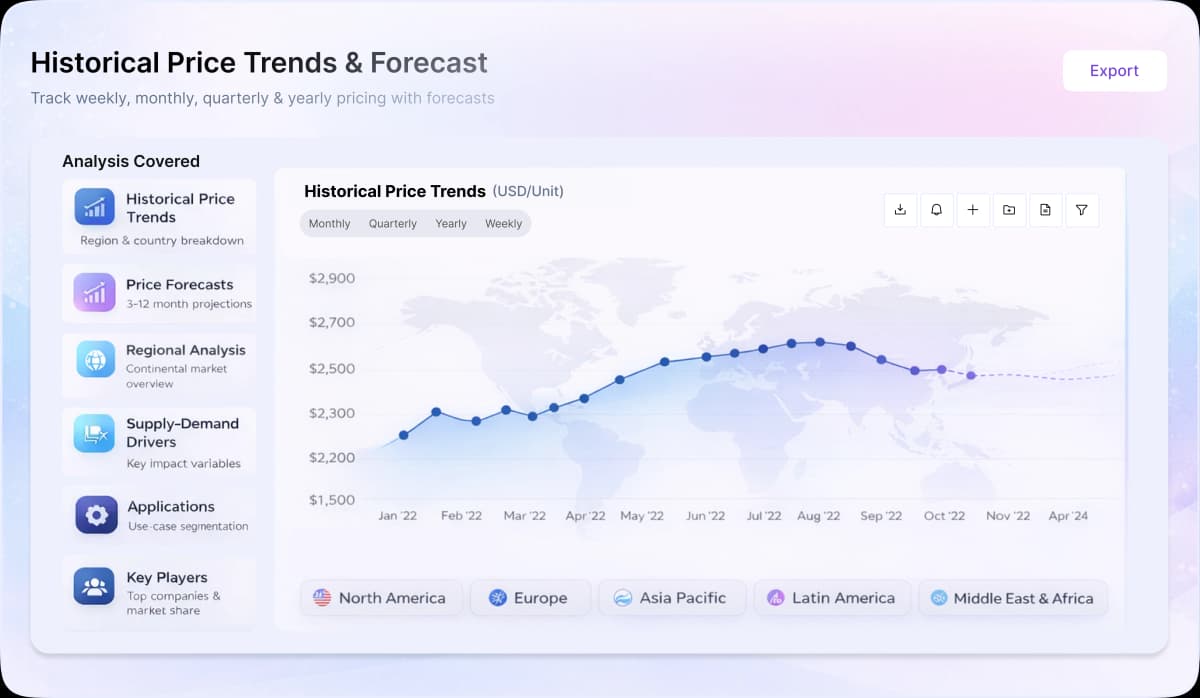
Get real-time price assessments, periodic trends, forecasts and price driver insights across key global markets.
Unlock Price Insights NowOur Clients
Asia
In Asia, NP fertiliser prices stayed firm throughout 2025 as the region faced tight supply from start to finish. China remained the key driver of the market because its strict export controls and long inspection procedures limited the flow of material for most of the year. Even though China recorded strong NP export activity in early 2025, the overall availability still felt restricted, especially for buyers in Southeast Asia. Countries like Indonesia saw rising domestic use after subsidized fertiliser prices were cut, which lifted consumption and added more pressure on regional supplies.
Meanwhile, producers in Malaysia and Brunei were booked until mid-year, and buyers in the Philippines and South Korea closely watched for any signal of China easing restrictions. Rumours about possible export quota changes caused short-term uncertainty, but no major improvement in supply arrived. As a result, the Asian NP market moved through the second half of the year with the same tightness it saw earlier, and prices stayed supported right to the end of 2025.
Europe
In Europe, NP fertiliser prices followed a steadier but still firm pattern across the year. Global tightness in phosphate materials influenced the market from the beginning, even though weaker ammonia costs provided some relief on the nitrogen side. Reduced export availability from China kept European buyers cautious, and the region also faced external pressures from geopolitical disruptions that affected freight routes and increased delivery risks. Demand stayed stable but not strong, as buyers generally purchased based on need rather than building heavy stocks. Supply stayed sufficient to avoid major spikes, but it was never loose enough to push prices down. Through both halves of the year, Europe moved within a narrow range, supported by the global squeeze on phosphate fertilisers and the continuing uncertainty around China’s export policy.
North America
In North America, NP fertiliser prices stayed relatively balanced in 2025, with fewer disruptions compared with other regions. Domestic production planning and contracts kept the first half steady, and softer ammonia values helped contain production costs. In the second half, the region continued to benefit from predictable supply flows and long-standing import agreements, which protected it from the strong global volatility seen elsewhere. Even though the world market remained tight due to limited Chinese participation, North America did not face major shortages, and prices drifted within a stable range for most of the year.
Analyst Insight
According to Procurement Resource, NP Fertiliser prices are expected to stay supported unless global phosphate availability improvs or China eases its export controls.
Related Report
Get real-time price assessments, periodic trends, forecasts and price driver insights across key global markets.
Unlock Price Insights NowOur Clients

Turn price intelligence into action with the Procurement Resource Database. Log in or subscribe to unlock live price trends, historical charts, supplier databases, cost curves, and analyst-backed insights across chemicals, agriculture, energy, packaging, and more. Use these tools to benchmark your contracts, plan budgets with confidence, and stay ahead of market moves on every product you buy.

0
+Products
0
+Regions
0
+Subscriptions
Asia
Across Asia, NP fertiliser prices moved through a series of fluctuations in 2024. Earlier global shocks such as the war in Ukraine, high natural gas costs, and shipping disruptions pushed production costs up in previous years. But by 2024, these pressures weakened. Fertiliser inputs, especially nitrogen-based components, became cheaper and more available. Countries like India also tightened pricing oversight on non-urea fertilisers, which helped stabilise domestic markets and prevented sudden jumps. As a result, NP fertilisers in Asia generally followed a softening pattern through the year, with fewer sharp swings and a more predictable market for farmers.
Europe
In Europe, NP fertiliser prices in 2024 also trended downward compared with the peak levels seen during the 2022 energy crisis. Natural gas a key input in nitrogen fertiliser production became more affordable, allowing European producers to operate at steadier costs. Global fertiliser trade also recovered after the earlier contraction, reducing supply tightness. While Europe still faced risks from geopolitical tensions and shipping disruptions, the overall market in 2024 was calmer. This created a year marked by moderate declines, improved supply flows, and less price volatility than in the previous two years.
North America
North America saw a similar easing trend in 2024. Retail data from early in the year showed that major nitrogen and phosphorus products were not rising sharply and mostly moved in small monthly steps. Compared with a year earlier, many fertiliser types were cheaper, reflecting lower input costs and better global availability. NP fertilisers followed this pattern as the region benefited from stable domestic production, rebounding global trade volumes, and reduced pressure from transportation costs. Farmers experienced a more manageable price environment than during the peak disruption years.
Nitrogen and superphosphate are both present in NP fertilisers, sometimes referred to as granular fertilisers. Because they use a lot of ammonium sulphate, they are known to contain a lot of sulphur. The crops and soils receive a balanced amount of nutrients from NP fertilisers. S, Ca (Calcium), and Mg (Magnesium), which are secondary nutrients included in NP fertilisers, may lower the likelihood of soil deficiency, resulting in a higher yield and higher-quality produce.



Furthermore, NP fertilisers are well renowned for their exceptional hardness, which ensures that quality is maintained during handling, blending, and field application. These fertilisers also have the advantage of being completely soluble or miscible with all nutrients readily available for plant absorption.
Acron Group, Aries Agro Limited, Azomures, Borealis AG, Carbotecnia SL
CurrencyUS$ (Data can also be provided in local currency)
Supplier Database AvailabilityYes
Customization ScopeThe report can be customized as per the requirements of the customer
Post-Sale Analyst Support360-degree analyst support after report delivery
Note: Our supplier search experts can assist your procurement teams in compiling and validating a list of suppliers indicating they have products, services, and capabilities that meet your company's needs.
In order to separate calcium nitrate from phosphoric acid as crystals, phosphate rock is first acidified with nitric acid to produce a combination of calcium nitrate and phosphoric acid. To create NP fertiliser, the residual phosphoric acid filtrate which also contained traces of calcium nitrate and nitric acid is ultimately neutralised with ammonia.
Our Price Analysis Methodology

Experience how Procurement Resource transforms raw material price data into clear, decision ready intelligence. Optimise your performance with reliable, expert market data and analysis. Schedule your demo today to experience a live walk-through where our experts will showcase interactive price charts, forecasted prices, and insights driving the prices for your key commodities, tailored to your workflows. Contact us now!
Our Team will be happy to assist you
We are just a text away
Still Need Help ?
Unlock full access to Procurement Resource's price databases, interactive charts, and short-term forecasts for thousands of commodities. Elevate your sourcing decisions by comparing prices across regions, downloading historical data, and layering in analyst-backed insights, all with our flexible plans that scale as your portfolio grows.
Still have any Questions
Contact Us


Price Trend Dashboard - What's Included
Price trends across a diverse portfolio of categories and products, spanning board to niche chemicals
Coverage extendable to grade-specific chemicals based on procurement requirements
Regular price tracking supported by robust historical datasets
News, policy updates, and key market drivers impacting price movements
Short-term and long-term price outlooks and forecasts
Supply–demand dynamics and capacity-driven market analysis