Propane Price Trend Analysis 2026: Supply Demand Analysis, Latest News, Market Insights, Price Drivers & Historical Prices

Written ByVikas Jha

Procurement Resource Database

Laptop screen

Turn price intelligence into action with the Procurement Resource Database. Log in or subscribe to unlock live price trends, historical charts, supplier databases, cost curves, and analyst-backed insights across chemicals, agriculture, energy, packaging, and more. Use these tools to benchmark your contracts, plan budgets with confidence, and stay ahead of market moves on every product you buy.

Propane Dashboard Inclusions

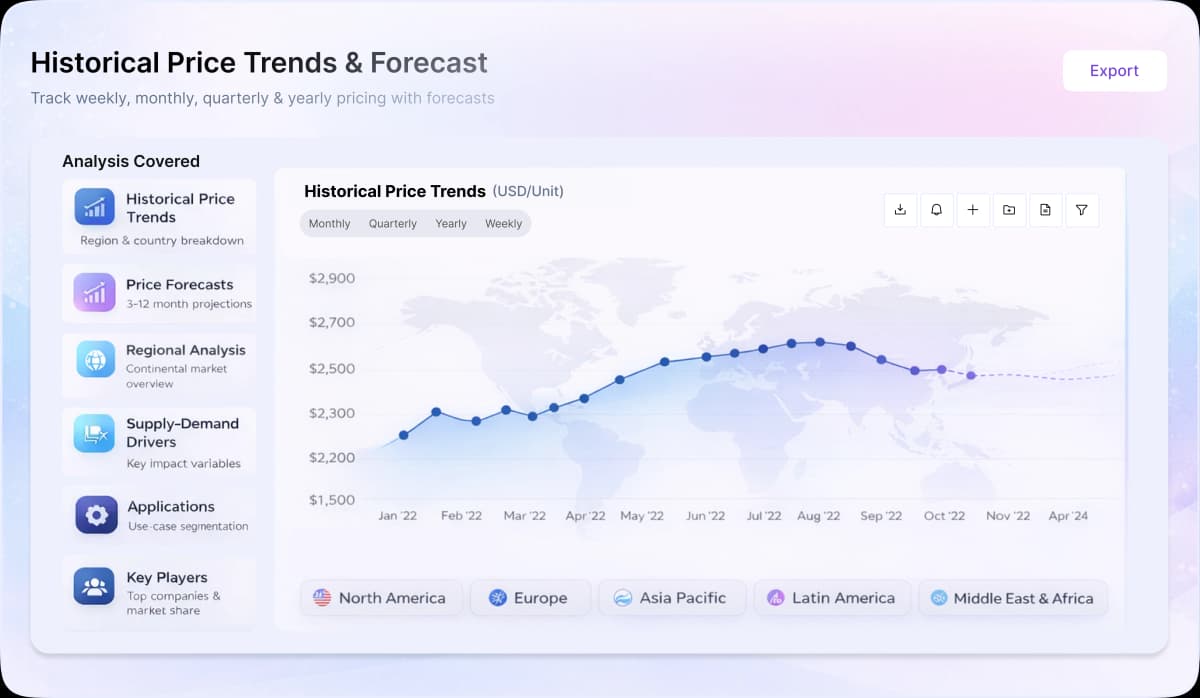
Propane Price Dasboard

0

+

Products

0

+

Regions

0

+

Subscriptions

Asia

The Asian propane market during the fourth quarter exhibited mixed price movements reflecting both seasonal dynamics and feedstock influences. The quarter opened with prices experiencing moderate decline as crude oil weakness transmitted cost pressure reductions through the value chain, while regional supply availability remained comfortable. Demand from petrochemical sectors, particularly propylene production facilities, showed cautious procurement patterns amid margin pressures. Residential and commercial heating demand demonstrated gradual strengthening as winter season approached, though uptake remained measured. Following the initial softness, prices entered a period of relative stabilization through the middle portion of the quarter as market participants balanced inventory positions. Import volumes from Middle Eastern suppliers maintained steady flow, while regional refinery output supported availability. The latter portion of the quarter witnessed modest recovery attempts as residential heating consumption accelerated and industrial buyers increased winter stockpiling.
Europe

In the European region, the propane price trajectory demonstrated wavering patterns throughout the fourth quarter. Supply availability remained balanced as refinery production, North Sea output, and transatlantic imports provided adequate volumes to meet seasonal requirements. Demand from residential heating sectors showed gradual improvement as temperatures declined, while industrial and agricultural applications contributed to demand support. Crude oil price movements influenced production economics, though propane pricing exhibited relative independence reflecting localized fundamentals. The market witnessed brief recovery attempts during mid-quarter as heating demand intensified and inventory draws accelerated, yet these gains proved temporary as ample storage levels limited price advances. The latter portion of the quarter saw prices fluctuating within moderate ranges as traders balanced winter demand expectations against comfortable supply positions.

North America

North American propane markets experienced relatively stable price conditions during the quarter. Domestic production from natural gas processing and refinery operations maintained steady output, while inventory levels remained within normal ranges. Demand patterns reflected seasonal strengthening across residential and commercial heating sectors, particularly in northern regions. Agricultural demand for crop drying showed expected seasonal decline following harvest completion, while petrochemical consumption provided consistent support. Export activity to international markets remained active as competitive pricing sustained shipment volumes. Crude oil price stability supported production economics and steady supply flows.

About Propane

Propane is basically a 3-carbon alkane. It is known to be in gaseous state at standard temperature and pressure, but it can easily be compressed to a transportable liquid state. It is also known as a by-product of natural gas. It is most commonly utilised as a fuel.

Propane Product Detail

Hs Code
27111200
Chemical Formula

C3H8

Cas Number
74-98-6
Molecular Weight
44.1 g/mol
Industrial Uses

Adhesives and sealant chemicals, Adsorbents and absorbents, Fuels and fuel additives, Functional fluids (for both open and closed systems), Intermediates, Laboratory chemicals, Processing aids, specific to petroleum production, Propellants and blowing agents

Synonyms

Dimethylmethane, Propyl hydriden-Propane

Supplier Database

AmeriGas Propane, Inc, Royal Dutch Shell (Shell), Saudi Arabian Oil Co, GAIL (India) Limited, China Petrochemical Corporation (SINOPEC)

Regional Coverage

Asia Pacific

China, India, Indonesia, Pakistan, Bangladesh, Japan, Philippines, Vietnam, Iran, Thailand, South Korea, Iraq, Saudi Arabia, Malaysia, Nepal, Taiwan, Sri Lanka, UAE, Israel, Hongkong, Singapore, Oman, Kuwait, Qatar, Australia, and New Zealand

Europe

Germany, France, United Kingdom, Italy,Spain, Russia, Turkey, Netherlands, Poland, Sweden, Belgium, Austria, Ireland Switzerland, Norway, Denmark, Romania, Finland, Czech Republic, Portugal and Greece

North America

United States and Canada

Latin America

Brazil, Mexico, Argentina, Columbia, Chile, Ecuador, and Peru

Africa

South Africa, Nigeria, Egypt, Algeria, Morocco

CurrencyUS$ (Data can also be provided in local currency)

Supplier Database AvailabilityYes

Customization ScopeThe report can be customized as per the requirements of the customer

Post-Sale Analyst Support360-degree analyst support after report delivery


Note: Our supplier search experts can assist your procurement teams in compiling and validating a list of suppliers indicating they have products, services, and capabilities that meet your company's needs.

Propane Production Processes

  • Production of Propane via Natural Gas; and via Petroleum Refining Process

Production of Propane via natural gas involves the running of crude oil via gas trap in order to separate it into wet gas and oil. This step is followed by several other processes to obtain LPG, which is further finally divided into butane, isobutane and propane.

Frequently Asked Questions

During Q1 2026, propane prices increased sharply in key regions. In China, prices showed a ~15.6% increase from January to March, while in the Netherlands they witnessed a ~ 20.4% increase. The rise was supported by higher import replacement costs, freight market volatility, tighter spot availability, and crude-linked energy market strength. While propane dehydrogenation (PDH) demand continued to provide an important consumption base in China, higher seaborne costs and concerns regarding Middle Eastern supply flows played a larger role in supporting prices during the quarter.
The propane outlook for 2026 remains firm but volatile. Prices will continue to be influenced by crude oil, NGL supply, freight costs, winter heating demand, and petrochemical consumption. China’s PDH sector is expected to remain the largest source of propane demand, although demand growth may moderate compared with earlier expansion phases. U.S. and Middle Eastern exports will continue to shape global supply availability.
The main factors affecting propane prices in Q1 2026 were higher import costs, freight market disruptions, and tighter seaborne availability. Supply concerns linked to Middle Eastern exports increased replacement costs for import-dependent buyers. China's petrochemical sector, including PDH plants, continued to support demand, while seasonal fuel consumption and stronger crude oil sentiment contributed to upward price pressure.
Major propane markets include the United States, China, Saudi Arabia, the Netherlands, Japan, South Korea, India, Canada, Qatar, and the United Arab Emirates. The United States and the Middle East are major export suppliers, while Asia and Europe are key consuming regions. Major companies include Enterprise Products Partners, Phillips 66, ONEOK, Saudi Aramco, ADNOC, QatarEnergy, Shell, BP, ExxonMobil, Sinopec, and PetroChina.
A major recent infrastructure development was AD Ports Group and Nimex Terminals’ February 2026 groundbreaking of a strategic LPG storage terminal at Khalifa Port in the UAE. The terminal is designed to handle propane, butane, and LPG mix products. Phase 1 includes refrigerated storage tanks, including a 50,000 cubic meter propane tank, strengthening regional storage and marine handling capacity for global propane trade.
Propane is mainly produced as a byproduct of natural gas processing and crude oil refining. The value chain includes gas production, crude oil refining, natural gas liquids recovery, fractionation, purification, pressurized or refrigerated storage, pipeline or marine transport, terminal handling, cylinder filling, bulk distribution, and final use in heating, cooking, agriculture, petrochemicals, autogas, and industrial fuel applications.

Major propane grades include commercial propane, HD-5 propane, petrochemical-grade propane, refrigerant-grade propane, and autogas-grade propane. HD-5 is widely used as consumer fuel and generally contains at least 90% propane with limits on propylene and heavier hydrocarbons. Petrochemical-grade propane requires tighter purity control because it is used as feedstock for propane dehydrogenation and other chemical processes.
Propane demand is mainly driven by residential heating, cooking, agriculture, petrochemicals, propane dehydrogenation, industrial heating, commercial fuel use, autogas, and power backup systems. In China, PDH demand is especially important because propane is converted into propylene for polypropylene and other downstream chemicals. In Europe, heating, industrial fuel, and petrochemical consumption support baseline demand.
A key policy development affecting propane markets in 2026 was the continuation of the U.S.-China trade truce through November 2026. Although broader tariff tensions eased, China maintained a 10% tariff on U.S. LPG imports, including propane. This continued to influence cargo sourcing decisions and encouraged greater reliance on Middle Eastern suppliers, affecting trade flows, freight patterns, and import replacement costs for Asian buyers.
Procurement Resource employs a structured methodology combining primary research, secondary market data, analytical models, and validation processes to assess propane prices and trends. Price evaluations incorporate supply-demand dynamics, feedstock movements, trade flows, and value chain analysis, supported by continuous market monitoring to ensure accurate and reliable insights.

About the Author

Vikas Jha profile photo

Vikas Jha

Vice President - Sales and Operations

Driving growth and operational excellence at Procurement Resource by partnering with global enterprises on procurement consulting and client solutions, with expertise in scaling research operations and delivering actionable commodity intelligence.

Our Price Analysis Methodology

Schedule Demo

Schedule a demo

Experience how Procurement Resource transforms raw material price data into clear, decision ready intelligence. Optimise your performance with reliable, expert market data and analysis. Schedule your demo today to experience a live walk-through where our experts will showcase interactive price charts, forecasted prices, and insights driving the prices for your key commodities, tailored to your workflows. Contact us now!

Our Team will be happy to assist you

We are just a text away

+1

Still Need Help?

Europe & Africa

+44 7573 171117

[email protected]

USA & Canada

+1 307 363 1045

[email protected]

APAC

+91 8850629517

[email protected]

Unlock full access to Procurement Resource's price databases, interactive charts, and short-term forecasts for thousands of commodities. Elevate your sourcing decisions by comparing prices across regions, downloading historical data, and layering in analyst-backed insights, all with our flexible plans that scale as your portfolio grows.

Still have any Questions

Contact Us
Mastercard
Wire
VISA
Stripe

Why Procurement Database

Commodity Market Intelligence

Commodity Market Intelligence

Track prices, market movements, supply-demand dynamics, and industry developments across hundreds of commodities through a centralized intelligence platform built for informed procurement decisions.

Price Forecasts & Market Outlooks

Price Forecasts & Market Outlooks

Understand market fluctuations using analyst-backed forecasts, historical pricing patterns, and evolving industry trends to strengthen sourcing strategies and budget planning.

Cost & Procurement Optimization

Cost & Procurement Optimization

Leverage cost models, pricing benchmarks, and procurement insights to evaluate purchasing opportunities, improve negotiations, and enhance operational efficiency.

Global & Regional Market Insights

Global & Regional Market Insights

Access region-specific price trends, trade activities, capacity changes, and supply chain developments influencing commodity markets worldwide.

1/4