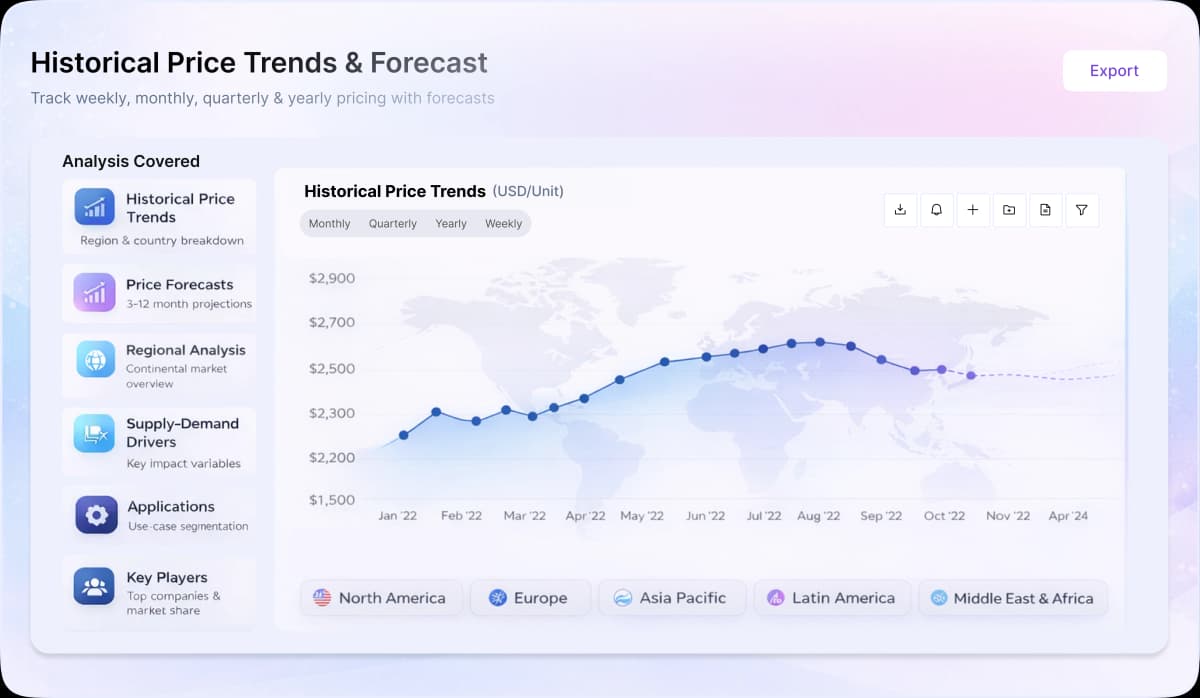
- Global refined olive oil prices witnessed a mixed trend during Q1’26 as improved European harvests initially eased prices, while freight disruptions linked to the Iran war pushed prices upward toward the end of the quarter.
- Feedstock availability improved due to better crop recovery across southern Europe, although weather risks and logistics disruptions continued influencing market sentiment.
- Downstream demand remained subdued after earlier price spikes, while higher freight and import costs increased procurement pressure in major importing regions.
Global refined olive oil prices followed a mixed trajectory during Q1’26 as improved harvesting activity across southern Europe corrected earlier supply shortages and pressured prices downward during the initial months of the quarter. However, the Iran war and shipping disruptions around the Strait of Hormuz sharply increased marine freight, fuel, and transportation costs, reversing the declining trend toward the quarter’s end. Feedstock conditions improved compared to previous drought-hit seasons as the EU maintained olive oil supply availability near ~2.506 million MT, supported by stronger crop recovery across Mediterranean producers. Spain remained the dominant regional supplier, contributing nearly 70% of total EU olive oil output, which supported export flows and improved product availability across international markets. Nevertheless, rerouted shipping activity and longer cargo transit times significantly increased landed costs for import-dependent regions, particularly the U.S., where Mediterranean-origin imports account for the majority of consumption. Downstream demand from foodservice, retail, and packaged food sectors remained cautious as consumers continued adjusting to previously elevated prices and inflationary pressure across edible oil markets.