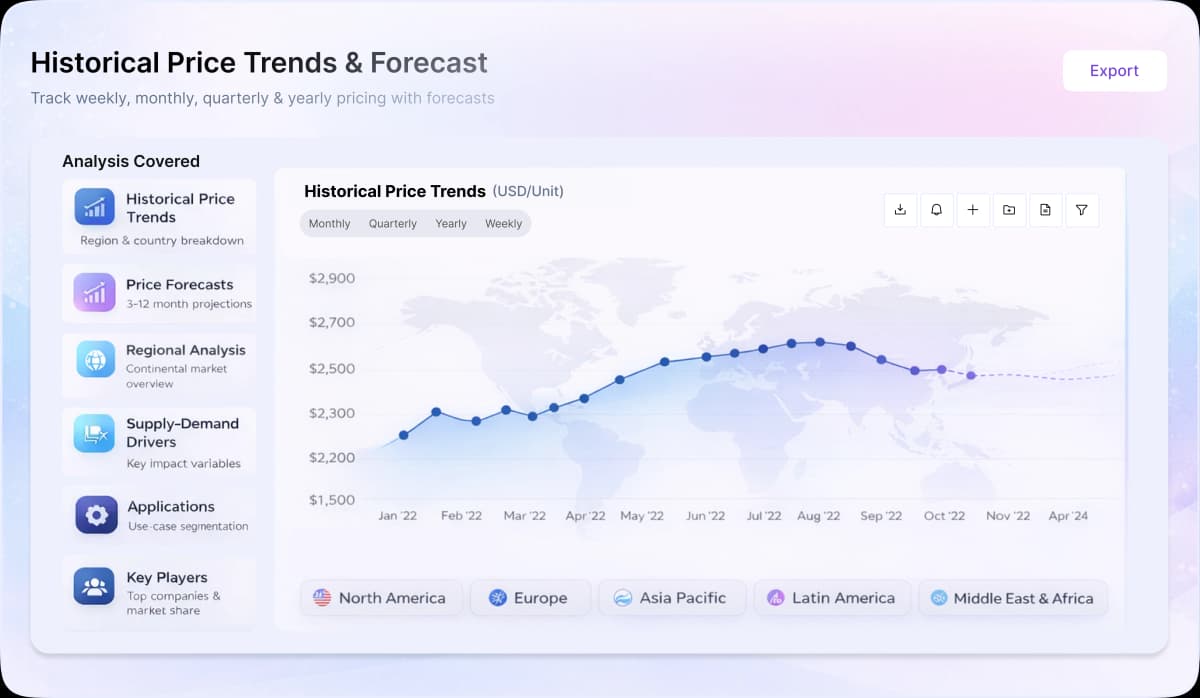
- Global sulphur prices moved strongly upward in Q1’26 as Middle East supply disruption tightened availability, while freight and insurance costs increased after the Strait of Hormuz closure.
- Feedstock conditions remained critical as sulphur supply, derived from oil and gas refining, was impacted by energy market volatility and export disruption.
- Downstream demand remained firm from phosphate fertilizers, sulphuric acid, and metals processing, sustaining procurement across regions.
Asia
Sulphur prices in Asia followed a strong upward trend in Q1 of 2026 due to tightening import availability and steady fertilizer demand. For India, the prices were ~4.08 RMB/kg (Spot FD) in January and ~4.97 RMB/kg (Spot FD) in March. Last quarter prices were ~25.53% lower than Q1’26 prices, while prices increased by ~21.85% from January to March. Supply tightened as the Middle East, accounting for 47% of global seaborne sulphur trade, faced export disruption, limiting cargo flow into Asia. Demand from phosphate fertilizers and sulphuric acid production remained firm, supporting sustained buying despite rising freight costs.
Europe
Sulphur prices in Europe showed a firm upward trend in Q1’26, driven by import dependency and higher logistics costs. Supply risk increased as the Strait of Hormuz disruption affected global trade flows, while energy and shipping costs rose sharply. Europe remained exposed due to reliance on imported sulphur and sulphuric acid feedstock, while stable demand from fertilizers and industrial processing allowed cost-side pressure to pass through into market sentiment.
North America
In Q1’26, sulphur prices in North America trended upward with lower volatility compared to Asia and Europe, supported by strong domestic refinery and gas recovery supply. U.S. sulphur production was estimated at 8.1 million tons in 2025, reflecting a substantial domestic supply base that limited volatility but still transmitted global cost pressure into the market. Downstream demand from fertilizers and metals processing remained steady, maintaining consistent consumption levels.