Tomato Puree Price Trend Analysis 2026: Price Drivers, Supply Demand Analysis, Latest News, Market Insights & Historical Prices

Siddharth David profile photo
Written BySiddharth David

Procurement Resource Database

Laptop screen

Turn price intelligence into action with the Procurement Resource Database. Log in or subscribe to unlock live price trends, historical charts, supplier databases, cost curves, and analyst-backed insights across chemicals, agriculture, energy, packaging, and more. Use these tools to benchmark your contracts, plan budgets with confidence, and stay ahead of market moves on every product you buy.

0

+

Products

0

+

Regions

0

+

Subscriptions

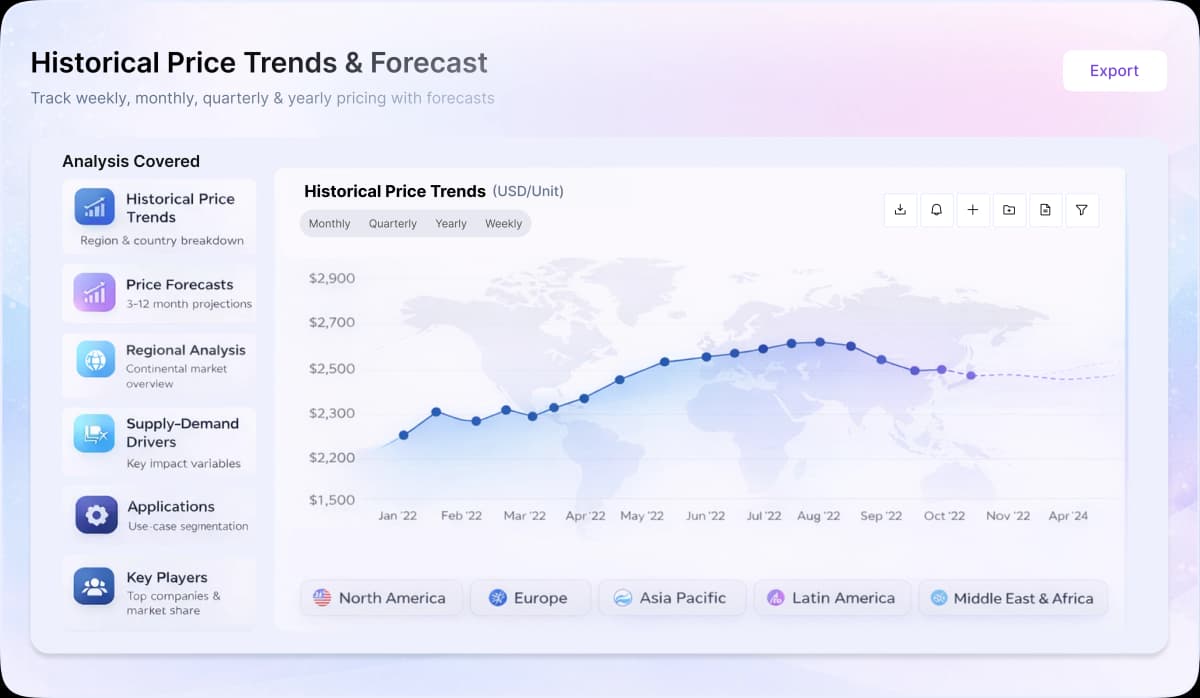
During 2025, tomato puree prices displayed a mixed but generally firm trend, influenced mainly by fluctuations in fresh tomato availability and processing economics. In the first half of the year, abundant tomato arrivals from winter harvests improved raw material availability for processors, allowing production units to operate at comfortable rates. This supported relatively stable pricing in the early months, although transportation and packaging costs prevented any major downward correction in puree prices despite softer fresh tomato values. In the second half of 2025, pricing conditions became firmer as weather-related disruptions affected tomato harvests across key producing regions. Heavy rainfall and irregular crop arrivals tightened raw material availability, raising procurement costs for processing units. Although improved Kharif arrivals offered temporary relief and supported some stabilization, renewed supply pressure later in the year once again strengthened prices. Demand from foodservice operators, sauce manufacturers, and institutional buyers remained consistent throughout the period, providing steady support to the market.

Overall, the tomato puree market remained more insulated than the fresh tomato segment, though it still reflected the broader supply volatility seen across the agricultural value chain.


About Tomato Puree

Tomato puree is a thick liquid made by cooking and straining tomatoes. The term tomato puree has different interpretations in different regions; like in the USA, it is an unseasoned processed food, whereas seasoned versions are prevalent throughout Europe.

The difference between tomato puree, paste and sauce lies in the consistency; generally, the puree is much thicker and richer in flavour. Tomato puree contains antioxidants, including lycopene, beta-carotene, and vitamin E & C, which help reduce blood pressure and improve overall immune function.

Tomato Puree Product Detail

HS Code
200290
Industrial Uses

Culinary, Consumer Goods, Food and Beverage

Synonyms

Solanum lycopersicum fruit puree

Supplier Database

Galla Foods, Kiril Mischief, China Kunyu Industrial Co., Ltd., Aditi Foods (India) Pvt. Ltd, Riviana Foods Inc.

Regional Coverage

Asia Pacific

China, India, Indonesia, Pakistan, Bangladesh, Japan, Philippines, Vietnam, Iran, Thailand, South Korea, Iraq, Saudi Arabia, Malaysia, Nepal, Taiwan, Sri Lanka, UAE, Israel, Hongkong, Singapore, Oman, Kuwait, Qatar, Australia, and New Zealand

Europe

Germany, France, United Kingdom, Italy,Spain, Russia, Turkey, Netherlands, Poland, Sweden, Belgium, Austria, Ireland Switzerland, Norway, Denmark, Romania, Finland, Czech Republic, Portugal and Greece

North America

United States and Canada

Latin America

Brazil, Mexico, Argentina, Columbia, Chile, Ecuador, and Peru

Africa

South Africa, Nigeria, Egypt, Algeria, Morocco

CurrencyUS$ (Data can also be provided in local currency)

Supplier Database AvailabilityYes

Customization ScopeThe report can be customized as per the requirements of the customer

Post-Sale Analyst Support360-degree analyst support after report delivery

Note: Our supplier search experts can assist your procurement teams in compiling and validating a list of suppliers indicating they have products, services, and capabilities that meet your company's needs.

Tomato Puree Production Processes

The tomatoes are harvested, followed by washing and sorting. Then they are cut into smaller pieces and heated to concentrate the flavour extracted in the next stage. After a series of cooling and sterilization processes, the puree is sent for bottling and packing.

Frequently Asked Questions

The tomato puree outlook is firm, with prices expected to hold at elevated levels. The market remains tightly linked to seasonal raw tomato supply cycles, energy and packaging costs, and steady food processing demand. Any weather-driven disruption across Indian or Mediterranean growing regions would sustain upward pressure, while improved harvests and stable feedstock costs could offer modest relief. Harvest monitoring remains the most useful lever for buyers navigating shorter contract cycles.

Raw tomato supply at farm level is the dominant factor. Erratic winter harvests across key Indian states (Andhra Pradesh, Karnataka, Maharashtra) and Mediterranean hubs (Italy, Spain) constrain feedstock availability, tightening puree output and lifting procurement costs. Sustained energy and packaging cost pressure, intermittent logistics disruption, and freight cost volatility compound the squeeze. Steady orders from sauce manufacturers, institutional caterers, and export-oriented processors absorb available supply, preventing price softening, while improved spring arrivals can modestly ease conditions by raising processor utilisation rates.

Tomato puree production concentrates in California, Italy, Spain, China via COFCO Tunhe, and India's Andhra Pradesh, Karnataka, and Maharashtra, where weather-driven crop shortfalls tighten global supply. Exporters include the USA, Italy, Spain, and China, with Europe, the Middle East, and South and Southeast Asia as import markets. Key processors include Ingomar Packing Company, The Morning Star Company, and COFCO Tunhe. Buyers favor shorter contract cycles amid limited raw tomato supply visibility.

Seasonal and weather disruptions drive tomato puree supply pressure. Erratic winter harvests in Andhra Pradesh, Karnataka, Maharashtra, Italy, and Spain constrain raw tomato arrivals, keeping feedstock tight and costs elevated. Spring can bring modest relief, but logistics disruptions and steady downstream demand from sauce manufacturers and institutional buyers prevent meaningful price softening. Unseasonal rainfall and severe heatwaves across Maharashtra, Karnataka, Andhra Pradesh, and Himachal Pradesh reduce arrivals and spike costs, while heavy monsoon rains further disrupt supply chains.

Tomato harvesting is seasonal and region-specific. Andhra Pradesh, Karnataka, and Maharashtra harvest rabi winter crops November through March and Kharif monsoon crops September to November. Italy and Spain harvest July to September; California runs July through October. These windows concentrate raw material availability, so processors build stocks during peak arrivals and face tight supply off-season. Disruptions such as erratic winter arrivals across India and the Mediterranean push procurement costs higher, while strong harvests ease pricing pressure.

Sauce manufacturers, institutional caterers, export-oriented processors, and retail channels are the primary downstream drivers of tomato puree demand. Sauce producers rely on puree for marinara, pizza sauce, hot sauce and salsa, while institutional caterers and ready-to-eat manufacturers use it across processed foods and savoury baked goods. Retail consumption and foodservice recovery keep demand resilient, preventing meaningful price softening despite improved tomato arrivals in spring. Sustained pull from multiple end-use segments, combined with intermittent logistics disruption, maintains firm and slightly elevated pricing.

Procurement Resource assesses tomato puree prices through a structured, data-driven methodology that combines primary engagement with producers, suppliers and traders, secondary market data, continuous monitoring of feedstock and input costs, trade-flow and inventory tracking, and exchange or spot benchmarks. All inputs are validated and translated into a transparent price assessment and outlook. The detailed methodology is available on the Procurement Resource website.

Our Price Analysis Methodology

About the Author

Siddharth David profile photo

Siddharth David

Manager - Market Research

Delivering market research and procurement intelligence at Procurement Resource with a focus on economic forecasting, commodity analysis, and client advisory to help sourcing teams make data-backed purchasing decisions.

Schedule Demo

Schedule A Demo

Experience how Procurement Resource transforms raw material price data into clear, decision ready intelligence. Optimise your performance with reliable, expert market data and analysis. Schedule your demo today to experience a live walk-through where our experts will showcase interactive price charts, forecasted prices, and insights driving the prices for your key commodities, tailored to your workflows. Contact us now!

Our Team will be happy to assist you

We are just a text away

+1

Still Need Help?

Europe & Africa

+44 7573 171117

[email protected]

USA & Canada

+1 254 254 1750

[email protected]

APAC

+91 8850629517

[email protected]

Other Related Reports

Tomato Puree Production from Mashing

This report provides the cost structure of tomato puree production by mashing. Fresh tomatoes are picked, washed, and their skins are removed.

Unlock full access to Procurement Resource's price databases, interactive charts, and short-term forecasts for thousands of commodities. Elevate your sourcing decisions by comparing prices across regions, downloading historical data, and layering in analyst-backed insights, all with our flexible plans that scale as your portfolio grows.

Still have any Questions

Contact Us
Mastercard
Wire
VISA
Stripe

Why Procurement Database

Commodity Market Intelligence

Commodity Market Intelligence

Track prices, market movements, supply-demand dynamics, and industry developments across hundreds of commodities through a centralized intelligence platform built for informed procurement decisions.

Price Forecasts & Market Outlooks

Price Forecasts & Market Outlooks

Understand market fluctuations using analyst-backed forecasts, historical pricing patterns, and evolving industry trends to strengthen sourcing strategies and budget planning.

Cost & Procurement Optimization

Cost & Procurement Optimization

Leverage cost models, pricing benchmarks, and procurement insights to evaluate purchasing opportunities, improve negotiations, and enhance operational efficiency.

Global & Regional Market Insights

Global & Regional Market Insights

Access region-specific price trends, trade activities, capacity changes, and supply chain developments influencing commodity markets worldwide.

1/4