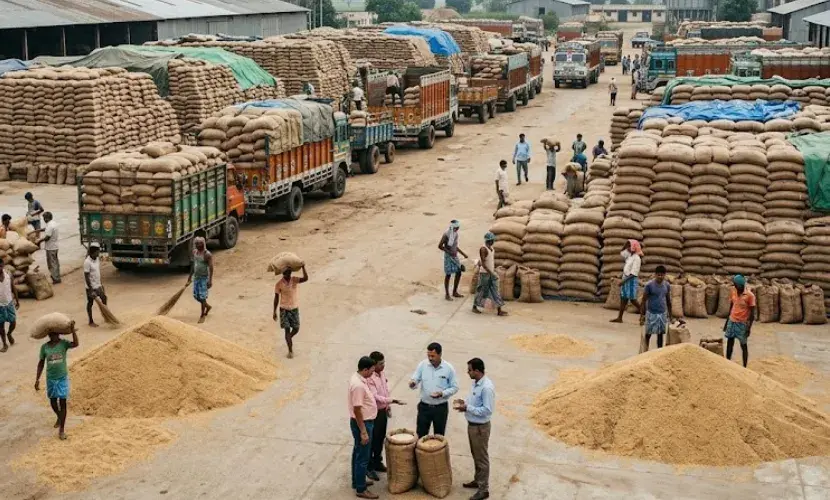
- Bangladesh’s salt output fell to 17.68 lakh tonnes by April 27, down from 18.61 lakh tonnes a year earlier, after heavy rain disrupted peak-season harvesting.
- Farmers are facing losses despite higher prices, as flooded fields damaged partly formed salt and reduced the volume available for sale.
- Domestic supply is the main concern, with annual demand at 27.15 lakh tonnes and production now at risk of falling short of target.
- Consumers could face price pressure if reduced output tightens local market supply in the coming months.
- The global salt market is unlikely to be directly affected because Bangladesh has a very small share of international salt exports.
- No major country or region outside Bangladesh is expected to face a supply shock from the disruption.
- India could see limited regional impact if Bangladesh increases salt imports to cover a domestic shortfall.
Heavy rain has halted salt production in Bangladesh during the most important harvesting period of the year, putting pressure on domestic supply and raising concern that output may fall short of national demand.The disruption has come at the worst point in the season for farmers. Salt production normally runs from November to May, with April and May producing the largest share because stronger heat helps seawater evaporate faster. This year, repeated storms and rainfall have flooded fields, damaged partly formed salt and stopped farmers from collecting crops that were close to harvest.
Bangladesh Small and Cottage Industries Corporation data show that output stood at 17.68 lakh tonnes as of April 27, down from 18.61 lakh tonnes at the same point last season. The country’s annual salt demand is 27.15 lakh tonnes, leaving the sector under pressure as the season nears its end.Production was suspended from April 28 to May 2 after repeated rain and storms hit salt-producing areas. Around 12 days of rainfall during the season have already reduced output, with farmers in Cox’s Bazar, Moheshkhali and nearby areas reporting heavy damage to salt fields.Farmers are getting better prices than last year, but the higher rate has not protected them from losses. The average farm-gate price has risen to Tk 255 per maund, compared with Tk 230 at the same time last year. Prices were around Tk 180 per maund early in the season before moving higher, but many farmers now have much less salt to sell.
The loss is especially painful because a batch of salt can usually be harvested within about three days during the hottest part of the year. A kani of land, equal to 40 decimal, generally produces 300 to 350 maunds of salt in a full season, with a large share coming in April and May. This year, rain has cut production sharply in many fields, and some farmers expect losses of Tk 25,000 to Tk 30,000 per kani.
Global impact expected to remain limited
The impact on the world salt market is expected to be minimal. Bangladesh is not a major global salt exporter, and public trade data show that its salt exports were only $73,600 in 2024, equal to a very small share of global exports. Its reported export destinations included Singapore, Australia, South Korea, Malaysia and the United Kingdom, but those shipments were too small to affect supply or prices in those markets.
No major country or region outside Bangladesh is expected to face a direct supply shock from this disruption. The global salt market is supplied mainly by much larger producers, including China, the United States and India, with world production far above Bangladesh’s domestic output. A shortfall in Bangladesh would not be large enough to move global prices unless similar weather problems hit major producing countries.
India is the only major regional market likely to feel a limited effect if Bangladesh needs to import more salt to cover a domestic gap. Any added demand would matter more for Indian exporters and regional trade flows than for the wider world market. For global producers and consumers, the Bangladesh disruption is expected to remain a local and regional issue, not an international supply crisis.