Prakhar Panchbhaiya
Assistant Manager: Business Insights and Content
Supporting procurement teams with category intelligence, market research, price trends, supply-demand analysis, and strategic sourcing insights across key industries.

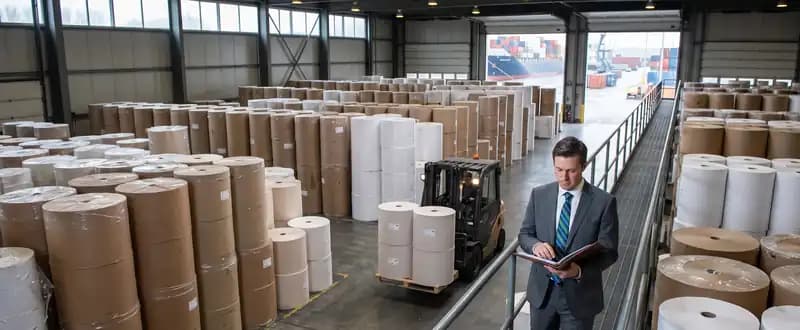
North American paper and packaging buyers face a fresh cost increase after a large containerboard producer announced a $140 per ton adjustment. The proposed rise is about twice the size usually sought by producers and marks the third pricing effort within a short purchasing cycle.
Containerboard is the base material used to manufacture corrugated boxes. Any recognised increase can move through box contracts, sheet plants and packaging distributors, raising costs for food companies, consumer-goods producers, manufacturers and online retailers. Converted-box prices often adjust after the underlying linerboard and corrugating-medium benchmarks move.
The producer action follows the removal of close to 10% of North American containerboard capacity through mill closures and machine shutdowns. The reduced production base has given operating mills less room to absorb unplanned outages or sharp order increases. Higher recovered-paper costs and improving corrugated shipments have added support to supplier pricing efforts.
The requested $140 per ton rise is unlikely to be accepted in full across every contract. Industry expectations point to a recognised movement of about $50 to $70 per ton. Even partial acceptance would add to the net $100 per ton increase already reflected in assessed containerboard prices during the current pricing cycle.
Other large paper producers face pressure to announce matching adjustments. A broad response would reduce buyers’ ability to avoid the increase by moving volume between suppliers. Mills with open production slots could also reserve capacity for customers willing to accept revised pricing or longer commitments.
Procurement teams should separate containerboard exposure from finished-box exposure. A box invoice contains paper, converting, ink, adhesive, labour and freight costs. Suppliers should show how much of a requested adjustment comes from the paper component rather than applying the full board increase to the entire converted-product price.
Buyers can also review board grades, basis weights, print coverage and box dimensions. Reducing material use without weakening product protection can offset part of the increase. Dual sourcing remains useful, but available capacity and freight distance need to be checked before shifting volume.
Inventory decisions require care. Building box stocks can protect near-term production, but corrugated packaging consumes warehouse space and can become obsolete after product or artwork changes. Contract reviews, supplier allocation checks and packaging redesign work offer a better response than unrestricted stock accumulation.
Assistant Manager: Business Insights and Content
Supporting procurement teams with category intelligence, market research, price trends, supply-demand analysis, and strategic sourcing insights across key industries.



.webp&w=1080&q=75)

We are Just a Text away