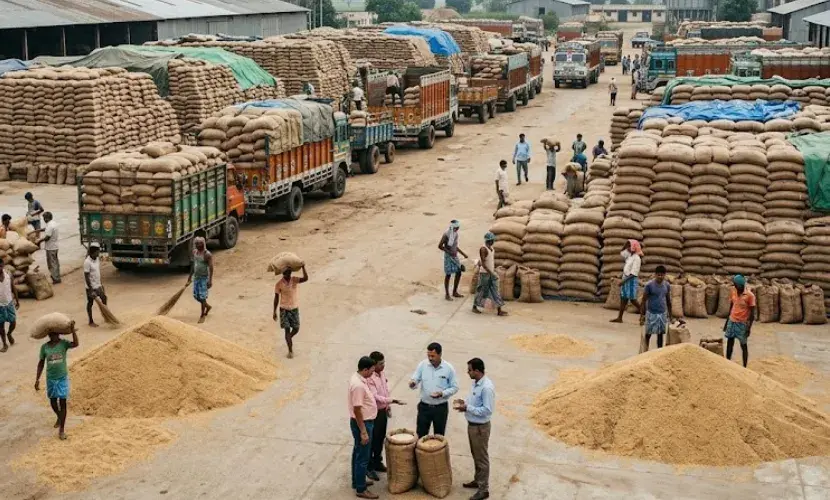
- Punjab rice mills and warehouses are nearing capacity.
- Custom milling rules have been relaxed to speed up processing.
- Faster milling can create storage space for new paddy.
- Transport capacity will remain important during procurement.
- Rice buyers should monitor mill and warehouse availability.
Punjab has relaxed its custom milling policy as rice mills and government storage facilities approach capacity ahead of the new paddy procurement season. The policy change is designed to accelerate milling and movement of stored grain so that new arrivals can be accommodated without creating a larger storage bottleneck.
Storage availability has become an important issue for the rice supply chain because Punjab handles large quantities of paddy during the procurement season. When existing stocks remain in warehouses and mills, incoming paddy can face delays in unloading, processing and onward movement.
The revised milling arrangements are intended to speed up the conversion of procured paddy into rice. Faster milling can release storage capacity and improve the flow from procurement centers to mills and then into government warehouses or distribution channels.
For rice procurement teams, the development is relevant because storage congestion can affect buying schedules and delivery planning. Buyers sourcing paddy or milled rice from Punjab may need to monitor mill availability and transportation capacity as procurement volumes increase.
Millers are also affected by the timing of procurement. Limited storage can force mills to manage incoming paddy and existing rice inventories at the same time. Changes to milling requirements can help reduce the time grain remains at procurement centers, but the benefit depends on how quickly mills can process and transport the finished rice.
Logistics will remain important. Even when milling capacity is available, insufficient trucks, rail movement or warehouse space can delay the movement of rice. Buyers with multiple delivery locations may have greater flexibility when supply becomes concentrated around specific procurement centers.
The policy change also has implications for government procurement operations. Keeping storage capacity available before the new crop arrives can reduce the risk of congestion during peak procurement periods and support smoother movement of grain from farms.
Private food processors should also watch regional stock levels. A temporary storage bottleneck does not necessarily mean a shortage of rice, but it can change where material is held and how quickly suppliers can fulfill new orders.
Procurement teams can reduce disruption by confirming mill capacity, warehouse availability and delivery schedules before placing large orders. Regional sourcing can also provide an alternative if Punjab facilities become congested.
The policy adjustment is aimed at creating more space and faster grain movement. Its success will depend on the ability of mills, warehouses and transport operators to clear existing stocks before new paddy volumes arrive.