Prakhar Panchbhaiya
Assistant Manager: Business Insights and Content
Supporting procurement teams with category intelligence, market research, price trends, supply-demand analysis, and strategic sourcing insights across key industries.

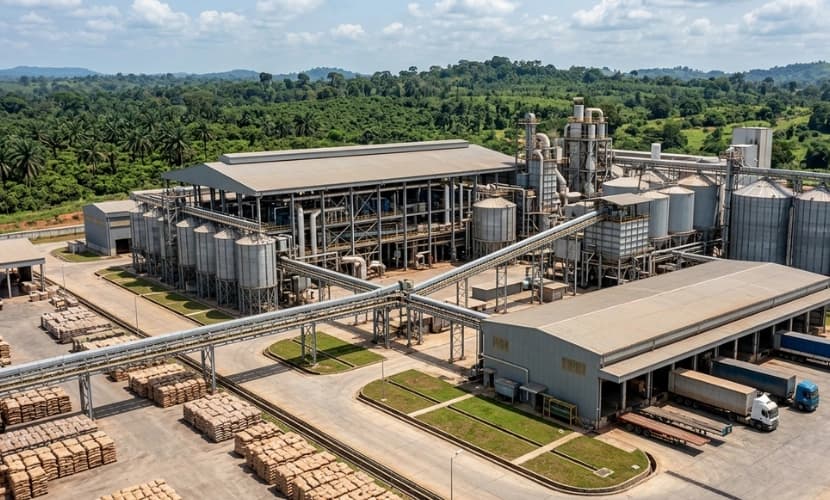
Côte d’Ivoire is expanding its domestic cocoa-processing capacity as the world's largest cocoa producer seeks to retain more value from its crop within the country. Installed processing capacity is expected to rise from 1.155 million tonnes to 1.344 million tonnes after new industrial facilities come into operation.
The expansion will change the way part of the country's cocoa crop moves through the supply chain. More beans could be processed locally rather than exported in raw form, increasing demand from domestic processors and creating closer links between farms, exporters and industrial facilities.
The country processed about 650,000 tonnes of cocoa during the previous season, equivalent to around 30% of available production according to the report. The additional installed capacity gives processors more room to handle local beans, provided sufficient crop volumes are available and the new facilities achieve stable operations.
Request the Latest Cocoa Prices Data - Access Price Insights Now
For cocoa procurement teams, the development could affect the availability of beans for export markets. Higher domestic processing does not necessarily reduce total cocoa production, but it can alter the balance between raw-bean exports and locally processed cocoa products.
The government is also calling for greater investment in research and agricultural productivity. The priorities include higher-yielding planting material and cocoa varieties with stronger resistance to disease and drought. Mechanization and improved plant-health measures are also being promoted.
These measures matter to long-term procurement because farm productivity determines how much cocoa can reach processors after accounting for weather and crop losses. Better planting material can support future yields, but new trees and improved varieties take time to affect commercial bean volumes.
Buyers should also monitor the location and operating status of new processing facilities. Greater local capacity can increase demand for nearby beans and may change trading patterns between cooperatives, exporters and processors.
Companies sourcing cocoa for chocolate manufacturing can respond by maintaining relationships with several approved suppliers and monitoring changes in domestic processing. Traceability will also become more important as a larger share of production moves through formal local processing channels.
The capacity expansion points to a gradual shift toward greater domestic value addition. For international buyers, the change could make Côte d’Ivoire's processing industry more important even as the country remains a major source of raw cocoa beans.
Assistant Manager: Business Insights and Content
Supporting procurement teams with category intelligence, market research, price trends, supply-demand analysis, and strategic sourcing insights across key industries.


We are Just a Text away