Prakhar Panchbhaiya
Assistant Manager: Business Insights and Content
Supporting procurement teams with category intelligence, market research, price trends, supply-demand analysis, and strategic sourcing insights across key industries.

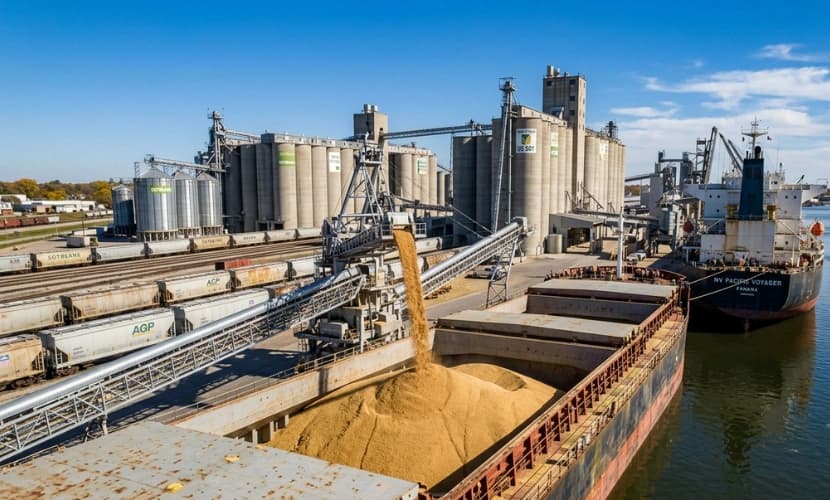
United States soybean futures firmed through the final week of August 2026, with fresh Chinese buying and yield uncertainty pulling the November Chicago contract higher. On August 21, private exporters disclosed three grain sales to the United States Department of Agriculture, including 26.2 million bushels of soybeans for shipment to China during the 2026 to 2027 marketing year. Two more parcels covered 8.1 million bushels of corn to unknown destinations and an additional 26.5 million bushels marked for unspecified buyers, all for the new crop year that begins on September 1.
The China purchase was the largest single day soybean sale in more than a month and signaled a real recovery in Chinese demand for United States origin beans after a slow first half of the year. State trading companies in China have been booking new crop cargoes as they wait for tariff decisions in Washington, and traders in Chicago read the sale as an early indication that Beijing wants to lock in at least a portion of its winter feed and crush needs before harvest pressure builds in the Midwest.
Request the Latest Soybeans Prices Data - Access Price Insights Now
By August 27, the September soybean contract at the Chicago Board of Trade found support around 1,239 cents per bushel with resistance mapped near 1,268, 1,280, and 1,292 cents. Soybean meal moved higher on the same session while soybean oil traded mixed to slightly weaker. Traders also weighed a fresh crop estimate from Pro Farmer that pegged the United States soybean yield at 53.3 bushels per acre with total production near 4.572 billion bushels, both figures running above the USDA August forecast. The corn estimate came in lighter than the USDA number, keeping the row crop story balanced between a large bean crop and a slightly tighter corn balance.
Weather kept the risk premium alive. Southern and western portions of the Midwest stayed hot and dry through the middle of the week, and while northern belt areas expected cooler and drier conditions, the southern zone was set to remain warm and dry into the following week. Soybeans were entering the pod fill and leaf drop window, the two phases that most decide final yield.
For procurement teams in crush, feed, and vegetable oil supply chains, the message is to expect steady to firmer bean prices into the harvest window. Feed buyers in South and Southeast Asia should watch Brazilian export offers, since a firm Chicago board will lift Paranagua and Santos values as well. Meal buyers in India and Vietnam may want to secure October and November coverage while board levels stay below the 1,292 cent resistance zone.
Assistant Manager: Business Insights and Content
Supporting procurement teams with category intelligence, market research, price trends, supply-demand analysis, and strategic sourcing insights across key industries.


We are Just a Text away