Potato Flakes Price Trend Analysis 2026: Market Insights, Latest News, Supply Demand Analysis, Price Drivers & Historical Prices

Pragati Agarwal profile photo
Written ByPragati Agarwal

Procurement Resource Database

Laptop screen

Turn price intelligence into action with the Procurement Resource Database. Log in or subscribe to unlock live price trends, historical charts, supplier databases, cost curves, and analyst-backed insights across chemicals, agriculture, energy, packaging, and more. Use these tools to benchmark your contracts, plan budgets with confidence, and stay ahead of market moves on every product you buy.

0

+

Products

0

+

Regions

0

+

Subscriptions

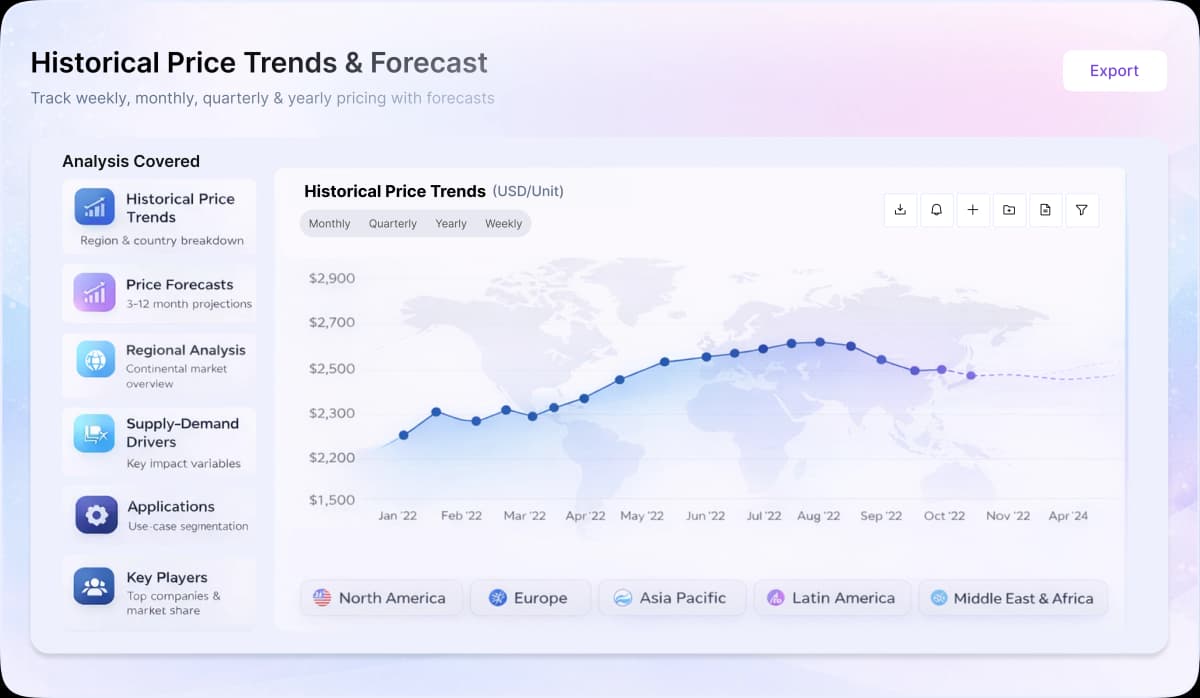
Potato Flakes prices recorded a fluctuating trend during the second half of 2025, shaped by the interplay of unsteady feedstock procurement costs and restrained offtake from key downstream consuming industries. Processing activity across major manufacturing facilities remained inconsistent throughout the period, as irregular arrivals of fresh potatoes and concerns over raw material quality disrupted production schedules. The elevated input costs inherited from earlier crop stress events continued to pressure manufacturer margins, keeping finished product supply relatively constrained during the initial phase of the period.

A gradual improvement in potato harvest output across primary growing belts subsequently eased raw material availability, allowing processors to resume fuller capacity operations. Finished product supply increased as procurement costs softened, yet this did not translate into corresponding demand growth. Buyers across the instant food, convenience meal, snack seasoning, and bakery premix segments approached procurement cautiously, maintaining lean inventory positions rather than committing to forward volumes. International demand from food manufacturers in the Middle East and Southeast Asian markets also stayed measured, with purchasing decisions largely driven by immediate requirements.


About Potato Flakes

Potato Flakes are basically the flat chunks of dehydrated mashed potato. Out of all the forms of dried potatoes, Potato Flakes are the only one that can easily be reconstituted using cold water, and thus, they are widely utilised to produce numerous food products in the food and beverage industry.

Potato Flakes Product Detail

Industrial Uses

Potato chips, French fries, Instant mash potato, Potato crisps

Supplier Database

Lutosa SA (McCain Foods Limited), Lamb Weston / Meijer (LW/M), Nestlé SA, Aviko Rixona Oostrum

Regional Coverage

Asia Pacific

China, India, Indonesia, Pakistan, Bangladesh, Japan, Philippines, Vietnam, Iran, Thailand, South Korea, Iraq, Saudi Arabia, Malaysia, Nepal, Taiwan, Sri Lanka, UAE, Israel, Hongkong, Singapore, Oman, Kuwait, Qatar, Australia, and New Zealand

Europe

Germany, France, United Kingdom, Italy,Spain, Russia, Turkey, Netherlands, Poland, Sweden, Belgium, Austria, Ireland Switzerland, Norway, Denmark, Romania, Finland, Czech Republic, Portugal and Greece

North America

United States and Canada

Latin America

Brazil, Mexico, Argentina, Columbia, Chile, Ecuador, and Peru

Africa

South Africa, Nigeria, Egypt, Algeria, Morocco

CurrencyUS$ (Data can also be provided in local currency)

Supplier Database AvailabilityYes

Customization ScopeThe report can be customized as per the requirements of the customer

Post-Sale Analyst Support360-degree analyst support after report delivery

Note: Our supplier search experts can assist your procurement teams in compiling and validating a list of suppliers indicating they have products, services, and capabilities that meet your company's needs.

Potato Flakes Production Processes

  • Production of Potato Flakes via Drum Drying Process

Potatoes are first cooked and mashed, then crushed by rollers on the surface of a drum. The mashed potato is fast-dried until its humidity reaches the desired level, then the layer of dried, mashed potato is scraped from the drum, thus, leaving behind Potato Flakes.

Frequently Asked Questions

The potato flakes outlook for H2 2026 hinges on fresh potato crop conditions and weather across key growing regions. Downstream demand from packaged food manufacturers, QSR operators, and snack producers should remain steady but restrained, with buyers favouring short-cycle replenishment. Supply conditions would improve if harvest quality strengthens and input costs ease, while deteriorating crop conditions or further input cost increases would tighten availability and support firmer pricing.

Potato flakes prices are shaped by fresh potato costs, post-harvest handling and crop conditions. Subdued fresh potato procurement costs lower processing input costs and temper upward price pressure. Intermittent cold storage transitions and variable post-harvest handling quality introduce periodic supply tightness, while planting uncertainty across South Asian growing belts adds supply ambiguity. Irregular rainfall and elevated agricultural input costs reduce forward supply visibility. Downstream demand from packaged food manufacturers, quick-service restaurant operators, and snack producers is steady but restrained, with buyers favouring short-cycle replenishment.

Potato flakes are produced by processors such as Aviko Rixona in the Netherlands, Emsland Group in Germany, and Idahoan Foods, Basic American Foods and Lamb Weston in the United States. Production is tied to fresh potato availability from key growing regions, including South Asian growing belts. Export demand is measured from Middle Eastern and Southeast Asian food processors.


Seasonal and weather conditions significantly shape potato flakes production. Irregular rainfall and planting uncertainty across growing belts create raw material tightness, while heat and soil moisture deficits can stress potato crops, as seen in Ireland and the UK, where growth can halt, and in France and Spain during heatwaves. These conditions degrade tuber quality and reduce yield visibility, tightening fresh potato procurement for processors and sustaining upward pressure on potato flakes prices.

Potatoes are seasonal crops whose availability is governed by harvest cycles and growing conditions, directly driving potato flakes pricing year-round. Supply normalisation after harvest keeps procurement costs subdued and finished-product availability comfortable. Cold storage transitions, variable post-harvest handling quality, and planting uncertainty across South Asian growing belts introduce periodic tightness. Irregular rainfall and elevated input costs weaken farmer confidence and forward supply visibility, adding intermittent upward pressure. Downstream buyers favouring short-cycle replenishment keep demand steady but restrained.

Packaged food manufacturers, quick service restaurant operators, and snack producers are the primary downstream drivers of potato flakes demand, using them in instant mashed potatoes, ready-to-eat meals, and snack seasonings. Bakeries and animal feed operations also contribute steady consumption. Downstream demand is steady but restrained, with buyers favouring short-cycle replenishment over strategic inventory builds, which limits upward price pressure despite periodic raw potato tightness from irregular rainfall and planting uncertainty.

In the current 2026 crop year, US potato plantings fell to approximately 873,000 acres, down roughly 29,000 acres or 3.2% from 2025, with the harvested area forecast at around 867,600 acres. India produced approximately 58.57 million tonnes in 2024-25. The US acreage reduction, concentrated in Idaho, signals tighter raw potato supply entering processing channels, which underpins support for potato flakes pricing despite subdued downstream demand.

Procurement Resource assesses potato flakes prices through a structured, data-driven methodology combining primary engagement with producers, suppliers and traders, secondary market data, monitoring of feedstock and input costs, trade flow and inventory tracking, and exchange or spot benchmarks. These inputs are validated and translated into a transparent price assessment and outlook. The detailed methodology is available on the Procurement Resource website.

Our Price Analysis Methodology

About the Author

Pragati Agarwal profile photo

Pragati Agarwal

Senior Business Insights Analyst

Delivering price trend analysis and procurement market insights at Procurement Resource, with expertise in identifying commodity patterns, supporting purchasing strategies, and improving cost efficiency through actionable market intelligence.

Schedule Demo

Schedule A Demo

Experience how Procurement Resource transforms raw material price data into clear, decision ready intelligence. Optimise your performance with reliable, expert market data and analysis. Schedule your demo today to experience a live walk-through where our experts will showcase interactive price charts, forecasted prices, and insights driving the prices for your key commodities, tailored to your workflows. Contact us now!

Our Team will be happy to assist you

We are just a text away

+1

Still Need Help?

Europe & Africa

+44 7573 171117

[email protected]

USA & Canada

+1 254 254 1750

[email protected]

APAC

+91 8850629517

[email protected]

Other Related Reports

Potato Starch Production from Extraction Process

This report provides the cost structure of potato starch production from the extraction process.

Unlock full access to Procurement Resource's price databases, interactive charts, and short-term forecasts for thousands of commodities. Elevate your sourcing decisions by comparing prices across regions, downloading historical data, and layering in analyst-backed insights, all with our flexible plans that scale as your portfolio grows.

Still have any Questions

Contact Us
Mastercard
Wire
VISA
Stripe

Related News

View All

Why Procurement Database

Commodity Market Intelligence

Commodity Market Intelligence

Track prices, market movements, supply-demand dynamics, and industry developments across hundreds of commodities through a centralized intelligence platform built for informed procurement decisions.

Price Forecasts & Market Outlooks

Price Forecasts & Market Outlooks

Understand market fluctuations using analyst-backed forecasts, historical pricing patterns, and evolving industry trends to strengthen sourcing strategies and budget planning.

Cost & Procurement Optimization

Cost & Procurement Optimization

Leverage cost models, pricing benchmarks, and procurement insights to evaluate purchasing opportunities, improve negotiations, and enhance operational efficiency.

Global & Regional Market Insights

Global & Regional Market Insights

Access region-specific price trends, trade activities, capacity changes, and supply chain developments influencing commodity markets worldwide.

1/4