PTA (Purified Terephthalic Acid) Price Trend Analysis 2026: Market Insights, Latest News, Historical Prices, Supply Demand Analysis & Price Drivers

Udeesha Tomar profile photo
Written ByUdeesha Tomar

Procurement Resource Database

Laptop screen

Turn price intelligence into action with the Procurement Resource Database. Log in or subscribe to unlock live price trends, historical charts, supplier databases, cost curves, and analyst-backed insights across chemicals, agriculture, energy, packaging, and more. Use these tools to benchmark your contracts, plan budgets with confidence, and stay ahead of market moves on every product you buy.


PTA (Purified Terephthalic Acid) Dashboard Inclusions

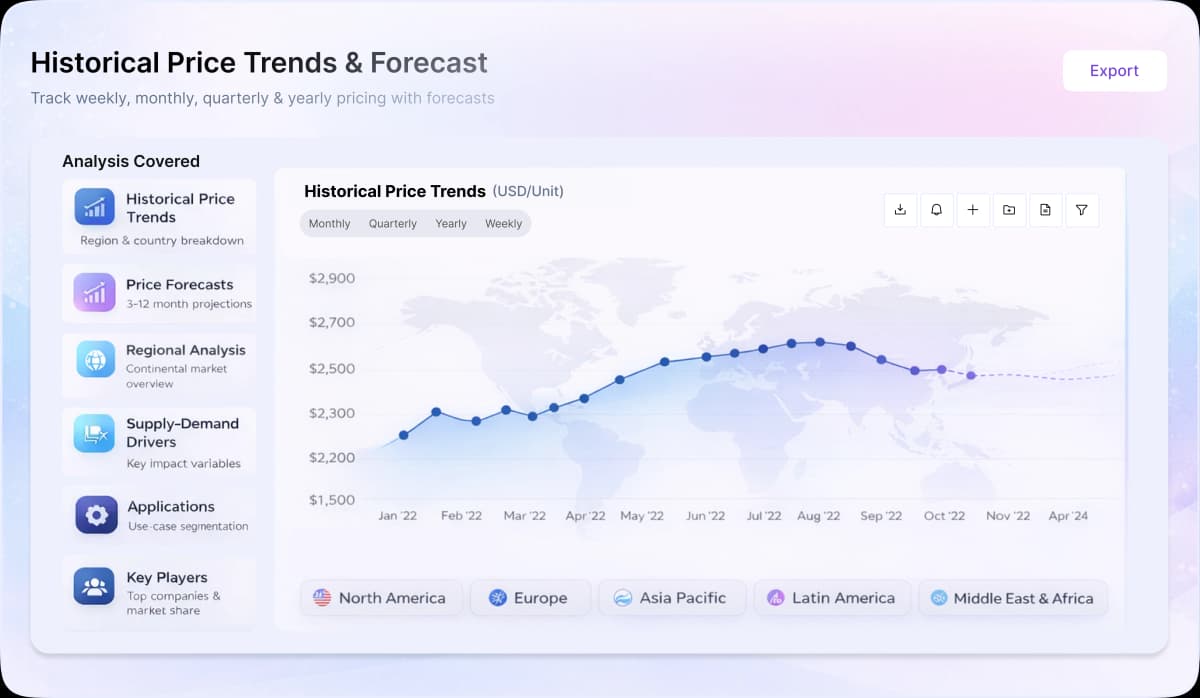
PTA (Purified Terephthalic Acid) Price Dasboard

0

+

Products

0

+

Regions

0

+

Subscriptions

Asia

In Q4’24, PTA prices in Asia exhibited an upward trend, primarily driven by the strong performance of its key feedstock, xylene. Chinese markets led the regional price surge, particularly in December, when supply tightness in xylene created upward pressure on PTA production costs.

The market was further supported by steady downstream polyester demand, especially from the textile sector preparing for the spring season. Southeast Asian producers operated at reduced rates during October and November due to maintenance schedules, which helped maintain the supply-demand balance. Indian markets showed mixed sentiment, with demand remaining moderate despite the festival season.

Europe

European PTA markets witnessed volatility throughout Q4’24. The market initially struggled with high energy costs and reduced operating rates at several facilities. However, by mid-November, the situation improved as energy prices stabilized. Downstream polyester demand remained sluggish, with many converters operating at lower rates due to economic uncertainties. The market saw some support from reduced imports from Asia, as Asian producers focused on their domestic markets. December brought modest improvements in demand as textile manufacturers began preparing for the spring season.

North America

The North American PTA market showed resilience in Q4’24. The region experienced improved margins compared to other global markets, benefiting from relatively stable feedstock costs. Producer inventory levels remained balanced, though operating rates were adjusted downward in December due to seasonal factors. Demand from the packaging sector remained steady, while textile and fibre applications showed some weakness. The Mexican market saw increased activity, particularly in the bottle-grade PET segment.

About Purified Terephthalic Acid

PTA or Purified Terephthalic Acid, a white coloured solid, is an organic compound that mainly serves as a commodity chemical. It is used as a raw material to produce high-performance multipurpose plastics like polybutylene terephthalate (PBT), polyethylene terephthalate (PET), polytrimethylene terephthalate (PTT) and even forms of bioplastics.

PTA (Purified Terephthalic Acid) Product Detail

Hs Code
291736
Chemical Formula

C8H6O4

Cas Number
100-21-00
Molecular Weight
166.13g/mol
Industrial Uses

Intermediate and precursor, Polyester fibres, Adhesives and sealant chemicals, Lubricants , Paints and coatings, Plasticisers , Pharmaceuticals, Metal-organic frameworks

Supplier Database

Reliance Industries Limited (RIL), Saudi Basic Industries Corporation (SABIC), Alpek S.A.B. de C.V., BP p.l.c., Eastman Chemical Company

Regional Coverage

Asia Pacific

China, India, Indonesia, Pakistan, Bangladesh, Japan, Philippines, Vietnam, Iran, Thailand, South Korea, Iraq, Saudi Arabia, Malaysia, Nepal, Taiwan, Sri Lanka, UAE, Israel, Hongkong, Singapore, Oman, Kuwait, Qatar, Australia, and New Zealand

Europe

Germany, France, United Kingdom, Italy,Spain, Russia, Turkey, Netherlands, Poland, Sweden, Belgium, Austria, Ireland Switzerland, Norway, Denmark, Romania, Finland, Czech Republic, Portugal and Greece

North America

United States and Canada

Latin America

Brazil, Mexico, Argentina, Columbia, Chile, Ecuador, and Peru

Africa

South Africa, Nigeria, Egypt, Algeria, Morocco

CurrencyUS$ (Data can also be provided in local currency)

Supplier Database AvailabilityYes

Customization ScopeThe report can be customized as per the requirements of the customer

Post-Sale Analyst Support360-degree analyst support after report delivery

Note: Our supplier search experts can assist your procurement teams in compiling and validating a list of suppliers indicating they have products, services, and capabilities that meet your company's needs.

Purified Terephthalic Acid Production Process

  • Production of PTA (Purified Terephthalic Acid) from p-Xylene via Amoco Process

p-Xylene serves as the feedstock for Terephthalic Acid production. In the Amoco process, p-xylene is oxidised in the presence of a cobalt manganese–bromide catalyst, which gives Terephthalic Acid as the result.

About the Author

Udeesha Tomar profile photo

Udeesha Tomar

AVP - Strategy and Solutions

Leading procurement research solutions across chemicals, materials, and food & beverages, with expertise in price forecasting and market analytics.

Our Price Analysis Methodology

Schedule Demo

Schedule a demo

Experience how Procurement Resource transforms raw material price data into clear, decision ready intelligence. Optimise your performance with reliable, expert market data and analysis. Schedule your demo today to experience a live walk-through where our experts will showcase interactive price charts, forecasted prices, and insights driving the prices for your key commodities, tailored to your workflows. Contact us now!

Our Team will be happy to assist you

We are just a text away

+1

Still Need Help?

Europe & Africa

+44 7573 171117

[email protected]

USA & Canada

+1 307 363 1045

[email protected]

APAC

+91 8850629517

[email protected]

Other Related Reports

Purified Isophthalic Acid (PIA) Production from Oxidation

This report provides the cost structure of Purified Isophthalic Acid (PIA) production by the oxidation process. The process involves oxidation of m-xylene using oxygen.

2- Hydroxypropanoic Acid Production from Carbohydrates (molasses, starch, or whey) via Fermentation

This report presents a detailed cost analysis of 2-hydroxypropanoic acid production from carbohydrates using the fermentation process.

Unlock full access to Procurement Resource's price databases, interactive charts, and short-term forecasts for thousands of commodities. Elevate your sourcing decisions by comparing prices across regions, downloading historical data, and layering in analyst-backed insights, all with our flexible plans that scale as your portfolio grows.

Still have any Questions

Contact Us
Mastercard
Wire
VISA
Stripe

Related News

View All

Why Procurement Database

Commodity Market Intelligence

Commodity Market Intelligence

Track prices, market movements, supply-demand dynamics, and industry developments across hundreds of commodities through a centralized intelligence platform built for informed procurement decisions.

Price Forecasts & Market Outlooks

Price Forecasts & Market Outlooks

Understand market fluctuations using analyst-backed forecasts, historical pricing patterns, and evolving industry trends to strengthen sourcing strategies and budget planning.

Cost & Procurement Optimization

Cost & Procurement Optimization

Leverage cost models, pricing benchmarks, and procurement insights to evaluate purchasing opportunities, improve negotiations, and enhance operational efficiency.

Global & Regional Market Insights

Global & Regional Market Insights

Access region-specific price trends, trade activities, capacity changes, and supply chain developments influencing commodity markets worldwide.

1/4