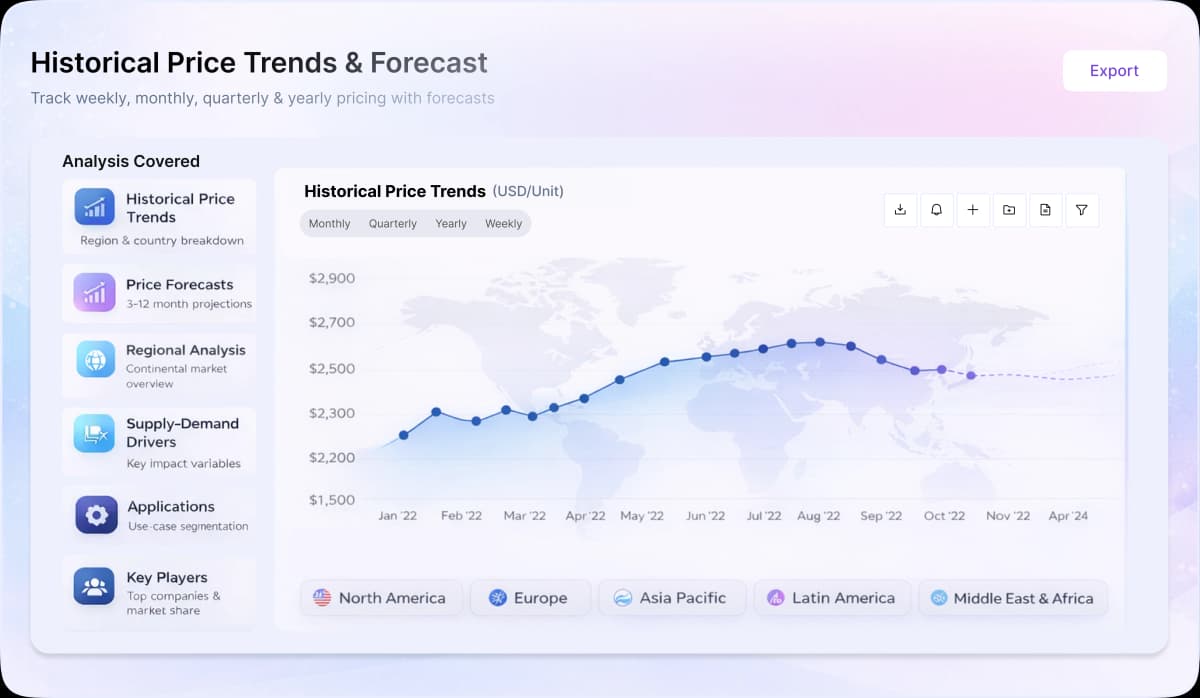
- Global styrene butadiene rubber (SBR) prices moved on a strong upward trend in Q1 2026, supported by rising feedstock costs and tightening supply, with volatility around the holiday period and sharp gains in March.
- Feedstock pressure remained elevated as butadiene and styrene prices increased, further intensified by the Iran war and disruptions in the Strait of Hormuz, which raised crude-linked costs and tightened supply chains.
- Downstream demand improved gradually, led by recovery in tire production and export activity, though cost pass-through remained uneven across regions.
Asia
The Asian Styrene Butadiene Rubber (SBR) market witnessed a mixed price trend in Q1 2026, with China prices rising by nearly 31% from around USD 1,749/MT in January to approximately USD 2,292.45/MT in March. Prices initially increased in January due to higher butadiene and styrene costs, along with improved tire operating rates ahead of the Spring Festival. Following the holiday period, the market weakened as demand recovery remained slow and supply stayed ample. However, prices rebounded sharply in March as the Iran war and disruptions in the Strait of Hormuz raised crude-linked feedstock costs, tightened butadiene availability, and increased production expenses. Lower plant operating rates and reduced inventories further supported the upward trend, while stronger tire production and exports improved demand. China exported 1.55 million tons of rubber tires during January and February 2026, contributing to firmer market sentiment.
Europe
In Europe, SBR prices followed an upward trend, supported by rising feedstock costs and global supply constraints. The Iran war and Strait of Hormuz disruptions increased freight and energy costs, tightening availability of petrochemical inputs. Demand remained stable, with tire producers facing higher costs and cautious purchasing.
North America
In North America, SBR prices moved higher, supported by elevated raw material costs and global supply tightness. Logistics disruptions linked to Middle East tensions increased transportation costs, while steady demand from automotive and tire sectors provided support. Market sentiment remained firm due to sustained cost pressure.