Almond and Cherry Flavor Notes Keep Benzaldehyde Demand Resilient Across Food and Beverage Formulations
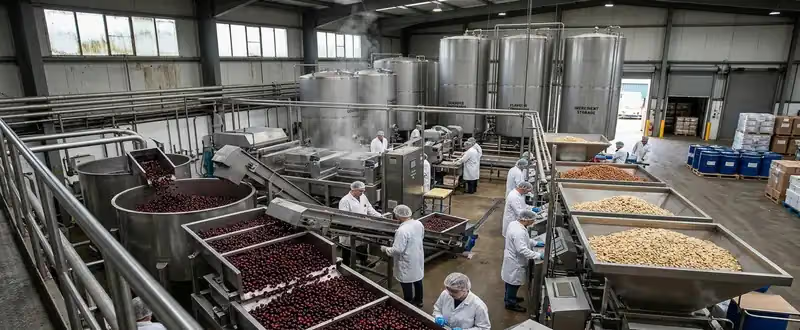
- Benzaldehyde production is shifting from traditional toluene chlorination toward catalytic oxidation, improving purity and reducing byproduct handling burden.
- Flavor and fragrance applications account for roughly a quarter of global benzaldehyde demand, led by almond and cherry flavor notes in food and beverage products.
- Bio-based and fermentation-derived production pathways are attracting growing investment, targeting natural-origin claims in food and cosmetic formulations.
- Pharmaceutical-grade benzaldehyde carries additional purity and documentation requirements distinct from industrial or flavor-grade material.
- Procurement teams should evaluate supplier production technology transitions, as these may affect impurity profiles and long-term pricing structure.
The global benzaldehyde industry is shifting its production technology as traditional chlorination-based manufacturing routes come under increasing pressure from regulatory, cost, and purity considerations. Benzaldehyde has historically been produced through the chlorination of toluene followed by hydrolysis, a process that generates chlorinated byproducts requiring careful handling and disposal. Producers are increasingly moving toward catalytic oxidation of toluene under controlled conditions, a route that yields higher-purity benzaldehyde while reducing the byproduct burden associated with the older chlorination pathway.
Flavor and fragrance applications represent the single largest end-use category for benzaldehyde, accounting for roughly a quarter of global consumption. The compound imparts characteristic almond and cherry notes that are difficult to replicate synthetically through alternative chemistries, making it a near-irreplaceable ingredient in a wide range of food, beverage, and personal care formulations. This entrenched position in flavor and fragrance applications provides a stable demand floor for the market even as other end-uses, including pharmaceutical intermediates and agrochemical synthesis, fluctuate with broader industrial cycles.
A parallel development gaining momentum across the supply base is growing investment in bio-based and fermentation-derived benzaldehyde production. Rather than starting from petrochemical toluene, these alternative pathways derive benzaldehyde from botanical sources such as benzyl alcohol or through microbial fermentation processes. While these routes currently represent a smaller share of total global output, they are attracting investment from producers targeting natural-origin claims in food and cosmetic applications, where consumer demand for naturally derived ingredients continues to expand across developed markets.
Request the Latest Benzaldehyde Production Cost Report - Get Your Free Sample Copy
Geographically, production capacity remains concentrated among toluene-integrated petrochemical producers, with downstream formulators in the flavor and fragrance industry typically sourcing benzaldehyde through long-term supply agreements rather than spot purchases, given the criticality of consistent purity and sensory characteristics to finished formulations. Pharmaceutical-grade benzaldehyde, used as an intermediate in certain active pharmaceutical ingredient synthesis routes, carries additional purity and documentation requirements that further differentiate this segment from industrial or flavor-grade material.
For procurement teams managing benzaldehyde sourcing in 2026, the production technology transition underway across the supplier base is a relevant consideration beyond price alone. Buyers should evaluate whether current suppliers are transitioning toward catalytic oxidation or bio-based routes, as this shift may affect impurity profiles, documentation requirements, and in some cases pricing structure as producers invest in updated manufacturing assets. Long-term agreements with established flavor and fragrance grade suppliers remain the most reliable sourcing strategy given the sensory criticality of this material to finished products.
Recent News & Articles

Manufacturer Transition Triggers Erythromycin Shortage as Azithromycin Becomes Temporary Clinical Alternative

European Dimethyl Sulphate Plants Run Near Capacity as Feedstock Pressure Builds in 2026

Battery-Grade Caustic Potash Restocking Adds Selective Tightness to Stable European Supply in 2026

June 30 Commerce Department Tariff Update Will Define Copper Market Direction Through Q3 2026

China Holds Dominant Benzoic Acid Production Share but Tariff Exposure Is Forcing North American Procurement Diversification
Tags
- Access independent price trends and market intelligence for thousands of raw materials.
- Request customised production cost and prefeasibility reports for specific plants or locations.
- Explore subscription dashboards for continuous tracking of prices, indices, and news.
- Commission bespoke research on categories, suppliers, or trade flows tailored to your brief.
Our Team will be happy to assist you
We are Just a Text away