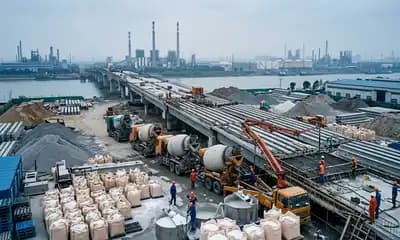
China Holds Dominant Benzoic Acid Production Share but Tariff Exposure Is Forcing North American Procurement Diversification
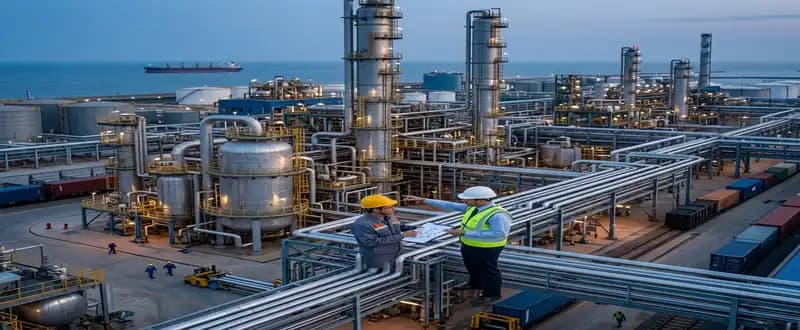
- Benzoic acid prices in June 2026 range from $0.98/kg in India to $1.69/kg in Europe, with Northeast Asia at $1.08/kg and North America at $1.16/kg.
- Toluene feedstock costs are the primary driver of benzoic acid production economics; toluene spot price movements transmit into benzoic acid contracts within weeks.
- China holds the largest share of global production capacity with approximately 7% annual output growth; India and Southeast Asia supply the remainder of global demand.
- US tariff measures on Chinese chemical intermediate imports have raised landed costs for North American buyers and are accelerating Indian and Southeast Asian supplier qualification.
- Buyers should maintain second-source qualification for at least one non-Chinese origin and build inventory buffers to manage shipping lead time and tariff exposure simultaneously.
Benzoic acid prices in June 2026 show a wide regional spread reflecting the interaction of feedstock costs, tariff barriers, and trade flow redirection. In India, prices are holding near $0.98 per kilogram the lowest major market level globally while Europe commands $1.69 per kilogram, driven by higher energy costs, REACH compliance requirements, and lower domestic production scale. Northeast Asia, where the majority of global capacity is concentrated, is priced around $1.08 per kilogram, and North America sits at approximately $1.16 per kilogram, a premium over Asian levels that reflects both import logistics and the impact of US trade policy on chemical intermediate sourcing.
The primary driver of benzoic acid production economics is the cost of toluene, which serves as the main feedstock in the controlled oxidation manufacturing route used by the majority of global producers. When refinery operating rates fall, aromatics output declines, and toluene availability tightens quickly a transmission mechanism that pushes benzoic acid production costs higher within weeks. Conversely, when toluene prices soften on the back of weaker gasoline blending demand or higher refinery throughput, benzoic acid production costs follow. This tight feedstock linkage means procurement teams who track toluene spot prices have an early signal on benzoic acid contract direction.
Request the Latest Benzoic Acid Prices Data - Access Price Insights Now
China is the dominant global supplier, holding the largest share of production capacity and growing its output at approximately 7% annually on the back of domestic food processing, pharmaceutical intermediate, and chemical downstream demand. India and Southeast Asia together account for a significant share of the remaining global capacity. The geographic concentration of supply in Asia means that shipping disruptions, port congestion, or export policy changes in China or India can create localized availability gaps for buyers in Europe and North America within a single shipping cycle.
US trade actions on imported Chinese chemical intermediates have raised effective landed costs for Chinese-origin benzoic acid materially above the FOB price, prompting North American buyers to accelerate the qualification of alternative sources. Indian producers, who price at the low end of the regional range, are the most price-competitive alternative, but lead times, quality auditing, and container logistics from Indian production sites to North American ports add cost and complexity that partially offset the price advantage. Southeast Asian producers represent a middle option closer in shipping distance to the US West Coast than India and with established export track records.
For procurement teams, benzoic acid in June 2026 is a product where origin selection is as important as price negotiation. Buyers with flexibility to source from India gain the widest price advantage but must invest in supplier qualification and longer inventory buffers. Those locked into Chinese supply chains face tariff-driven cost inflation that is not visible in the underlying Asian spot price. A second-source qualification program covering at least one non-Chinese origin remains the most effective risk management measure available for the current trade environment.
Recent News & Articles

Manufacturer Transition Triggers Erythromycin Shortage as Azithromycin Becomes Temporary Clinical Alternative
European Dimethyl Sulphate Plants Run Near Capacity as Feedstock Pressure Builds in 2026

Battery-Grade Caustic Potash Restocking Adds Selective Tightness to Stable European Supply in 2026
Almond and Cherry Flavor Notes Keep Benzaldehyde Demand Resilient Across Food and Beverage Formulations

June 30 Commerce Department Tariff Update Will Define Copper Market Direction Through Q3 2026
Tags
- Access independent price trends and market intelligence for thousands of raw materials.
- Request customised production cost and prefeasibility reports for specific plants or locations.
- Explore subscription dashboards for continuous tracking of prices, indices, and news.
- Commission bespoke research on categories, suppliers, or trade flows tailored to your brief.
Our Team will be happy to assist you
We are Just a Text away