News and Articles
Dark Chocolate Buyers Gain Leverage After Cocoa Futures Decline
- Faster Ivory Coast arrivals eased concern over near-term cocoa availability.
- Higher exchange inventories reduced pressure on cocoa futures.
- Dark chocolate costs may fall more slowly than futures benchmarks.
- Earlier bean contracts can delay supplier price adjustments.
- Staggered purchasing can reduce exposure to another market reversal.
Cocoa futures gave back part of their early-week gains after stronger supply signals from Ivory Coast reduced concern over immediate bean availability. The reversal offered some relief to dark chocolate manufacturers following a sharp rally earlier in July.
New York and London cocoa contracts had climbed to their highest levels in several months before selling accelerated at the end of the week. The decline continued into Monday, when September New York cocoa closed 3.68% lower and the corresponding London contract fell 3.31%. The movement reflected a correction across the futures market rather than a fall in one isolated physical quotation.
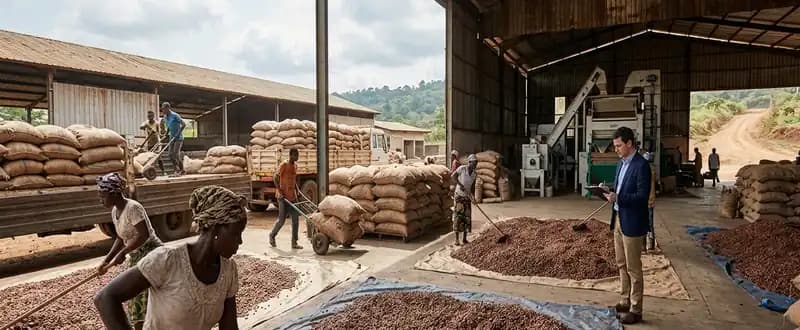
Cumulative cocoa arrivals at Ivory Coast ports reached about 2.09 million tonnes from the start of the marketing season through July 12. Deliveries were 21% higher than during the same period a year earlier. The faster arrival rate eased concern that exporters and processors would struggle to obtain enough beans for near-term shipments.
Request the Latest Dark Chocolate Prices Data - Access Price Insights Now
ICE-certified cocoa stocks also climbed to about 3.19 million bags, their highest level in two years. Higher exchange inventories gave buyers more confidence that available supply had improved, encouraging traders to reduce some of the long positions built during the earlier rally.
The futures decline will not pass through to dark chocolate contracts at the same speed. Manufacturers usually purchase cocoa liquor, cocoa butter and cocoa powder under formulas agreed weeks or months earlier. Grinding charges, freight, financing, sugar, packaging and energy also affect the final delivered cost.
Dark chocolate products use a higher share of cocoa solids than many milk chocolate products, leaving their production costs more exposed to cocoa movements. Suppliers may resist immediate reductions when they are processing beans purchased under earlier contracts or carrying higher-priced inventories.
Buyers with uncovered third-quarter or fourth-quarter volumes now have more room to discuss contract adjustments. Splitting purchases across several fixing dates can reduce the risk of locking the full requirement during another temporary rise. Buyers should also ask suppliers to separate the cocoa component from processing, freight and packaging charges.
The supply picture has improved, but the market remains sensitive to West African weather, crop quality and port movement. Stronger Ivory Coast arrivals and higher exchange stocks support softer near-term procurement conditions, though another weather-related disruption could quickly reverse the trend.
Recent News & Articles

US Diesel Stocks Fall to Record Seasonal Low Before Winter Heating Demand

Domtar to Idle Howe Sound NBSK Mill in Latest North American Pulp Capacity Cut

Corn Above Five Dollars Tightens United States Ethanol Plant Margins

Chinese Coking Coal Futures Head for Record 46 Percent Monthly Gain in August

North American Linerboard Prices Hold Flat in August as September Hikes Loom
Tags
- Access independent price trends and market intelligence for thousands of raw materials.
- Request customised production cost and prefeasibility reports for specific plants or locations.
- Explore subscription dashboards for continuous tracking of prices, indices, and news.
- Commission bespoke research on categories, suppliers, or trade flows tailored to your brief.
Our Team will be happy to assist you
We are Just a Text away