Udeesha Tomar
AVP - Strategy and Solutions
Leading procurement research solutions across chemicals, materials, and food & beverages, with expertise in price forecasting and market analytics.
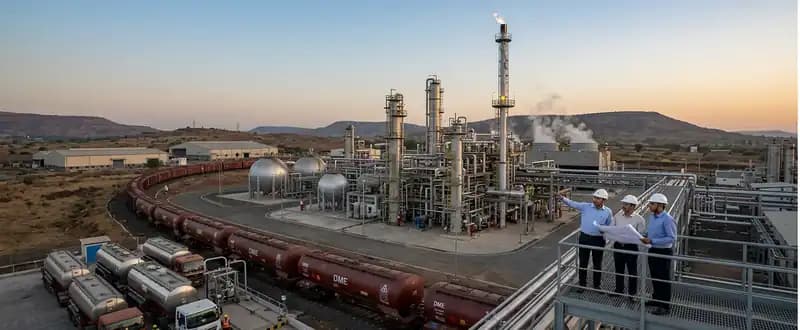
India’s dimethyl ether market gained a domestic supply source after Balaji Amines began commercial production at its Unit-IV facility in Chincholi MIDC, Solapur, on May 20, 2026. The plant has an annual capacity of 1,00,000 metric tonnes and marks India’s first commercial-scale DME production unit. The new capacity gives local buyers a domestic option for a product used in aerosol applications and as an alternative fuel in commercial and industrial sectors.
DME has long been discussed as a clean-burning fuel that can be blended with LPG. The new Indian production base may help reduce reliance on imported material for select uses, mainly where regulations and technical approvals allow adoption. The Bureau of Indian Standards has issued a code permitting DME blending of up to 8 percent with LPG, creating a regulatory path for wider use. Public-sector oil marketing companies will still need to decide how quickly such blending programs can be adopted.
Access Dimethyl Ether Production Cost Insights – Download Your Free Sample Report
For procurement teams, the immediate effect is likely to be felt in the aerosol sector. DME is used as a propellant in products such as sprays, personal care items, household products, and industrial aerosols. Domestic production could shorten lead times, reduce exposure to import delays, and give buyers better control over contract terms. Commercial heating users may also evaluate DME where storage, handling, and safety approvals are in place.
The project also shows how new chemical capacity can reshape sourcing plans beyond a single product. Since domestic DME production is new in India, buyers will need to qualify product grades, storage systems, transport vendors, and safety procedures. The company had to work through approvals related to storage, handling, transport, and usage because Indian standards were still being developed for the product.
Aerosol manufacturers and fuel-sector buyers may now begin vendor trials and supply discussions. Early buyers are likely to focus on quality consistency, cylinder logistics, pricing formulas, and delivery reliability. If domestic supply proves stable, DME procurement may shift from import-linked buying toward local contracts. The speed of that shift will depend on end-use approvals, buyer testing, and acceptance by fuel and aerosol customers.
AVP - Strategy and Solutions
Leading procurement research solutions across chemicals, materials, and food & beverages, with expertise in price forecasting and market analytics.

We are Just a Text away