Prakhar Panchbhaiya
Assistant Manager: Business Insights and Content
Supporting procurement teams with category intelligence, market research, price trends, supply-demand analysis, and strategic sourcing insights across key industries.

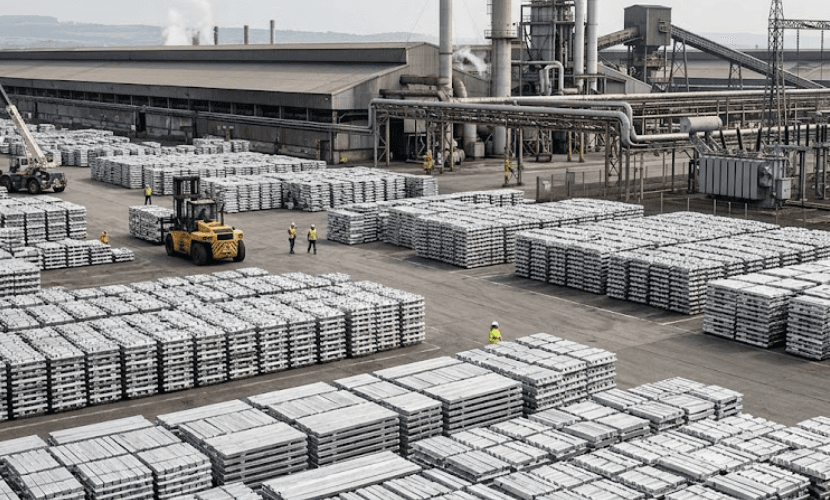
London Metal Exchange aluminium moved through a volatile first full week of October 2026, with the three month contract pulling back sharply from the late September highs before stabilizing by midweek. The LME cash settlement fell from about 3,248.5 United States dollars per tonne on September 28 to 3,107 dollars per tonne on October 5, with the largest single session drop coming on October 1, when the price fell about 84 dollars to 3,120 dollars per tonne. By October 6, the market had steadied near 3,134.5 dollars per tonne, with traders describing the move as a cautious attempt at consolidation rather than a fresh uptrend.
A combination of factors drove the pullback. A stronger United States dollar and firm interest rate expectations made dollar denominated commodities less attractive to overseas investors. Profit taking after the late September rally also added selling pressure. The supply risk premium tied to Middle East tension eased as production and logistics conditions normalized through the opening days of the quarter. Weaker Chinese demand added to bearish sentiment, though it was not the primary driver of the sell off.
Request the Latest Aluminium Prices Data - Access Price Insights Now
The Chinese alumina chain picture remained closely watched. On October 8, the Chinese alumina index traded at a premium of about 5.67 yuan per tonne over the main contract's latest transaction price. Alumina warrant stocks fell by about 6,905 tonnes on the same day to 225,900 tonnes, pointing to continued physical draw at Chinese ports. Freight on board alumina values out of Western Australia reached about 373 United States dollars per tonne, running above the Chinese domestic index by about 518.33 yuan per tonne and keeping the import arbitrage window closed for most of the week.
Underlying supply fundamentals remained supportive on a structural basis. China's self imposed cap of 45 million tonnes on primary aluminium production, continued smelter cuts tied to energy costs in Europe, and tariff related trade restrictions on United States imports have all narrowed the market balance. Indonesia continued its aluminium capacity build with another 705,000 tonnes expected to come online, bringing total Indonesian primary aluminium capacity close to 1.4 million tonnes, though the ramp up was not expected to fully offset the market deficit before late 2026.
For procurement teams in automotive, construction, packaging, and electrical equipment supply chains, the near term action is to use the recent pullback to lock in November and December aluminium coverage. Rolling mill and extrusion buyers should confirm forward contracts while LME values sit in the 3,100 to 3,200 dollar per tonne band. Industrial users of alloy ingot and secondary scrap should stress test fourth quarter cost models against a scenario where LME aluminium firms back toward 3,250 dollars per tonne if alumina tightness extends or if Chinese smelters cut capacity further.Bullet Summary
Assistant Manager: Business Insights and Content
Supporting procurement teams with category intelligence, market research, price trends, supply-demand analysis, and strategic sourcing insights across key industries.


We are Just a Text away
.webp&w=1080&q=75)
.webp&w=1080&q=75)