Udeesha Tomar
AVP - Strategy and Solutions
Leading procurement research solutions across chemicals, materials, and food & beverages, with expertise in price forecasting and market analytics.


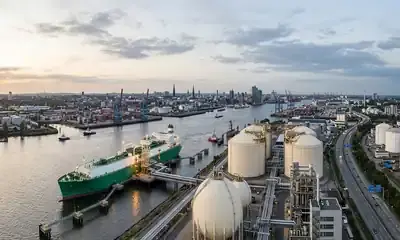
In September, India experienced a notable surge in liquefied natural gas (LNG) imports, witnessing a 21% increase compared to the same month in the previous year, with the volume reaching 2.27 billion cubic meters (m³). This uptick was primarily driven by the heightened power demand observed during the festive season and the resurgence of industrial activity after the conclusion of the monsoon period.
According to preliminary data from the oil ministry, India's reliance on LNG imports constituted 43.4% of the country's total natural gas consumption, which stood at 5.25 billion m³ in September. This marked a slight decrease from the previous year when the dependency was at 46%. Notably, over the course of January through September, India's cumulative LNG imports amounted to 15.11 billion m³, reflecting an 11% year-on-year increase.
Request Access To The Latest Price Trends of LNG
During the festive season in India, power demand traditionally reaches its peak, and with the conclusion of the monsoon season from June to September, industrial activities gained momentum. This led to coal and gas-based power utilities operating at optimal capacity. In response, the power ministry extended directives for increased coal imports and urged gas-based utilities to function at full capacity to meet the expected surge in power demand in the upcoming months.
In India, natural gas accounts for 6% of the installed power generation capacity, while coal dominates with a 50% share. The utilization of natural gas is primarily for household piped natural gas and compressed natural gas for automobiles.
India also witnessed a 6% year-on-year increase in its net natural gas production, reaching 2.97 billion m³ in September. This production growth has been ongoing since March, although the future trajectory of LNG imports remains uncertain, especially with the impending winter season, which typically sees reduced cooling requirements.
The Indian oil ministry has established the domestic natural gas price for October at $9.20 per million British thermal units (mn Btu), aligning with a new pricing mechanism tied to 10% of the monthly average of the Indian crude basket. However, conventional gas from older fields operated by ONGC and OIL will be priced at $6.50/mn Btu, in accordance with the revised natural gas pricing structure.
The International Energy Agency (IEA) has forecasted a 4% increase in India's natural gas demand for the current year, primarily propelled by the industrial and power sectors. Furthermore, it anticipates an average annual growth rate exceeding 8% between 2022 and 2026, resulting in an additional 20 billion m³ of demand. Over the period from January to September, India's natural gas demand registered a 7% year-on-year increase, totalling 32.6 billion m³.
As part of its broader strategy to reduce carbon emissions, India has articulated ambitions to transition towards a gas-based economy, targeting a 15% share of natural gas in its primary energy mix by 2030, up from approximately 6% in 2022. Additionally, India aims to expand domestic gas consumption while reducing reliance on more carbon-intensive fuels like coal, with the ultimate objective of achieving net zero emissions by 2070.
According to the article by Procurement Resource, India's LNG imports surged 21% year-on-year to 2.27bn m³ in September, driven by increased power demand during festive times and post-monsoon industrial activities. The country's LNG dependency was 43.4% of its total natural gas consumption, a slight decrease from the previous year. With a 6% rise in net natural gas production and heightened power demands, India's gas-based utilities are operating at full capacity. Despite natural gas comprising 6% of India's power generation capacity (with coal at 50%), the government aims to transition towards a gas-based economy, targeting a 15% share of natural gas in its energy mix by 2030 and net-zero emissions by 2070.
AVP - Strategy and Solutions
Leading procurement research solutions across chemicals, materials, and food & beverages, with expertise in price forecasting and market analytics.


We are Just a Text away