Prakhar Panchbhaiya
Assistant Manager: Business Insights and Content
Supporting procurement teams with category intelligence, market research, price trends, supply-demand analysis, and strategic sourcing insights across key industries.
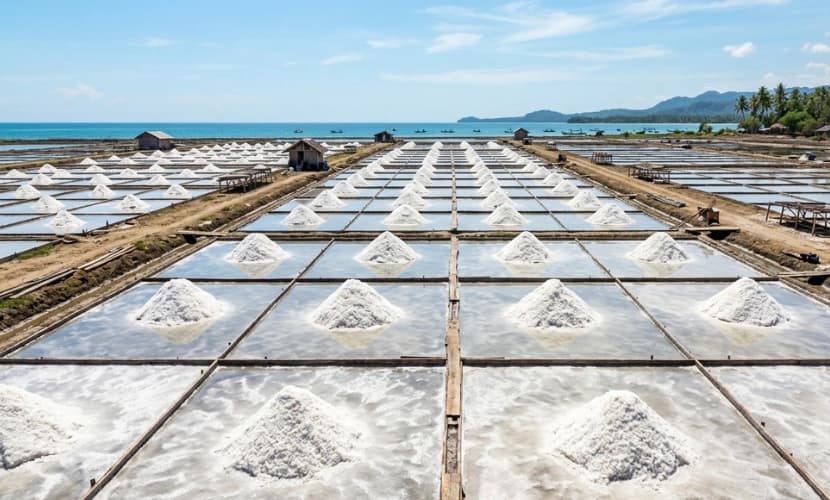
Indonesia's salt producers are benefiting from unusually dry conditions that have accelerated seawater evaporation and extended the harvesting period across important coastal production areas. The weather has created favourable operating conditions for traditional solar salt farms, where output can change sharply depending on rainfall and the length of the dry season.
Most domestic salt production relies on shallow evaporation ponds. Seawater is concentrated until salt crystallises on the pond floor, after which workers collect and move the material into storage. Rain can interrupt the cycle, dilute concentrated brine and reduce product quality. Longer periods without rainfall allow producers to operate their ponds more consistently and complete more harvesting cycles.
The current conditions are improving output in West Java, one of the country's salt-producing areas. Producers expect favourable weather to continue supporting harvesting, raising expectations for stronger national production after an earlier period when wetter conditions restricted output.
For sodium chloride procurement teams, greater domestic salt availability can provide more flexibility for processors and industrial buyers. Raw salt is used across food production, water treatment and chemical manufacturing, with chlor-alkali operations requiring dependable feedstock volumes for downstream chlorine and caustic soda production.
Request the Latest Chlorine Prices Data - Access Price Insights Now
Quality remains important when comparing additional supply. Industrial users may require tighter controls for moisture, impurities and mineral composition than traditional salt markets. Higher farm output does not automatically mean every harvested volume will meet chemical-processing specifications. Buyers should maintain testing and qualification requirements when adding new suppliers.
Storage is another consideration. Producers harvesting larger volumes during dry weather need sufficient covered storage to protect salt before sale. Poor storage can introduce moisture or contamination and reduce the value of higher production. Buyers securing future material can review warehouse conditions alongside production capacity.
Weather remains the main supply variable for solar evaporation systems. The same production base can deliver sharply different results when rainfall patterns change. Procurement teams should avoid treating one strong harvesting period as permanent additional capacity and maintain alternative sourcing options for wetter seasons.
The extended dry period currently provides better conditions for sodium chloride production. Buyers can use the increase in harvesting activity to review supply coverage, supplier quality and inventory requirements before weather conditions change.
Assistant Manager: Business Insights and Content
Supporting procurement teams with category intelligence, market research, price trends, supply-demand analysis, and strategic sourcing insights across key industries.
We are Just a Text away