Prakhar Panchbhaiya
Assistant Manager: Business Insights and Content
Supporting procurement teams with category intelligence, market research, price trends, supply-demand analysis, and strategic sourcing insights across key industries.
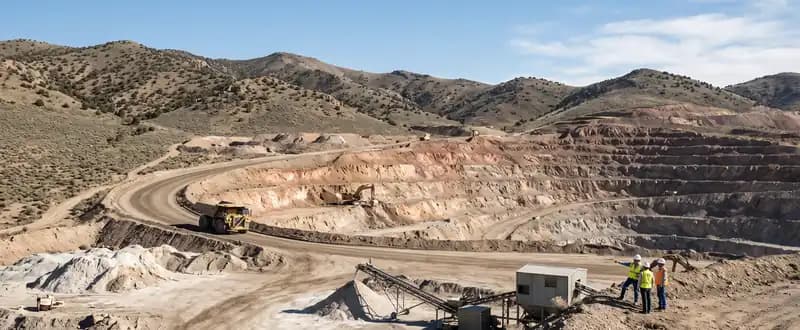
A mineral exploration programme in Nevada has identified underground deposits containing boron alongside lithium, potash and tungsten. The resources cover a wide salt formation, but a portion of the claims overlaps land used for satellite calibration. Federal restrictions on mining within that area have created uncertainty over how much of the deposit can be developed.
The discovery could support future diversification of boron supply in the United States. Domestic users currently depend on a limited group of producers and producing regions. A new source could widen supplier choice and reduce exposure to overseas transport, port delays and currency movements.
The resource cannot yet be treated as available supply. Exploration results must be followed by engineering work, permitting, financing, construction and product qualification. The land dispute adds another step that could change the accessible resource area or require revisions to the mine plan. Development is expected to take several years, even if the access issue is resolved.
Procurement teams should separate geological resource announcements from commercial production. A large measured deposit does not confirm annual output, processing yields, product purity or delivery costs. Buyers need information on the planned mining method, processing route, finished grades and impurity controls before judging whether the project can meet their requirements.
Request the Latest Potash Prices Data - Access Price Insights Now
Future customers may also need qualification trials. Boron products are purchased in several chemical forms and grades, and changing suppliers can affect manufacturing performance. Supply agreements signed before commissioning should include product specifications, sample approval, minimum-volume terms and remedies for delayed production.
The project may still influence negotiations before material reaches the market. Existing suppliers will know that buyers are examining alternative domestic sources. Large consumers may use the proposed capacity when discussing longer contracts, allocation guarantees or investment in downstream processing.
The land conflict remains the main constraint. Removing or changing the restriction could support a larger operation. Continued protection may reduce accessible reserves or force the developer to concentrate on areas outside the disputed zone. Buyers should base sourcing plans on permitted production rather than the full reported resource.
A future Nevada operation could strengthen regional boron availability, but it will not solve immediate purchasing needs. Procurement teams should continue managing current suppliers and inventories while tracking permits, engineering decisions and customer qualification progress.
Assistant Manager: Business Insights and Content
Supporting procurement teams with category intelligence, market research, price trends, supply-demand analysis, and strategic sourcing insights across key industries.




We are Just a Text away