Electricity Price Trend Analysis 2026: Supply Demand Analysis, Price Drivers, Market Insights, Historical Prices & Latest News

Written ByVikas Jha

Procurement Resource Database

Laptop screen

Turn price intelligence into action with the Procurement Resource Database. Log in or subscribe to unlock live price trends, historical charts, supplier databases, cost curves, and analyst-backed insights across chemicals, agriculture, energy, packaging, and more. Use these tools to benchmark your contracts, plan budgets with confidence, and stay ahead of market moves on every product you buy.

Electricity Dashboard Inclusions

Electricity Price Dasboard

0

+

Products

0

+

Regions

0

+

Subscriptions

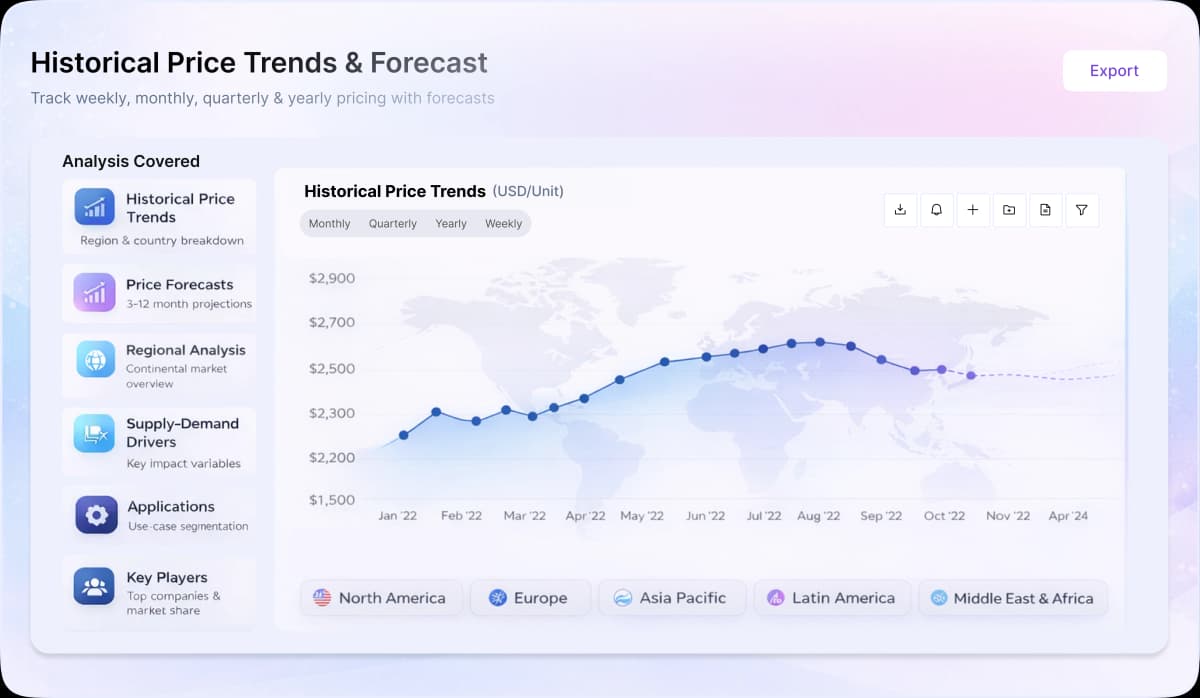
During the first half of 2025, electricity prices showed mixed but generally stable trends across major global markets. In the EU, prices stayed lower compared to the same period in 2024, supported by strong growth in renewable energy generation. A mild winter and high hydropower availability also helped to ease pressure on wholesale prices.

Solar power hit new records in spring, further reducing reliance on gas-fired generation. Combined with steady nuclear output and lower overall electricity demand, these factors kept both wholesale and retail prices in check. The declining cost of gas in early 2024 also continued to influence electricity prices positively into 2025.

In contrast, the U.S. experienced a steady increase in electricity prices through H1’25. Retail prices continued to rise faster than inflation, driven by increased infrastructure investment and the ongoing need to upgrade aging systems. Areas with already high electricity costs saw the largest price hikes. While fuel costs like natural gas had moderated, retail prices didn’t fall in step due to delayed pass-through effects and other fixed charges.


In Vietnam, a new retail electricity pricing framework was introduced, bringing more transparency to consumers. The government set clearer pricing limits, aligning with market costs while excluding VAT, suggesting a move towards more stable and predictable pricing.

About Electricity

Electricity refers to the flow of electrical power or charge. Electricity is one of the most widely used forms of energy as well as a basic part of nature. The electricity that we use at our homes is a secondary energy source because it is generated by the conversion of primary energy sources including coal, natural gas, solar energy, hydraulic energy, and wind energy, into electrical power. Further, as electricity can also be converted into other forms of energy like mechanical energy or heat, it is also referred to as an energy carrier.

Electricity Product Detail

Industrial Uses

Residential Uses, Industrial Uses, Transportation, Commercial Buildings

Synonyms

Power, Energy

Supplier Database

State Grid Corporation of China (SGCC), Enel Group, General Electric Co, Korea Electric Power Corporation (KEPCO), Tokyo Electric Power Company Holdings Inc (TEPCO), EDF (Électricité de France) S.A., RWE AG

Regional Coverage

Asia Pacific

China, India, Indonesia, Pakistan, Bangladesh, Japan, Philippines, Vietnam, Iran, Thailand, South Korea, Iraq, Saudi Arabia, Malaysia, Nepal, Taiwan, Sri Lanka, UAE, Israel, Hongkong, Singapore, Oman, Kuwait, Qatar, Australia, and New Zealand

Europe

Germany, France, United Kingdom, Italy,Spain, Russia, Turkey, Netherlands, Poland, Sweden, Belgium, Austria, Ireland Switzerland, Norway, Denmark, Romania, Finland, Czech Republic, Portugal and Greece

North America

United States and Canada

Latin America

Brazil, Mexico, Argentina, Columbia, Chile, Ecuador, and Peru

Africa

South Africa, Nigeria, Egypt, Algeria, Morocco

CurrencyUS$ (Data can also be provided in local currency)

Supplier Database AvailabilityYes

Customization ScopeThe report can be customized as per the requirements of the customer

Post-Sale Analyst Support360-degree analyst support after report delivery

Note: Our supplier search experts can assist your procurement teams in compiling and validating a list of suppliers indicating they have products, services, and capabilities that meet your company's needs.

Electricity Production Processes

  • Production of Electricity from Mechanical Energy

In order to generate electrical energy, electric power plants use turbines that convert the potential and kinetic energy of a moving fluid to mechanical energy. A moving fluid, like water, steam, or air, pushes a series of blades mounted on a shaft in a turbine generator, thus, rotating the shaft linked to a generator. On the basis of relationship between magnetism and electricity, the generator, in turn, transforms the mechanical energy to electrical energy.

About the Author

Vikas Jha profile photo

Vikas Jha

Vice President - Sales and Operations

Driving growth and operational excellence at Procurement Resource by partnering with global enterprises on procurement consulting and client solutions, with expertise in scaling research operations and delivering actionable commodity intelligence.

Our Price Analysis Methodology

Schedule Demo

Schedule a demo

Experience how Procurement Resource transforms raw material price data into clear, decision ready intelligence. Optimise your performance with reliable, expert market data and analysis. Schedule your demo today to experience a live walk-through where our experts will showcase interactive price charts, forecasted prices, and insights driving the prices for your key commodities, tailored to your workflows. Contact us now!

Our Team will be happy to assist you

We are just a text away

+1

Still Need Help?

Europe & Africa

+44 7573 171117

[email protected]

USA & Canada

+1 307 363 1045

[email protected]

APAC

+91 8850629517

[email protected]

Other Related Reports

Cooling Water Production from Cooling Tower

This report provides the cost structure of cooling water production through the use of cooling tower. In this process, the water is pumped into the cooling tower which flows down through wooden or plastic shells.

Menthol Production through Distillation, Filtration, and Cooling

This report provides the cost structure of menthol production by steam distillation, filtration, and cooling processes.

Unlock full access to Procurement Resource's price databases, interactive charts, and short-term forecasts for thousands of commodities. Elevate your sourcing decisions by comparing prices across regions, downloading historical data, and layering in analyst-backed insights, all with our flexible plans that scale as your portfolio grows.

Still have any Questions

Contact Us
Mastercard
Wire
VISA
Stripe

Related News

View All

Why Procurement Database

Commodity Market Intelligence

Commodity Market Intelligence

Track prices, market movements, supply-demand dynamics, and industry developments across hundreds of commodities through a centralized intelligence platform built for informed procurement decisions.

Price Forecasts & Market Outlooks

Price Forecasts & Market Outlooks

Understand market fluctuations using analyst-backed forecasts, historical pricing patterns, and evolving industry trends to strengthen sourcing strategies and budget planning.

Cost & Procurement Optimization

Cost & Procurement Optimization

Leverage cost models, pricing benchmarks, and procurement insights to evaluate purchasing opportunities, improve negotiations, and enhance operational efficiency.

Global & Regional Market Insights

Global & Regional Market Insights

Access region-specific price trends, trade activities, capacity changes, and supply chain developments influencing commodity markets worldwide.

1/4