Udeesha Tomar
AVP - Strategy and Solutions
Leading procurement research solutions across chemicals, materials, and food & beverages, with expertise in price forecasting and market analytics.

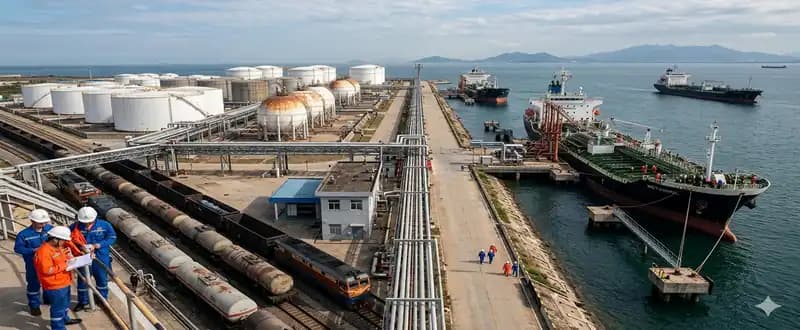
China's methanol futures market closed at 3,000 yuan per tonne, the lowest level since March and 2.2 percent below where the contract sat a month earlier. The retreat reflects a market struggling to reconcile two opposing forces. On one side, the Strait of Hormuz remains effectively closed, with Iran traditionally supplying around half of China's imported methanol cargoes, and Saudi Arabia, Qatar and Bahrain together accounting for another large share of the global trade flow. On the other, methanol to olefins operators across Jiangsu and Zhejiang have either cut runs or shut down entirely because the cost-margin equation no longer supports continuous operation.
The drop from the early-April peak above 3,370 yuan per tonne has been sharp. Spot CFR China cargoes that traded above 400 dollars per tonne in late March have eased into the 320 to 350 dollar range, though they remain well above pre-conflict levels around 280 dollars. Methanex, the largest global merchant methanol producer, has been prioritizing contract customers and has limited spot offerings. The wider global market, normally around 55 million tonnes of internationally traded volume against a total demand base near 110 million tonnes, is missing 18 to 20 million tonnes per year of Middle Eastern supply that would normally clear into China.
Request the Latest methanol Data - Get Your Free Sample Report
Downstream demand is signaling clearly. Many Chinese MTO units that purchase methanol at market prices remain shut, with operators preferring to take a write-down rather than run at deeply negative margins. Traditional consumption sectors including formaldehyde, MTBE and acetic acid have held up better, but acetic acid prices have themselves climbed sharply over the past quarter on methanol cost pass-through, with benchmark prices above 3,000 yuan per tonne in March. The negative feedback loop between methanol cost and MTO demand destruction is now the dominant near term price driver.
For procurement teams, the recent reset offers a tactical opportunity to ladder forward cover. Acetic acid, formaldehyde and dimethyl ether buyers should look at locking some Q3 volume at current values. MTO operators and downstream olefin derivative producers should remain cautious about extrapolating the recent weakness, since any escalation in Middle East tensions or restocking surge ahead of summer construction season would quickly tighten balances. The fundamental support sits between 5,500 and 5,700 yuan per tonne for coal to olefin integrated facilities, but the methanol producer cost floor is materially higher and could trigger sharp upside if MTO restart announcements emerge.
AVP - Strategy and Solutions
Leading procurement research solutions across chemicals, materials, and food & beverages, with expertise in price forecasting and market analytics.


We are Just a Text away