Udeesha Tomar
AVP - Strategy and Solutions
Leading procurement research solutions across chemicals, materials, and food & beverages, with expertise in price forecasting and market analytics.

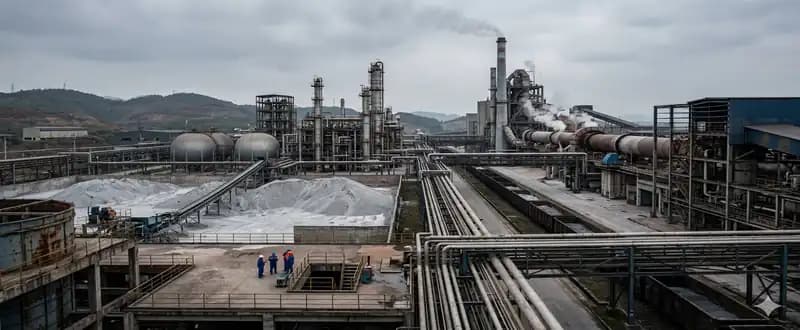
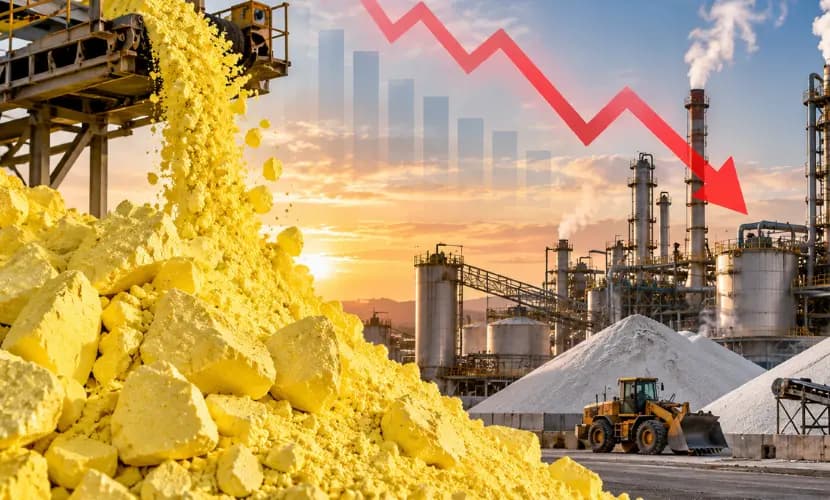
Global titanium dioxide producers continued to push through export price increases announced earlier in the year, with overseas customers absorbing the hikes against a backdrop of sustained sulfur and sulfuric acid feedstock costs. Daily market commentary from independent index trackers showed the TiO2 index near 2,476 with fluctuations of less than a tenth of a percent, indicating that the recent wave of producer led increases has settled into a new pricing floor. No major Chinese producer revised quotations downward, even as domestic margin pressure intensified.
The dynamics splitting the global TiO2 market are now firmly entrenched. On the export side, major producers including LB Group, Chemours and Tronox have implemented increases of roughly 100 dollars per tonne for both chloride and sulfate process material, building on a sequence of upward moves that began in the first quarter. Demand from paints, coatings and plastics customers in Europe and North America has been firm enough, particularly with chloride-route supply still recovering from the closure of Venator's European assets last year, to make those increases stick. Sulfuric acid pricing near 200 dollars per tonne has reinforced sulfate process producer cost floors.
Request the Latest Sulfuric Acid Price Data - Get Your Free Sample Report
Inside China, the picture is more difficult. Domestic rutile grade prices remain pinned in the 12,800 to 13,600 yuan per tonne range, with anatase between 11,800 and 12,500 yuan and chloride process material at 13,800 to 14,500 yuan. Cash costs for sulfate process rutile production in Shandong have at times topped 15,000 yuan per tonne, creating a cost-price inversion that has compressed producer margins. The real estate slowdown continues to limit coatings sector pull, and previous rounds of price hike announcements have struggled to translate into actual transactions. Most orders are still being filled at pre-increase prices, and producer profitability remains uneven.
For procurement teams sourcing TiO2 for paints, coatings, plastics masterbatches, paper and cosmetic applications, the divergence between export and domestic pricing presents a window of opportunity. Indian and Southeast Asian buyers can still source competitively from Chinese suppliers, though the spread is narrowing. European and North American converters facing the latest round of producer hikes should consider expanding their qualified supplier base into Chinese chloride and sulfate origins where regulatory and quality constraints permit. The structural support from elevated sulfur and sulfuric acid costs is unlikely to ease before Q3, suggesting current price levels will hold even if downstream demand stays soft.
AVP - Strategy and Solutions
Leading procurement research solutions across chemicals, materials, and food & beverages, with expertise in price forecasting and market analytics.

We are Just a Text away