Prakhar Panchbhaiya
Assistant Manager: Business Insights and Content
Supporting procurement teams with category intelligence, market research, price trends, supply-demand analysis, and strategic sourcing insights across key industries.
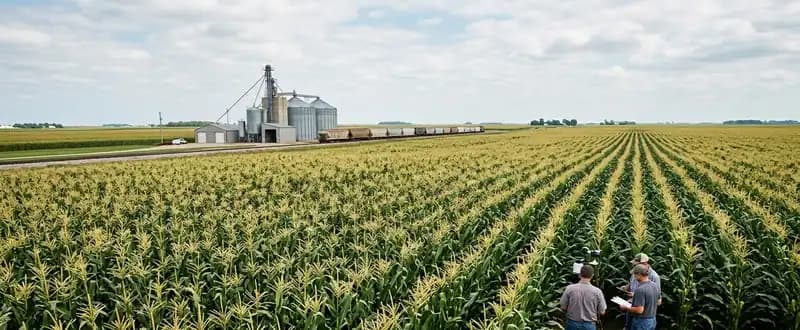
The US corn crop entered its main reproductive stages faster than its normal seasonal pace, but its national condition rating weakened. Sixty-seven percent of the crop was rated good or excellent, down one percentage point from the previous week and seven points below the prior year. Nine percent was rated poor or very poor, leaving almost one-quarter of the crop in fair condition.
Silking reached 59% across the 18 surveyed states, compared with a five-year average of 54%. Thirteen percent of the crop had reached the dough stage, two percentage points ahead of the normal pace. Faster development can support an early harvest, but it also moves more acres through pollination and grain filling during the same weather window. Heat or moisture stress during this period can affect kernel formation and final yield.
The national rating concealed wide state-level differences. Iowa and Minnesota each had 80% of corn rated good or excellent. Wisconsin recorded 79%, and Pennsylvania reached 82%. North Carolina had only 17% in the top two ratings, with almost half of its crop rated poor or very poor. Texas recorded 48% good or excellent and 23% poor. These gaps will influence local basis levels, feed availability and transport demand even when national production remains adequate.
Request the Latest Corn Prices Data - Access Price Insights Now
Feed mills, starch processors and ethanol plants should avoid treating the national condition score as a direct yield forecast. The score measures visible crop health, not the number of kernels that will reach harvest. Weather during pollination, soil moisture, disease pressure and late-season temperatures can still change production.
Procurement teams can reduce exposure by dividing purchases across delivery periods and origin regions. Plants close to weaker production areas should compare local contracts with rail or barge supplies from better-rated states. Freight capacity can tighten if regional crop losses force buyers to extend their sourcing radius. Storage availability also matters because advanced development can bring earlier arrivals and change the timing of basis pressure.
Corn users should monitor weekly condition changes, pollination progress and regional rainfall rather than reacting to one national number. Purchase coverage can be increased where local crop ratings are poor or where freight alternatives are limited. Buyers in stronger regions can retain more flexibility until kernel development provides a firmer view of yield.
Assistant Manager: Business Insights and Content
Supporting procurement teams with category intelligence, market research, price trends, supply-demand analysis, and strategic sourcing insights across key industries.





We are Just a Text away